2026-05-25
Rhinoplasty for a Low and Short Nose
A case study of a 20-year-old female patient who underwent rhinoplasty to correct a low bridge, short upturned tip, and bulbous nose using silicone and donated rib cartilage.
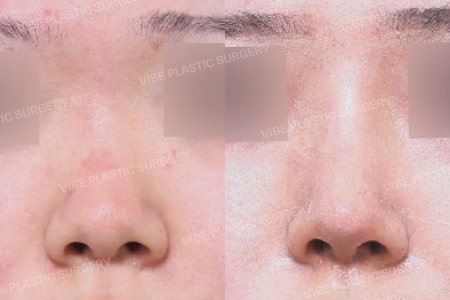
* Basic Information
- Female in her 20s
- Very low nasal bridge
- Short and upturned-looking nose
- Blunt nasal tip (Bulbous nose)
* Consultation
1. The patient visited due to a very low bridge and short nose, which made her face appear wide and flat like a ‘concave plate’.
2. We also needed to improve the blunt impression caused by the bulbous nose, right?
3. In the pre-operative CT scan, the septal cartilage was found to be too small to be used alone. Therefore, we planned the surgery using a combination of the septum, ear cartilage, and additional donated rib cartilage.
* Plan
1. Bridge Rhinoplasty (Silicone implant)
2. Tip Rhinoplasty
- Donated rib cartilage (Septal extension graft to correct the short nose)
- Septum & Ear cartilage (Columellar strut graft + Onlay graft)
- Correction of short and bulbous nose
* Post-operative Progress
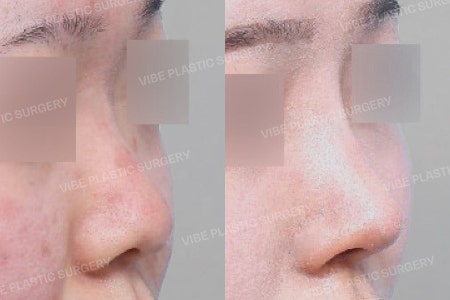
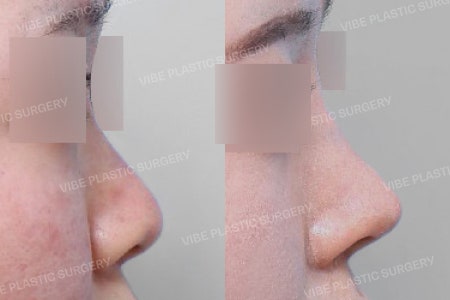
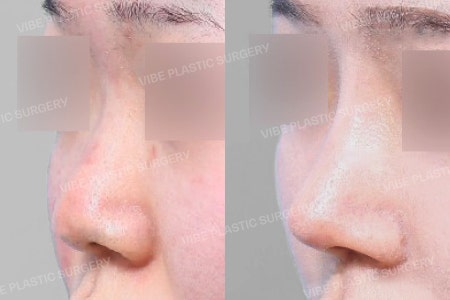
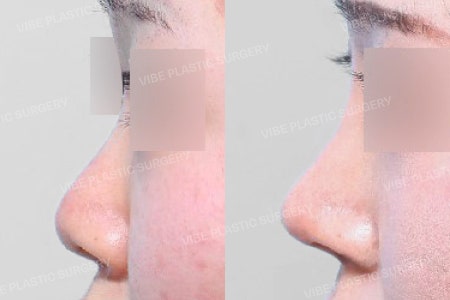
1. The patient was very satisfied as the sleek bridge line added three-dimensionality to her previously flat face, making it appear smaller.
2. To correct the short nose, donated rib cartilage, septal cartilage, and ear cartilage were all utilized. I believe the result is highly successful because I focused on creating strong support across all vectors to ensure the tip does not droop or become short again. ^^
3. By removing some of the blunt tissue at the tip and raising it sharply, the bulbous nose was sufficiently corrected. Overall, she now has a very sophisticated impression :)
* Key Points
1. For short nose correction, ‘sufficient dissection of skin and cartilage’ and ‘formation of a sturdy support’ are essential. Very tough ligaments hold the cartilage together like glue; to correct a short nose, it is vital to release these ligaments sufficiently and then build a firm support to prevent it from returning to its original state.
Looking at the anatomy of the nose below will be helpful!
2. Think of a ‘sturdy support’ like a camera tripod. When performing short nose surgery like this, the downward extending force and the upward lifting vector of the tip meet to create a solid framework!
3. Regarding the use of donated rib cartilage, opinions vary among both patients and surgeons. While I do not unconditionally recommend or insist on its use, I believe it is a good option when truly necessary.
4. The biggest concerns with donated rib cartilage are inflammation and tip drooping. Since it is a foreign material, the probability of inflammation may be slightly higher compared to using only autologous cartilage. Also, depending on the absorption rate, the tip may unexpectedly droop or warp.
5. However, I believe these issues mostly occur when the tip is raised excessively beyond what the individual can handle, or when factors like smoking play a major role. Therefore, if a proper surgical plan is established and factors that negatively affect the nose—such as smoking—are avoided, donated rib cartilage is a sufficiently good and sometimes necessary material.
Consultations and surgeries should be performed by a plastic surgery specialist!
Stay healthy and beautiful today :)
Right Thinking, Right Plastic Surgery - Yu Young-moon
Complications and side effects such as bleeding, inflammation, infection, and asymmetry may occur after surgery depending on the individual, and caution is required.
Frequently Asked Questions
What is the most important aspect of short nose correction surgery?
Yes, sufficient dissection of the skin and cartilage and the formation of a strong support structure are the most important aspects. After adequately releasing the tough ligaments between the cartilages, a sturdy support, like a camera tripod, must be created to prevent the nasal tip from shortening again.
Is rhinoplasty impossible if the septal cartilage is small?
No, surgery is possible by using other cartilages in addition. If a CT scan before surgery determines that the septal size is small, other materials such as ear cartilage or donated rib cartilage can be used in combination to create a strong nasal tip support.
Are there side effects when using donated rib cartilage?
Yes, the probability of inflammation or nasal tip drooping can be slightly higher compared to autologous cartilage. Since it is a foreign material, the nasal tip may bend or droop depending on the absorption rate, but side effects can be reduced by not raising it excessively and by quitting smoking.
How is bulbous nose correction performed?
Some of the blunt tissue at the nasal tip is removed, and the nasal tip is raised sharply to correct it. This improves the blunt impression, adds dimension to a flat face, and generally achieves a sophisticated and smaller-looking face.
What precautions should be taken when using donated rib cartilage?
It is important not to raise the nasal tip excessively beyond what you can tolerate. Also, smoking can cause inflammation and have a negative impact on the nose, so you must quit smoking after surgery to achieve stable results.