2026-05-25
Rhinoplasty for Low Bridge and Bulbous Tip
A case study of a 20-year-old female patient who achieved a refined, sophisticated look through rhinoplasty for a low bridge and bulbous tip.
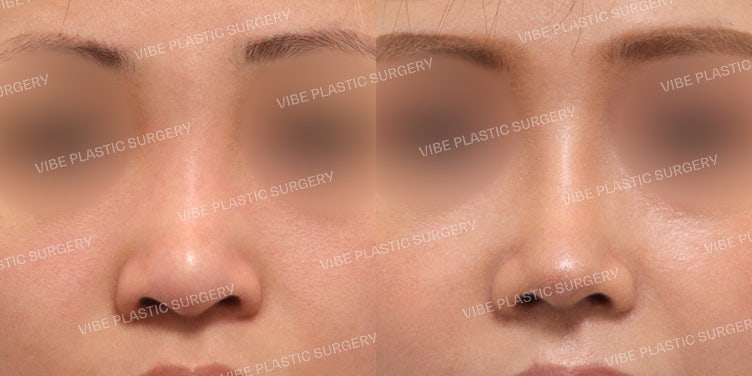
* Basic Information
# Female in her 20s
# Tried fillers for a low nasal bridge, but they spread out and she was dissatisfied with the shape.
# Bulbous nasal tip
* Consultation
# The patient desired improvement because her bridge was low and her tip was blunt and bulbous.
# Pre-operative CT scans showed a straight septum of sufficient size. We decided to raise the tip using a septal extension graft and elevate the bridge using a silicone implant.
* Surgical Plan
# Bridge Rhinoplasty (Silicone implant, Osteotomy)
# Tip Rhinoplasty (Bulbous tip correction, Septal extension graft)
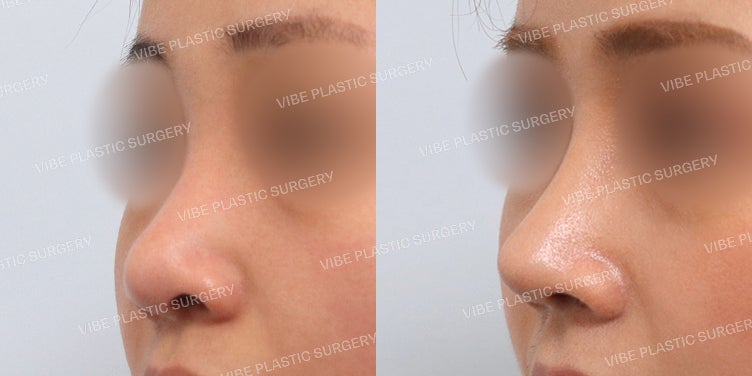
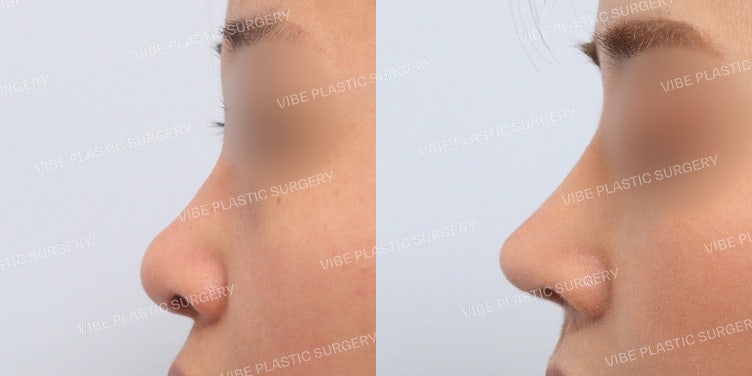
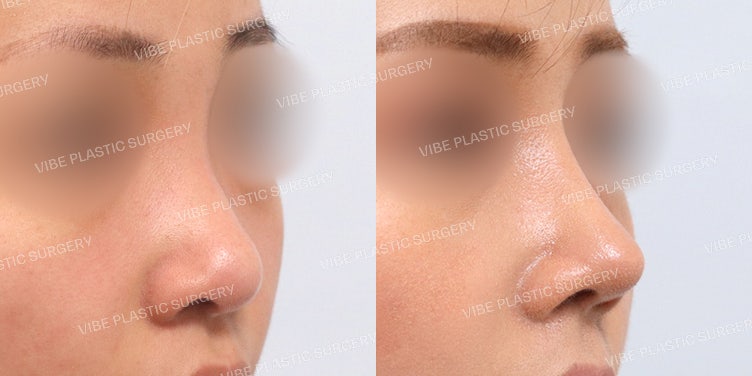
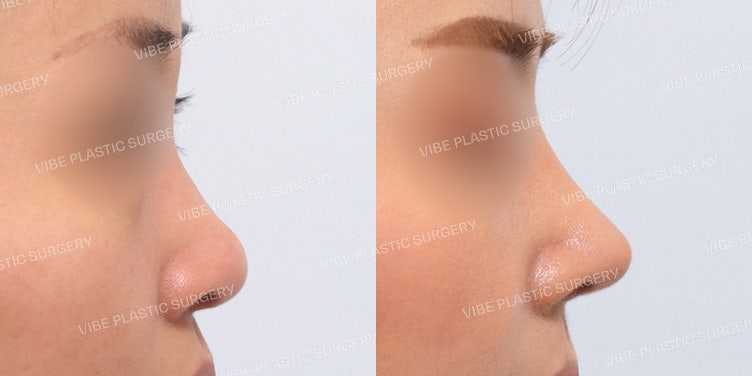
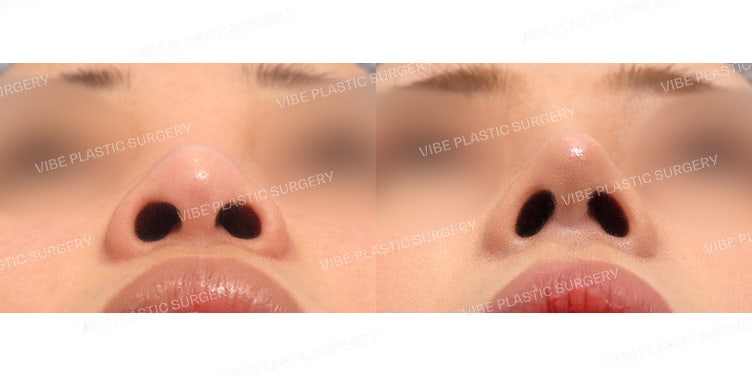
* Post-operative Progress
# Despite receiving filler-dissolving injections a week before surgery, some filler remained inside the nose. Remaining filler must be thoroughly removed to prevent future issues such as inflammation.
# There are several types of bulbous noses: 1. Thick skin 2. Thick soft tissue (subcutaneous fat, etc.) 3. Splayed or wide cartilage. Since these factors usually occur in combination, it is best to correct each factor appropriately. We sculpted the skin and soft tissue to be thinner and refined the cartilage to create a sleek shape.
# We achieved the ideal nasal tip angle using septal cartilage and ear cartilage.
# Now that the bulbous tip has been corrected, her overall impression has changed to a more sophisticated one!
Consultations and surgeries should be performed by a board-certified plastic surgeon!
VIBE coming from rich experience.
Dr. Yoo Young-moon, Representative Director of VIBE Plastic Surgery
Complications and side effects such as bleeding, inflammation, infection, and asymmetry may occur after surgery. These vary by individual and require caution.
Frequently Asked Questions
How can a low nose bridge and a blunt nasal tip be improved?
A low nose bridge and a blunt nasal tip can be improved by raising the nasal tip with septal extension grafting and augmenting the nose bridge with silicone implants. Before surgery, a CT scan is performed to check the size of the septum and plan the procedure.
What should be considered when undergoing 'Bokko' (bulbous nose) rhinoplasty?
A 'Bokko' (bulbous nose) can result from a combination of factors such as skin thickness, soft tissue thickness, and cartilage spread. Therefore, it is important to trim the skin and soft tissue and correct the cartilage shape according to each specific factor.
What should I do if I had fillers before nose surgery?
If fillers remain before nose surgery, they must be thoroughly removed, even if you received a dissolving injection one week prior to the surgery. This is to prevent problems such as inflammation later on.
What materials are used for nasal tip surgery?
Nasal tip surgery primarily uses septal cartilage and ear cartilage to achieve the ideal nasal tip angle. This is custom-applied according to each individual's nose structure and desired shape.
Is osteotomy also necessary for low nose bridge augmentation?
Yes, it may be necessary in some cases. In the example provided, osteotomy was included in the plan along with silicone implants for nose bridge augmentation. This is determined by the individual's nose condition.
What are the possible side effects after nose surgery?
Complications and side effects such as bleeding, inflammation, infection, and asymmetry may occur after nose surgery. These side effects can vary from person to person, so caution is required.