2026-05-25
Low Bridge Rhinoplasty & Full Face Fat Grafting
A case study of a woman in her 20s who achieved a more refined and youthful look through rhinoplasty and full-face fat grafting.
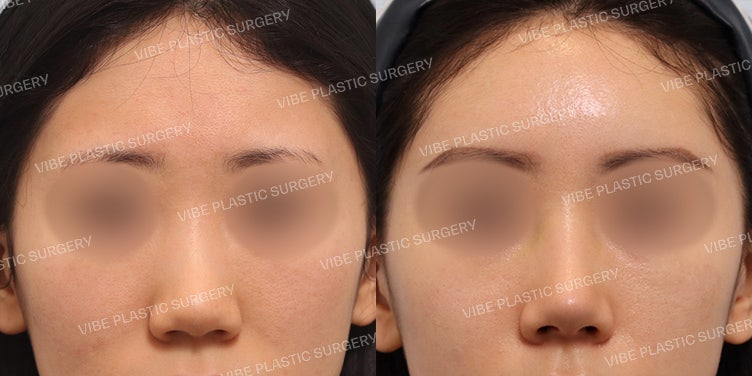
* Basic Information
# Female in her 20s
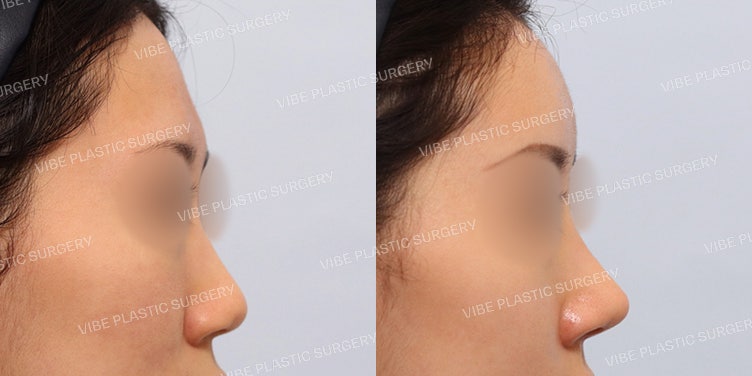
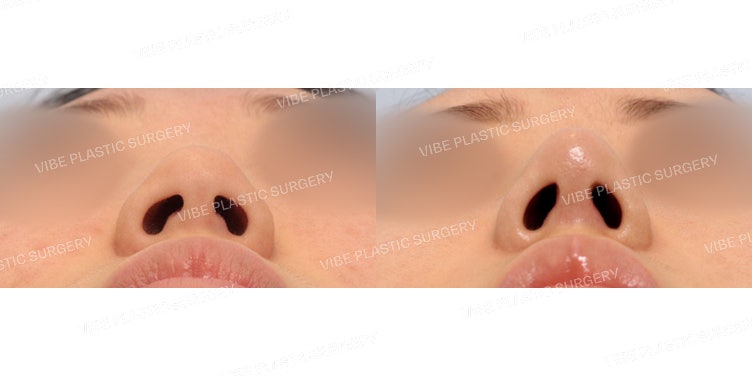
# Low nasal bridge and blunt nose tip
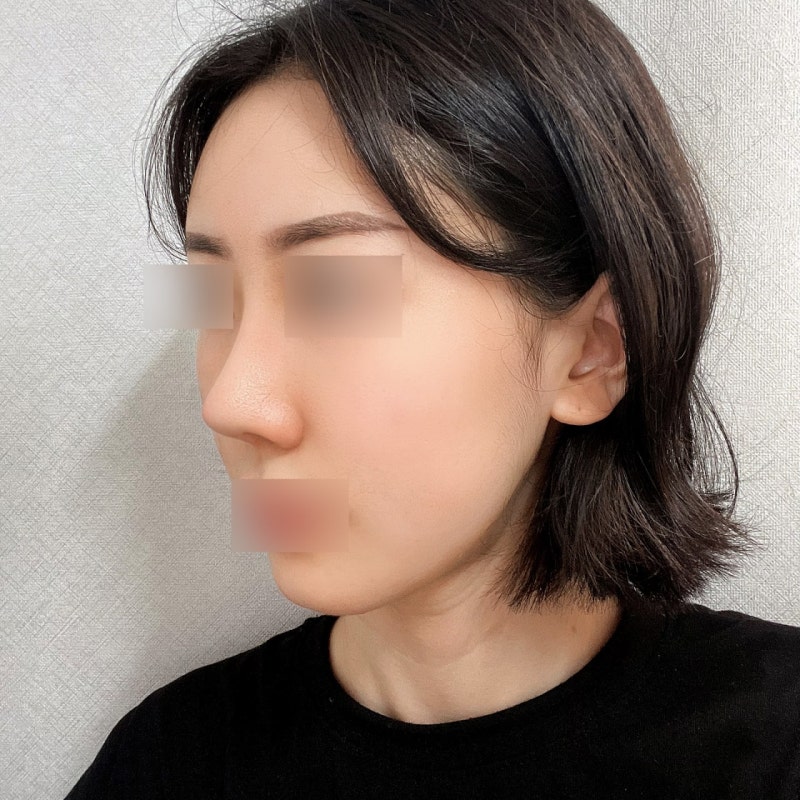
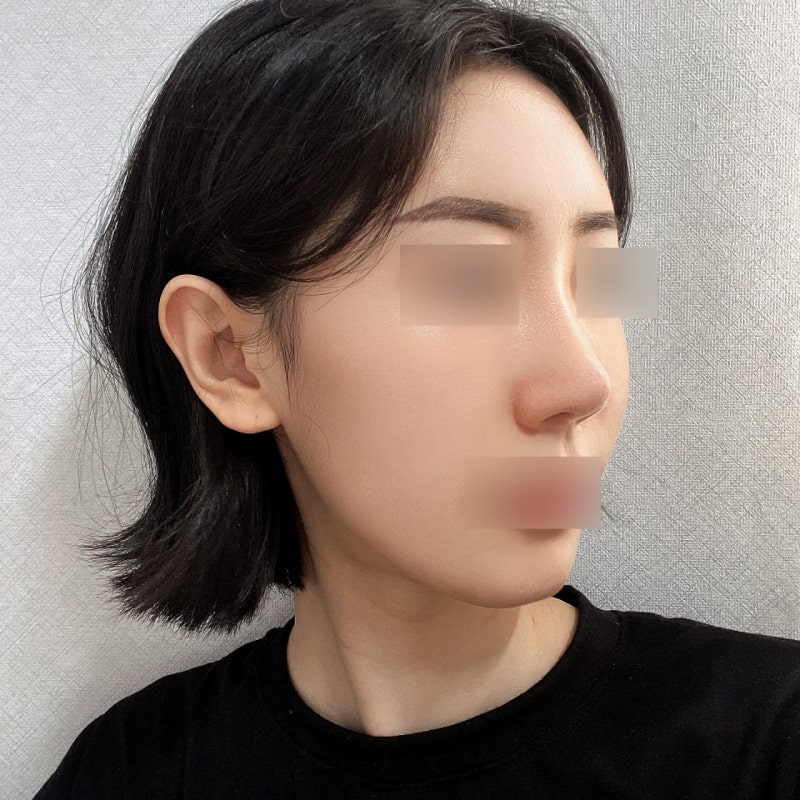
# Lack of overall facial volume making the face appear elongated
* Consultation
# The patient desired improvement for her low bridge and bulbous tip.
# She was also concerned about her narrow, flat forehead and the lack of volume across her face, which contributed to a long facial appearance.
# We planned to raise the nose while simultaneously performing fat grafting to create a voluminous, smooth facial contour.
* Surgical Plan
# Rhinoplasty (Silicone implant for the bridge)
# Tip Plasty (Septal extension graft, bulbous nose correction)
# Fat Grafting (Full face)
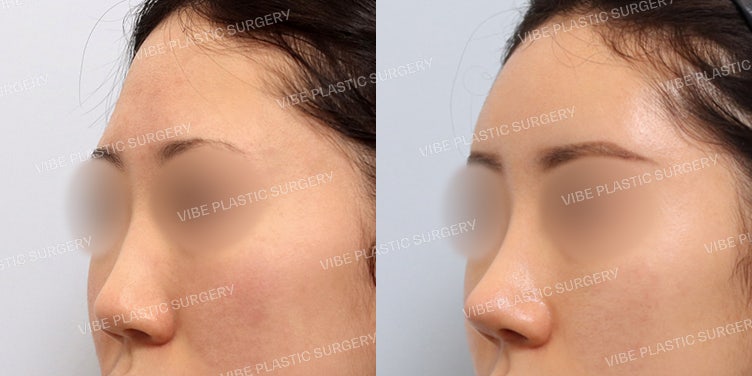
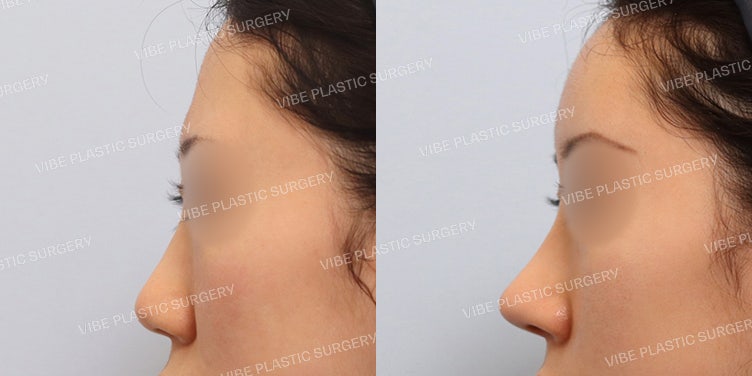
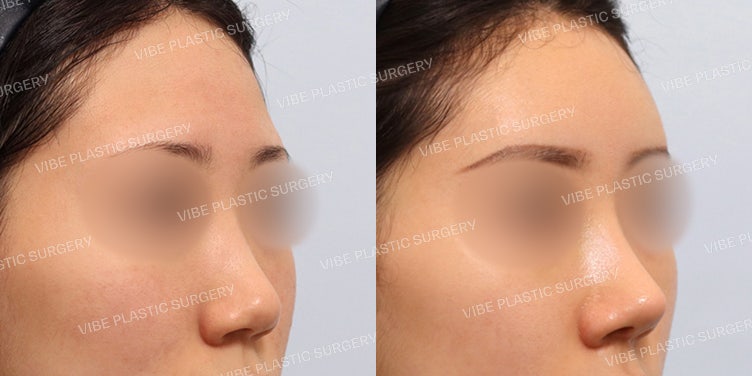
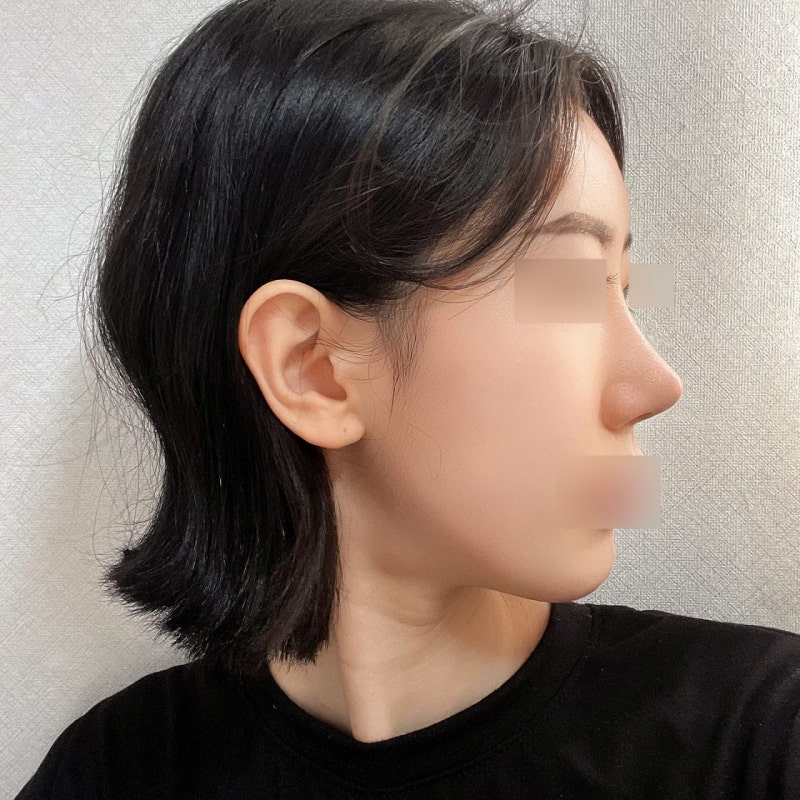
* Post-operative Progress
# We achieved an ideal nasal tip angle using septal cartilage and ear cartilage.
# By adding volume to the entire face, the facial lines were completed with a much more sophisticated and elegant image.
# When planning rhinoplasty, you should not look at the nose in isolation, but rather consider the entire line connecting the forehead, nose, and chin.
Consultations and surgeries should be performed by a board-certified plastic surgeon!
The ‘VIBE’ that comes from rich experience.
Dr. Yoo Young-moon, Lead Surgeon at Vibe Plastic Surgery
Complications such as bleeding, inflammation, infection, and asymmetry may occur after surgery depending on the individual, and caution is required.
Frequently Asked Questions
How can a low nose and a blunt nasal tip be improved?
A low nasal bridge can be elevated with silicone implants, and a blunt nasal tip can be improved through septal extension grafting and correction of a bulbous nose. This allows for the creation of an ideal nasal tip angle.
What surgery can be considered when facial volume is insufficient?
If the face appears long due to an overall lack of volume, full-face fat grafting can be considered. Fat grafting can add volume to the entire face, creating a smooth and立体 facial contour.
What materials are used for nasal tip surgery?
For nasal tip surgery, septal cartilage and ear cartilage are mainly used to achieve an ideal nasal tip angle. These can be used according to the individual patient's condition.
What is important when planning nose surgery?
When planning nose surgery, it is important to consider not just the nose, but the overall facial line from the forehead to the nose and chin. This helps achieve harmonious results.
What side effects can occur after surgery?
After surgery, various complications and side effects such as bleeding, inflammation, infection, and asymmetry can occur. These side effects may vary from person to person, so caution is required.
When can I check the post-operative progress?
In this case, the progress was checked 2 months after surgery. At this point, a sophisticated image change could be observed due to the creation of the nasal tip angle using septal and ear cartilage, and the improvement in overall facial volume.