2026-05-25
LipoSound Liposuction
A case study of a female patient in her 20s who underwent LipoSound ultrasonic liposuction for stubborn double chin fat, achieving a defined jawline.
* Basic Information
# Female in her 20s
# Stubborn double chin fat that persists despite consistent dieting
* Consultation
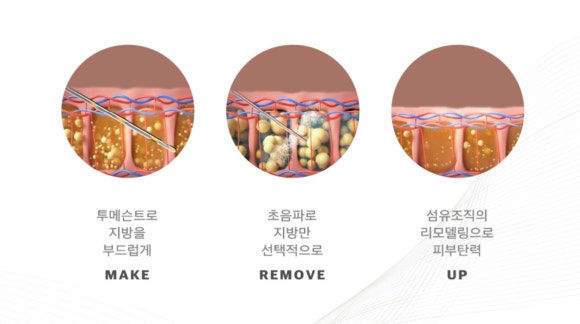
# By using ultrasound, subcutaneous fat can be broken down into fine particles. (Think of it as turning orange pulp into liquid orange juice.) This allows the fat to be removed effectively through a tiny opening, even with a small cannula, as it becomes liquid enough to be squeezed out.
# Since the patient had a significantly receding chin, chin filler was also recommended to be performed together.
# If you are curious about how liposuction is performed at VIBE Plastic Surgery, please watch the video below first ^^
* Plan
# LipoSound Ultrasonic Liposuction (Double Chin)
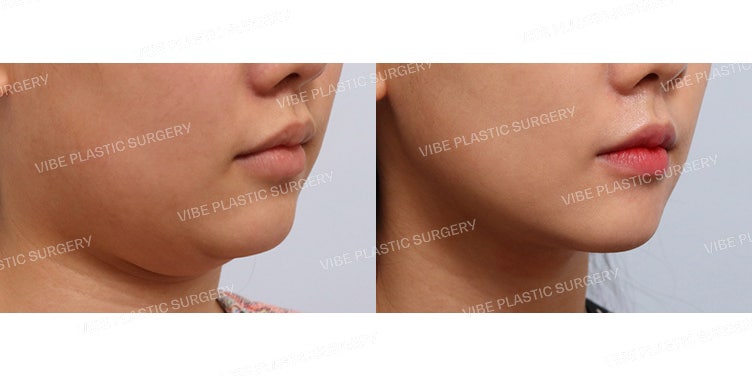
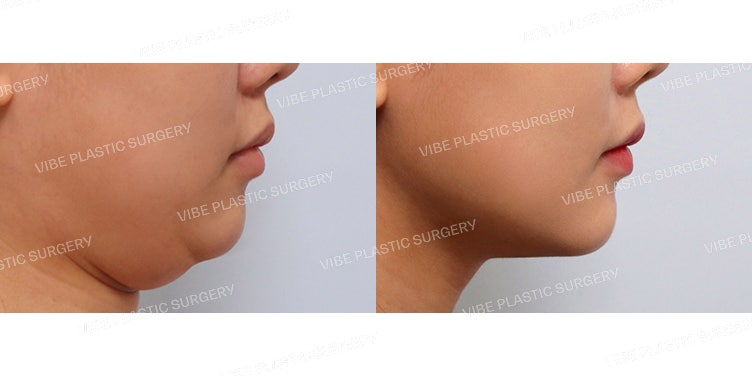
* Post-operative Progress
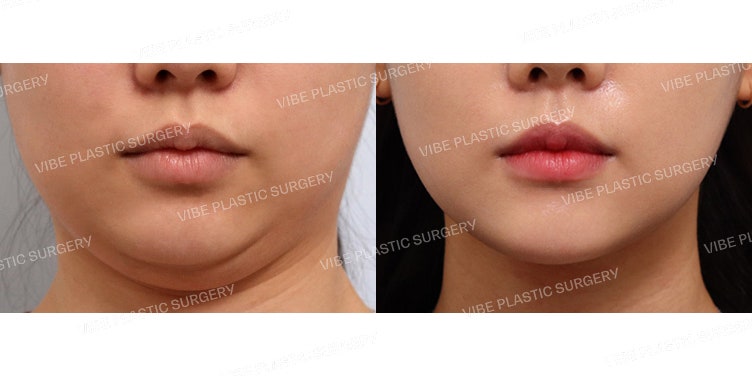
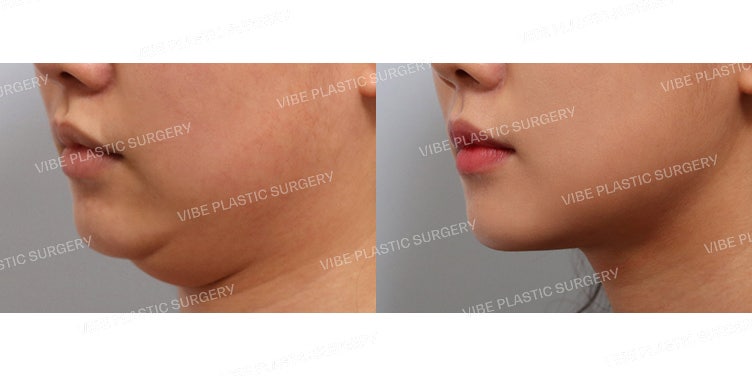
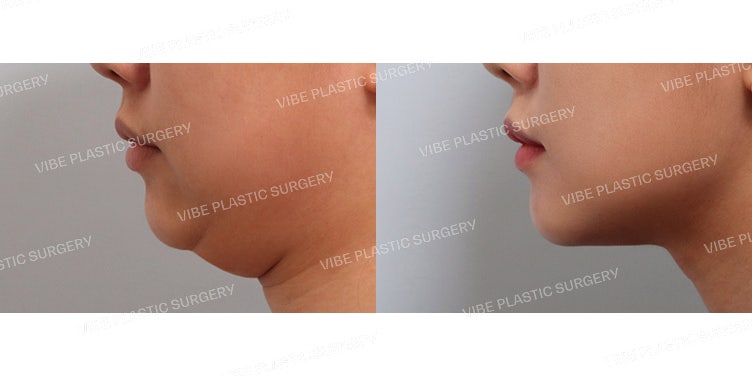
# The heavy, dull appearance has disappeared thanks to the jawline and double chin liposuction!
The Principles of LipoSound
# ‘LipoSound’ can be understood as a device that uses ultrasound to emulsify fat. Because it liquefies fat particles—like turning orange pulp into juice—it offers several benefits:
1. Much smoother process – Fat can be squeezed out like water without applying great force, and it can be suctioned using only a small cannula. Consequently, there is much less irritation, leading to faster recovery from bruising and swelling. This also results in significantly less ‘bio-bond’ (post-operative adhesions).
2. Since ultrasound is emitted beneath the dermis, there is less skin sagging after the procedure, and additional skin elasticity and tightening effects can be achieved.
# About two weeks after surgery, bio-bonds may form, which can feel uncomfortable. In such cases, applying warm compresses and stretching will help them resolve faster. Please note that we also provide injections to help dissolve these bonds during the one-month follow-up!
Consultations and surgeries should be performed by a board-certified plastic surgeon!
VIBE that comes from rich experience
Dr. Yoo Young-moon, Head Physician at VIBE Plastic Surgery
Complications and side effects such as bleeding, inflammation, infection, and asymmetry may occur after surgery depending on the individual, and caution is required.
Frequently Asked Questions
What is Liposound liposuction?
Liposound liposuction is a procedure that uses ultrasound to emulsify subcutaneous fat into a liquid-like state, which is then gently suctioned out with a small cannula. It liquefies fat particles, similar to orange pulp, into a juice-like consistency to aid in effective fat removal.
What are the advantages of Liposound liposuction?
Liposound liquefies fat, resulting in less irritation, faster recovery from bruising and swelling, and reduced bio-bond formation. Additionally, by applying ultrasound beneath the dermis, there is less skin sagging after the procedure, and additional benefits of skin elasticity and tightening can be achieved.
What is the recovery process like after Liposound liposuction?
About two weeks after the surgery, bio-bonds may form, which can cause discomfort. Warm compresses and stretching can help, and an injection to dissolve the bio-bonds may be administered at the one-month follow-up.
Which areas can be improved with Liposound liposuction?
Liposound liposuction can be effectively used to remove fat from specific areas that are difficult to reduce with diet alone, such as a double chin, thereby improving the jawline.
Is there any skin sagging after the Liposound procedure?
No, on the contrary, you can expect improved skin elasticity. Liposound applies ultrasound beneath the dermis, which results in less skin sagging after the procedure and provides additional benefits of skin elasticity and tightening.
What precautions should be taken during Liposound liposuction?
Complications and side effects such as bleeding, inflammation, infection, and asymmetry after surgery can vary from person to person, so caution is required. It is essential to consult thoroughly with a board-certified plastic surgeon before deciding on the procedure.