2026-05-24
When No-Implant Rhinoplasty Isn’t Enough! Why ‘Implant + Rib Cartilage’ is Necessary for a Dramatic Straight-Semi-Curved Line by Dr. Young-moon Yoo of VIBE Plastic Surgery
Discover why a combination of implants and rib cartilage is essential for achieving a dramatic straight-semi-curved nose line, especially for those with low bridges or bulbous tips.
Hello.
I am Dr. Young-moon Yoo of VIBE Plastic Surgery.
When conducting nose consultations,
there is one request I hear most often.
‘Doctor, I want to go with no-implant rhinoplasty.’ ‘I’m scared of rib cartilage, so I want to avoid it.’
I completely understand. The very idea of ‘inserting an implant or foreign material’ can feel burdensome.
However, realistically,
👉 whether your desired result is a ‘natural change’
👉 or a ‘dramatic straight-semi-curved change’
completely changes the surgical method.
The case I am introducing today is a perfect example of that difference.
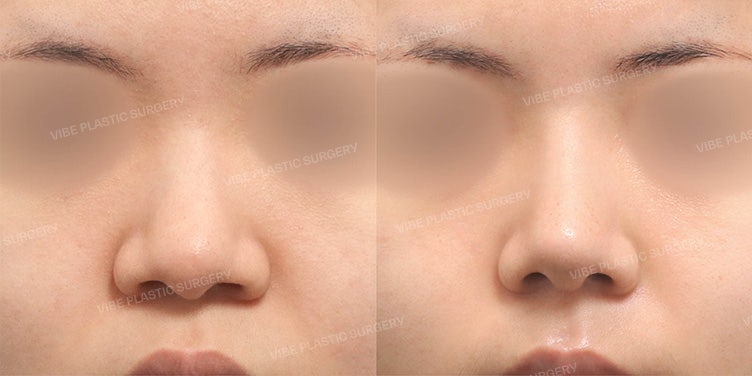
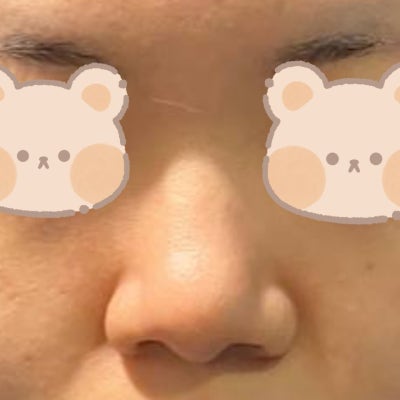
✅ Pre-operative Condition
When the patient first visited the clinic,
✔ Desired no-implant rhinoplasty
✔ Did not want to use rib cartilage
That is what they requested.
However, looking at the actual condition of the nose:
✔ Low nasal bridge
✔ Wide, bulbous tip
✔ Weak nasal tip support
✔ Droopy nasal tip
✔ Dull nasolabial angle
✔ Overall short and blunt line
Under these conditions, it was a structure where simple ear cartilage would clearly have its limits.
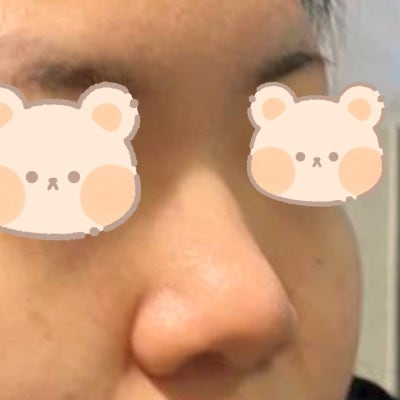
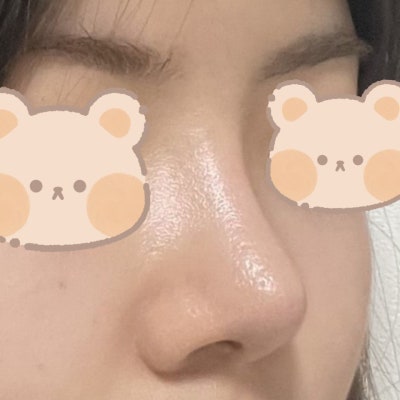
And the ‘wannabe’ photo the patient brought was 👉 a high, straight, and sophisticated ‘straight-semi-curved line.’
In other words, the desired result was not ‘naturalness’ but a ‘definite transformation.’
✅ Why No-Implant + Septal & Ear Cartilage is Not Enough
This is a part many people misunderstand.
No-implant rhinoplasty certainly has its advantages, but it is not possible for every nose.
It has limitations especially in these cases.
❌ Limited Cases
✔ When the bridge height is significantly lacking
✔ When the skin is thick and the nose is bulbous
✔ When nasal tip support is weak
✔ When a dramatic straight-semi-curved line is desired
Septal or ear cartilage is
👉 good for ‘fine corrections’
👉 but structurally insufficient for a ‘large volume increase.’
As a result,
• The height may be insufficient
• It may droop again
• The line may become blurred
✅ The Chosen Surgical Method
After thorough consultation, I explained anatomically why implants and rib cartilage were necessary, and after the patient fully understood, we decided on the surgical direction.
Surgical Plan
✔ Bridge – Use of a thin implant
✔ Tip – Rib cartilage
✔ Bulbous nose correction + Nasolabial angle correction performed simultaneously
1️⃣ Bridge: Why an Implant is Necessary
The core of a straight-semi-curved nose is 👉 a ‘smooth and straight line.’
To create such a line, uniform height and length are required.
In the case of a low nasal bridge, the no-implant method may lead to:
⚠ Potential absorption
⚠ Warping
⚠ Lack of volume, etc.
These issues make it difficult to maintain a precise straight line.
Therefore,
👉 creating the basic framework with a very thin implant
👉 and refining the line naturally is the most stable and predictable way to produce results.
2️⃣ Nasal Tip: Why Rib Cartilage is Necessary
It is no exaggeration to say the nasal tip accounts for over 70% of rhinoplasty.
Especially under these conditions:
✔ Bulbous tip
✔ Thick skin
✔ Droopy tip
✔ Need for strong support
It is difficult to withstand these factors with only septal/ear cartilage.
Rib cartilage provides:
✔ The strongest support
✔ Sufficient height as desired
✔ Minimal drooping over the long term
✔ Excellent maintenance of the straight-semi-curved angle
In short, it is 👉 nearly the only material capable of creating a ‘dramatic nasal tip transformation.’
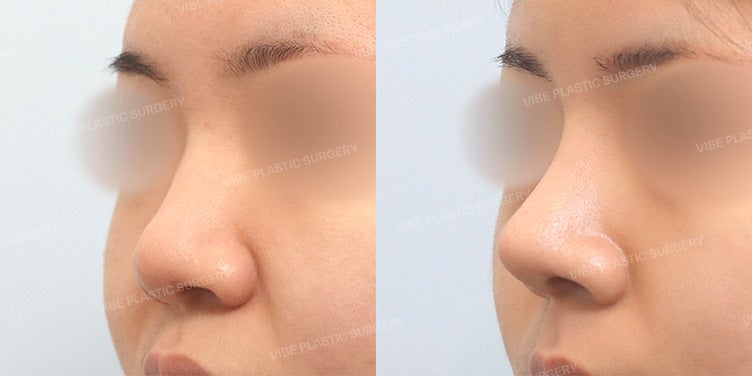
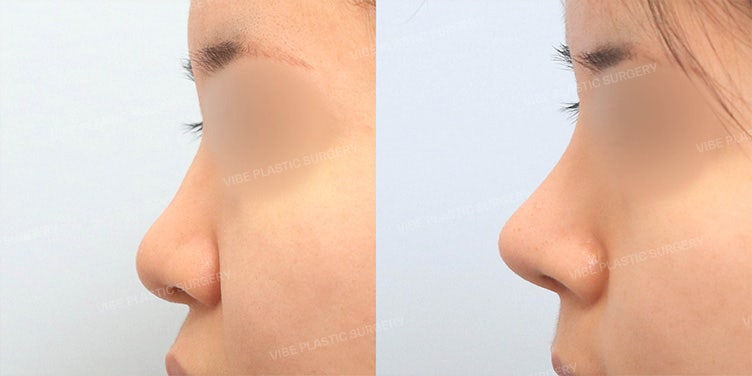
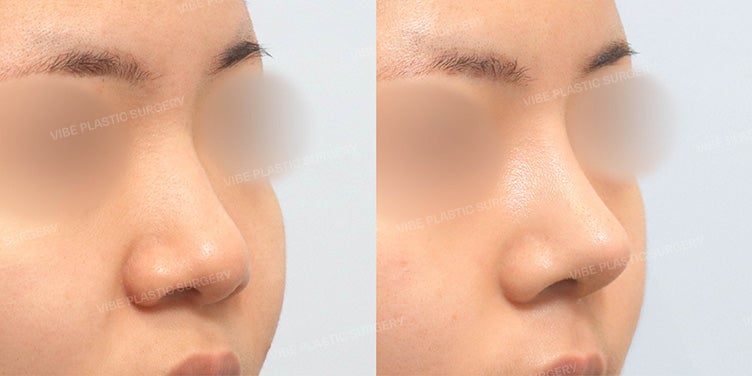
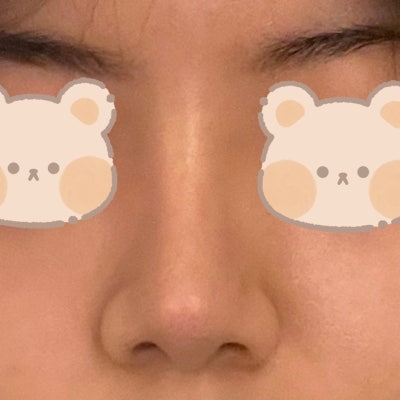
✅ Post-operative Results
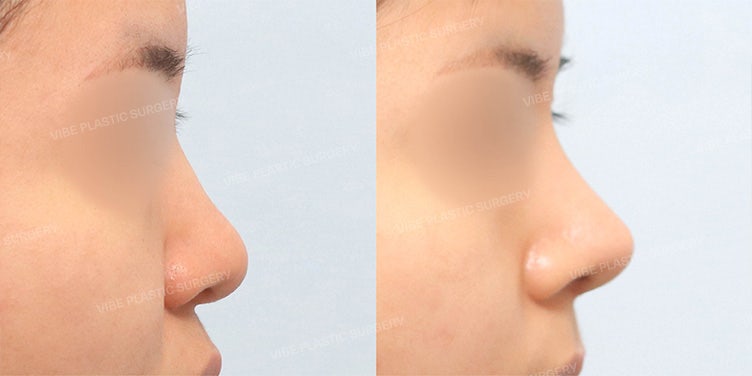
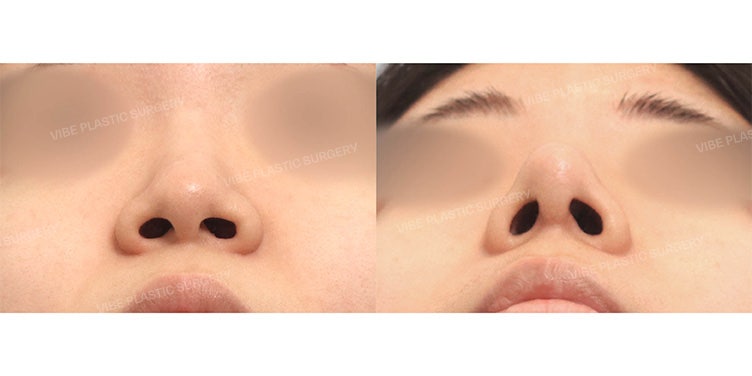
✔ A straight-semi-curved line that flows straight from the bridge to the tip
✔ Slim improvement of the previously bulbous tip
✔ Naturally lifted nasal tip
✔ Sophisticated nasolabial angle
✔ A sharp impression from both the front and side
The thing the patient said most was, ‘Why didn’t I consider this method from the start? haha.’
That is how close the result was to their desired image.
✅ The Most Important Factor in Creating a Straight-Semi-Curved Line
This is what I always emphasize.
Rhinoplasty is not about ‘what material you use,’ but
👉 ‘whether you design a structure that fits the desired result.’
The surgical materials and methods must change according to the goal.
If you limit the materials, you limit the results!
✅ Recommended for:
✔ Those who want a straight-semi-curved/sophisticated nose line
✔ Those with a very low nasal bridge
✔ Those with a bulbous tip/thick skin type
✔ Those worried about the recurrence of a droopy tip
✔ Those wanting a definite change for their first surgery
✔ Those considering rib cartilage rhinoplasty
Closing
No-implant is not always the right answer, nor is rib cartilage always ‘too much.’
The most important thing is 👉 ‘the method that fits my nose.’
If you are considering straight-semi-curved rhinoplasty,
I recommend receiving a consultation from the perspective of ‘structure and design’ rather than just materials.
Thank you.
This was Dr. Young-moon Yoo of VIBE Plastic Surgery.
Frequently Asked Questions
In what cases does non-implant rhinoplasty have limitations?
Yes, non-implant rhinoplasty has limitations if the bridge of the nose is significantly low, if the skin is thick and the nose is bulbous, if the tip of the nose has weak support, or if a dramatic straight-upturned nose is desired. This is because it is difficult to achieve a large volume increase with only septal or ear cartilage.
Why are implants necessary for the nasal bridge when creating a straight-upturned nose line?
Yes, for the smooth and straight line of a straight-upturned nose, uniform height and length are important. In the case of a low nasal bridge, non-implant methods can lead to problems such as absorption, warping, and insufficient volume, so it is more stable to create the basic framework with a thin implant and refine the line.
What is the main reason for using costal cartilage in tip rhinoplasty?
Costal cartilage is used when strong support is needed, such as for a bulbous nose, thick skin, or a drooping nasal tip. It provides the strongest support to sufficiently achieve the desired height, and it is excellent for long-term resistance to drooping and maintaining the angle of a straight-upturned nose, allowing for dramatic changes to the nasal tip.
What is the most important consideration when undergoing straight-upturned nose rhinoplasty?
The most important consideration in straight-upturned nose rhinoplasty is not "what material to use" but "designing a structure that matches the desired outcome." The surgical materials and methods should vary according to the goal, and limiting the materials can also limit the results.
Who is costal cartilage rhinoplasty recommended for?
Costal cartilage rhinoplasty is recommended for those who desire a straight-upturned nose or a refined nose line, those with a very low nasal bridge or a bulbous/thick skin type, those concerned about recurrence of nasal tip drooping, and those who want a definite change even for their first surgery.