2026-05-25
No-Implant Rhinoplasty (Hump Nose & Long Nose)
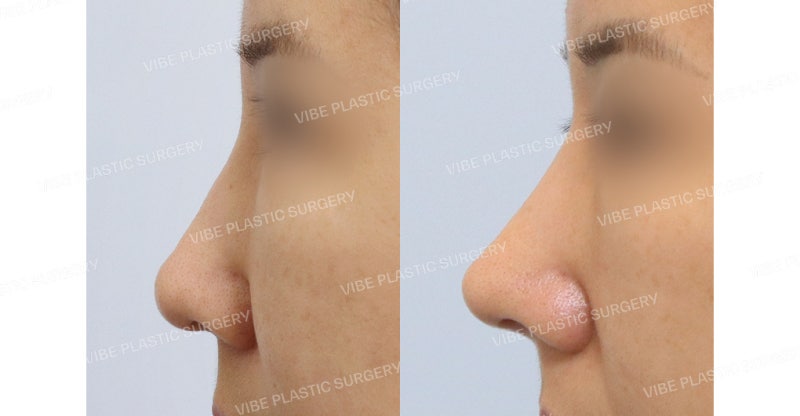
Case study of a 30s female achieving a younger, refined look through no-implant rhinoplasty to correct a long, drooping nose and dorsal hump.
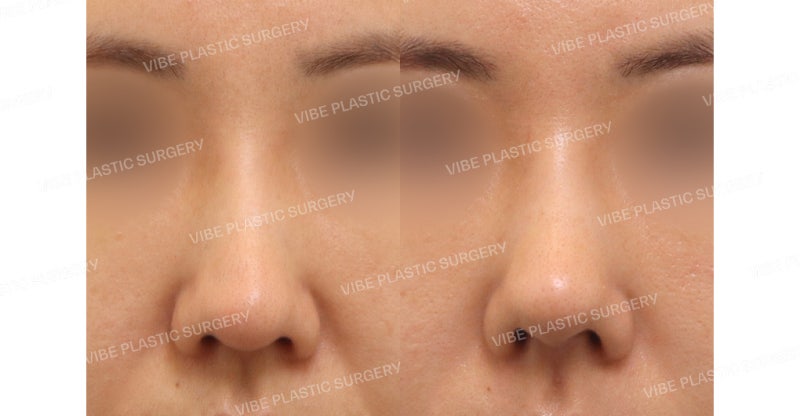
* Patient Information
# Female in her 30s
# Long nose appearance from the front makes her look older than her actual age
# Long, drooping, and bulbous nose tip
# Uneven bridge due to a dorsal hump
* Consultation
1. Her primary stressor was the long, drooping nose tip, which made her look older.
2. She also wanted to improve the uneven side profile caused by the dorsal hump.
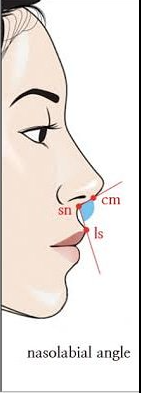
3. The plan was to create a shorter nose without making it look ‘upturned.’ Specifically, we aimed to correct the nasolabial angle by improving the retracted columella (columellar strut/shaping).
4. Since her natural bridge height was sufficient, we planned for a no-implant rhinoplasty.
* Surgical Plan
1. Bridge Rhinoplasty
- Dorsal hump correction
- No-implant
2. Tip Rhinoplasty
- Septal cartilage: Septal extension graft
- Columellar shaping: Nasolabial angle improvement
- Ear cartilage: Onlay graft
- Bulbous nose correction
* Post-operative Progress
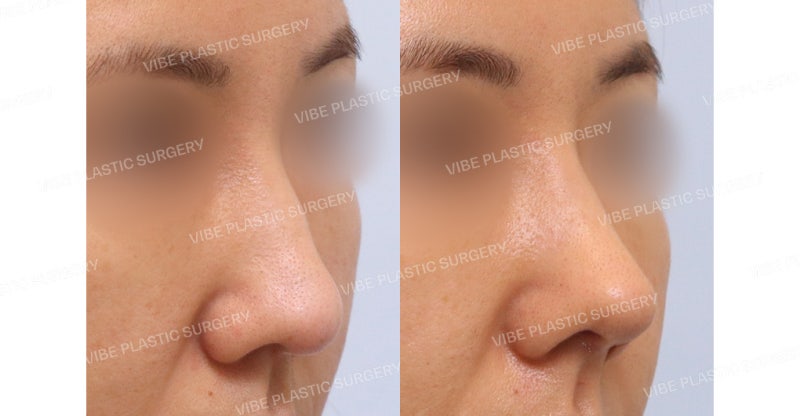
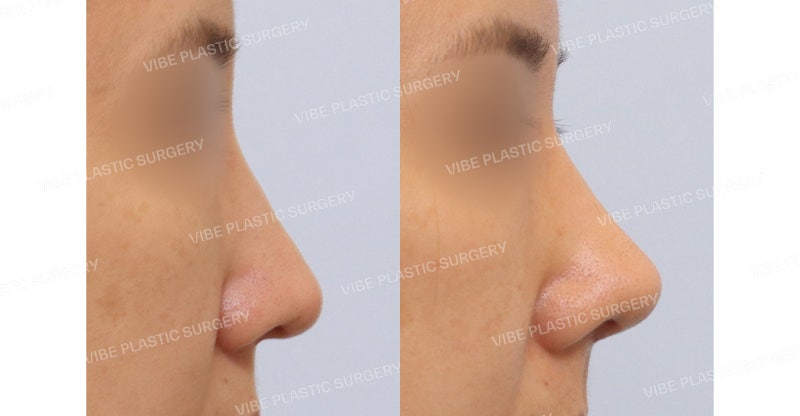
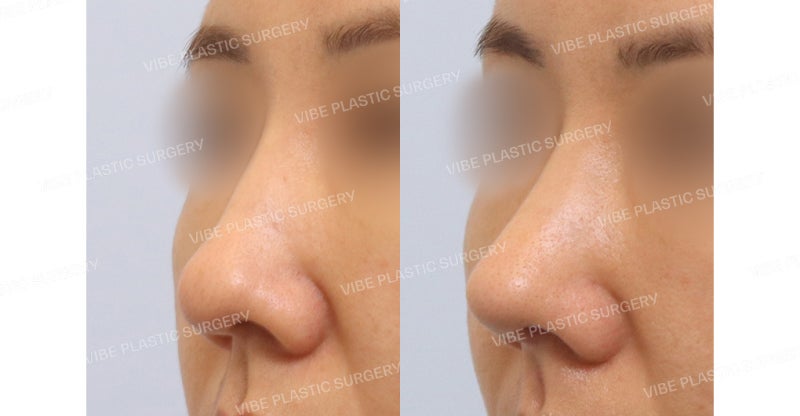
1. Following the procedure, a natural yet defined nose tip was achieved without excessive nostril exposure, exactly as requested.
2. Before the surgery, the drooping tip made the columella appear retracted. By using the septal cartilage to bring out the columella, the nasolabial angle was restored, making the line from the nose to the philtrum much more sophisticated and beautiful.
3. Correcting the long, bulbous nose resulted in a refined look that suits her age perfectly, leading to high satisfaction. ^^
4. If the bridge is naturally high enough, a natural nose line can be achieved without the use of implants!!
Consultations and surgeries should be performed by a board-certified plastic surgeon!
Stay healthy and beautiful today :)
Right Thought, Right Plastic Surgery – Dr. Yu Young-moon
Complications and side effects such as bleeding, inflammation, infection, and asymmetry may occur after surgery and vary by individual; careful attention is required.
Frequently Asked Questions
In what cases is non-implant rhinoplasty suitable?
It is suitable when the bridge of the nose is sufficiently high. In the case study, the nasal bridge was not low, allowing for hump correction and tip rhinoplasty without implants to create a natural nose line.
Can a long nose and a hooked nose be corrected with non-implant rhinoplasty?
Yes, it is possible. In the case study, the unevenness caused by a long nose and a hooked nose was corrected using septal cartilage and ear cartilage, and the nasolabial angle was improved through columella plasty to complete a sophisticated nose line.
What materials are used in non-implant rhinoplasty?
Autologous cartilage is mainly used. In the case study, tip rhinoplasty was performed using septal extension graft with septal cartilage and overlapping graft with ear cartilage.
What is columella plasty and what are its effects?
Columella plasty is a surgery that corrects the nasolabial angle by improving a retracted columella. This can make the line connecting the nose to the philtrum more refined and beautiful.
Are there any side effects after non-implant rhinoplasty?
As with all surgeries, complications and side effects such as bleeding, inflammation, infection, and asymmetry can occur, and these may vary depending on the individual, so caution is required.