2026-05-25
Achieving a Sophisticated Look with Bulbous Nose Rhinoplasty :D
A case study of a 20-year-old female who achieved a refined and sophisticated look through bulbous nose correction and bridge enhancement using silicone and septal cartilage.
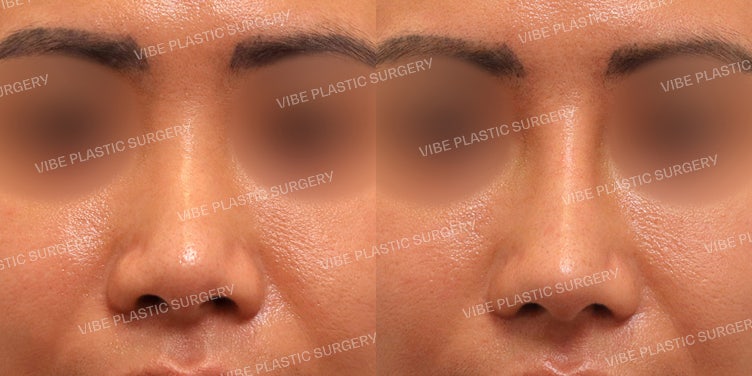
* Basic Information
# Female in her 20s
# Low bridge and blunt, bulbous nose tip
* Consultation
# The patient desired improvement for her low nasal bridge and blunt nose tip.
# Pre-operative CT scans showed a straight septum with sufficient size. We decided to raise the nose tip using a septal extension graft and elevate the bridge using a silicone implant.
# Since raising the nose tip alone would sufficiently improve the appearance of the wide alae, we decided not to perform an alar reduction.
* Surgical Plan
# Bridge Rhinoplasty (Silicone Implant)
# Tip Rhinoplasty (Bulbous Nose Correction)
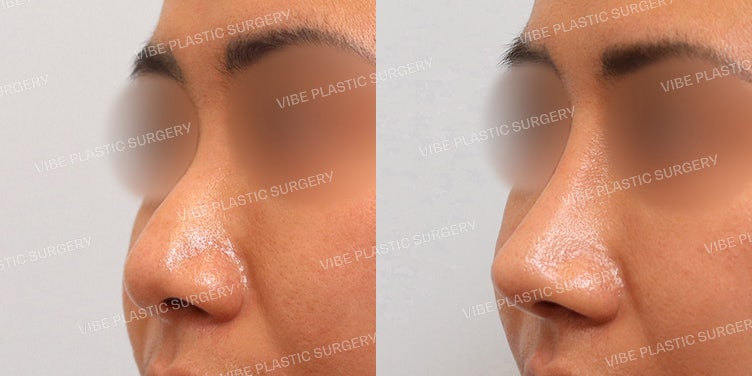
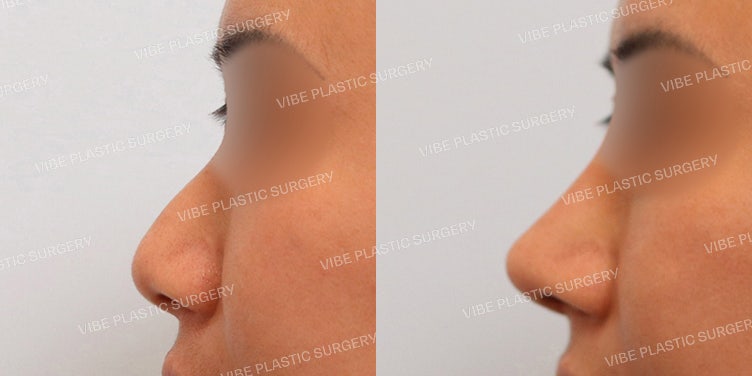
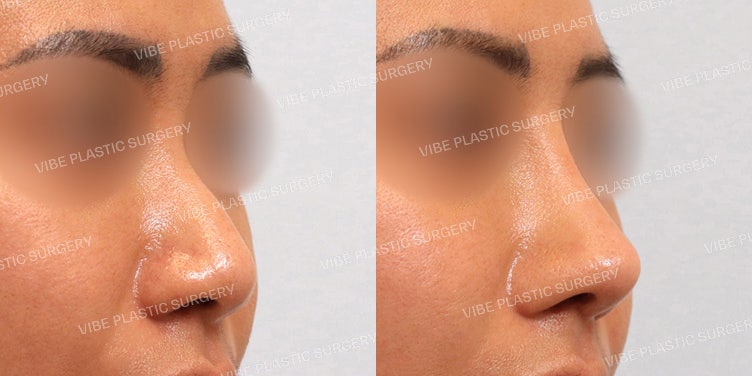
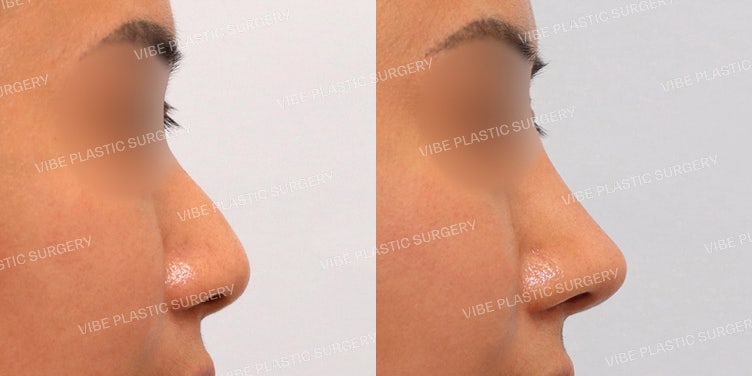
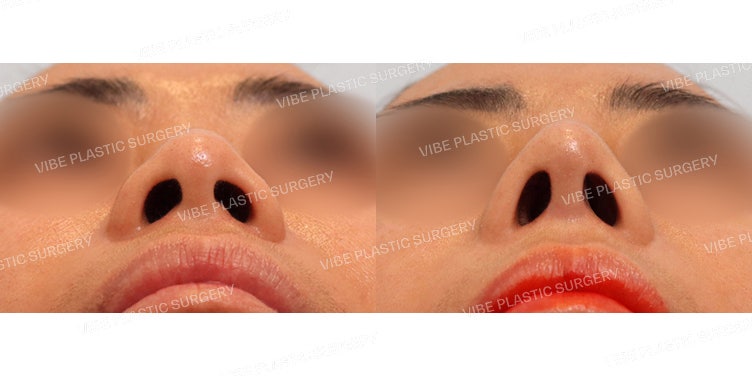
* Post-operative Progress
# There are various types of bulbous noses: 1. Thick skin, 2. Thick soft tissue (subcutaneous fat, etc.), 3. Spread and wide cartilage. Since these factors usually occur in combination, it is best to correct each factor appropriately. This involves sculpting the skin and soft tissue to be thinner and refining the cartilage to create a sleek shape.
# We achieved an ideal tip angle. The nasolabial angle must be well-defined for the nose tip to look much sharper. The importance of the nasolabial angle cannot be overemphasized!
# Now that the bulbous nose has been corrected, her overall impression has transformed into a very sophisticated one!
Consultations and surgeries should be performed by a board-certified plastic surgeon!
The VIBE that comes from rich experience.
Dr. Yoo Young-moon, Representative Director of Vibe Plastic Surgery
Complications and side effects such as bleeding, inflammation, infection, and asymmetry may occur after surgery depending on the individual, and caution is required.
Frequently Asked Questions
When can one consider a bulbous nose correction?
Bulbous nose correction can be considered when the bridge of the nose is low and the tip of the nose is blunt, or when the tip of the nose is wide, making the impression dull. Correction is possible for various types of bulbous noses, especially when the skin is thick, there is a lot of soft tissue, or the cartilage is widely spread.
Should nostril reduction be performed together with bulbous nose correction?
It is not always necessary to do so. Sometimes, simply raising the tip of the nose can sufficiently improve wide nostrils, making nostril reduction unnecessary. This can vary depending on the individual's nose shape and surgical plan.
What materials are mainly used for bulbous nose correction?
In this case, a silicone implant was used for the nasal bridge augmentation, and the nasal tip was raised using septal extension grafting for the tip correction. The materials can vary depending on the individual's nose condition and desired results.
Is the angle of the nasal tip important after bulbous nose correction?
Yes, the angle of the nasal tip is very important. Especially, an ideal nasolabial angle (the angle formed by the nose and lips) must be achieved to make the nasal tip appear much sharper and contribute to completing an overall sophisticated impression.
What types of bulbous noses are effective for bulbous nose correction?
Bulbous nose correction is effective for various types of bulbous noses, including cases where the skin is thick, the soft tissue (subcutaneous fat, etc.) is thick, or the cartilage is spread and wide. By appropriately correcting these complex factors, a sharp nose shape can be created.