2026-05-25
Bulbous Nose Rhinoplasty
A case study of a female patient in her 30s who achieved a refined, sophisticated look through bulbous nose correction and hump removal.
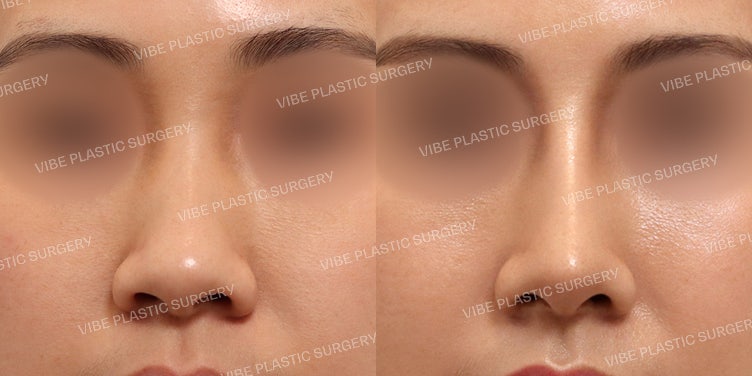
* Basic Information
- Female in her 30s
- Uneven nasal bridge due to a slight hump and low height
- Bulbous nasal tip
* Consultation
- The patient had an uneven nasal bridge caused by a hump and a relatively low bridge height. She also wanted to improve her blunt, bulbous nose tip.
- Pre-operative CT scans showed that the septal cartilage was straight and sufficient in size. Therefore, we decided to use a septal extension graft to raise the tip and a silicone implant to elevate the bridge.
- Since raising the nasal tip alone would sufficiently improve the appearance of the wide alae, we decided not to perform an alar reduction.
* Surgical Plan
- Bridge Rhinoplasty (Hump correction, silicone implant)
- Tip Rhinoplasty (Bulbous nose correction, septal extension graft)
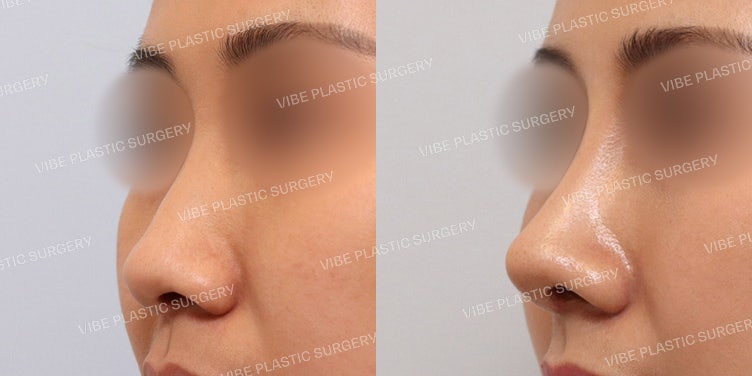
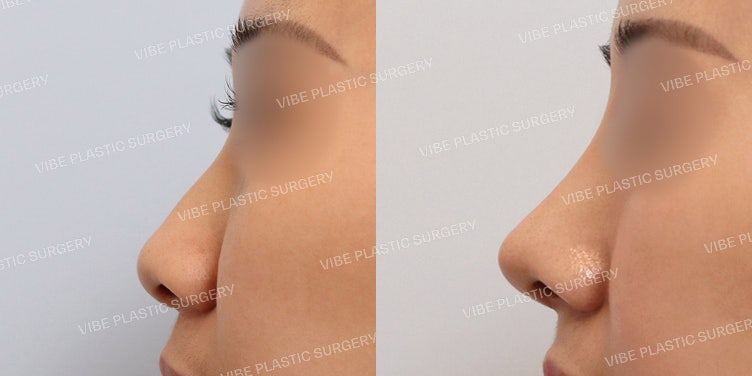
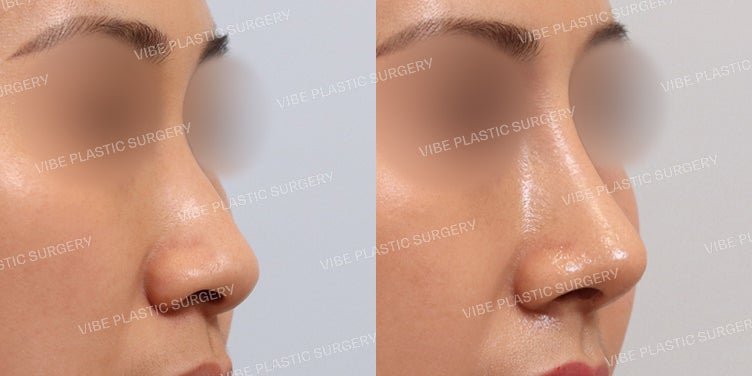
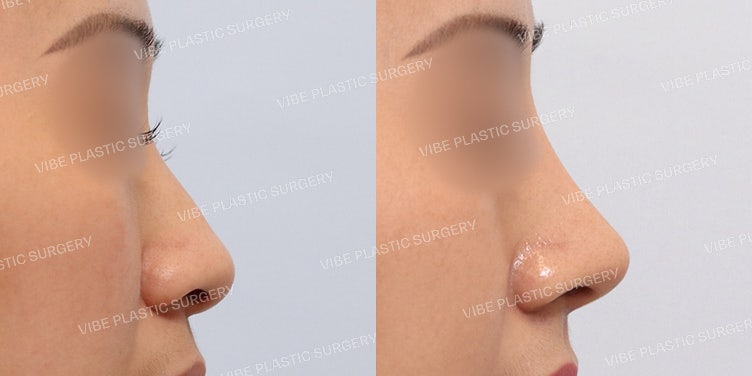
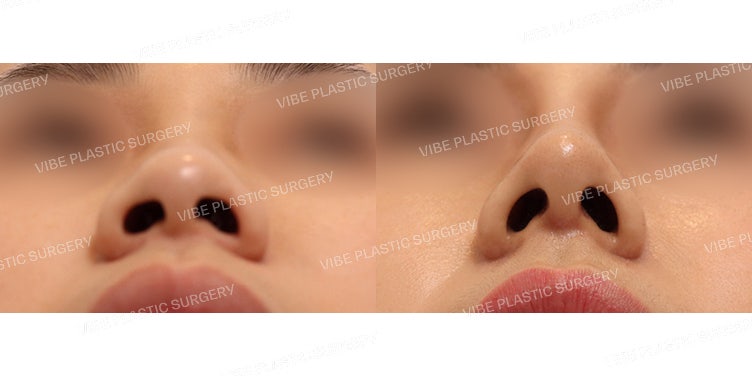
* Post-operative Progress
- There are various types of bulbous noses: 1. Thick skin, 2. Thick soft tissue (subcutaneous fat, etc.), 3. Splayed and wide cartilage. Since these factors usually occur in combination, it is best to correct each factor appropriately. This involves sculpting the skin and soft tissue to be thinner and refining the cartilage to create a sleek shape.
- An ideal nasal tip angle was achieved using septal cartilage and ear cartilage.
- With the bulbous nose corrected, her overall impression has transformed into a more sophisticated look!
Consultations and surgeries should be performed by a board-certified plastic surgeon!
VIBE stemming from rich experience.
Dr. Yoo Young-moon, Representative Director of Vibe Plastic Surgery
Complications and side effects such as bleeding, inflammation, infection, and asymmetry may occur after surgery depending on the individual, and caution is required.
Frequently Asked Questions
When is bulbous nose surgery considered?
Yes, bulbous nose surgery can be considered for improvement when the bridge of the nose is low and uneven due to a dorsal hump, and the nasal tip is blunt. Many people with these characteristics seek it for a more refined impression.
How are the nasal bridge and tip improved?
The nasal bridge can be raised using silicone implants along with dorsal hump correction. The nasal tip can be improved by elevating it through septal extension grafting.
Is alar reduction essential for bulbous nose surgery?
No, it is not essential. In some cases, simply raising the nasal tip can sufficiently improve wide nostrils, so alar reduction is not always performed together.
What are the main types of bulbous nose?
Bulbous nose can be broadly categorized into three types: cases with thick skin, cases with thick soft tissue such as subcutaneous fat, and cases where the cartilage is spread out and wide.
What cartilage is used for nasal tip surgery?
For nasal tip surgery, septal cartilage and ear cartilage can primarily be used. These cartilages are utilized to achieve the ideal nasal tip angle and shape.
What side effects can occur after bulbous nose surgery?
After surgery, complications and side effects such as bleeding, inflammation, infection, and asymmetry may occur. These can vary by individual, so caution is necessary.