2026-05-24
Primary Rhinoplasty with Autologous Rib Cartilage (Bulbous Nose, Droopy Tip, Nasolabial Angle Correction) / Why Choose Rib Cartilage for the First Surgery? by Dr. Young-moon Yoo, VIBE Plastic Surgery
Dr. Young-moon Yoo explains why autologous rib cartilage is increasingly chosen for primary rhinoplasty to correct bulbous tips, drooping, and nasolabial angles with long-lasting results.
Hello.
I am Dr. Young-moon Yoo, Director of VIBE Plastic Surgery.
Today,
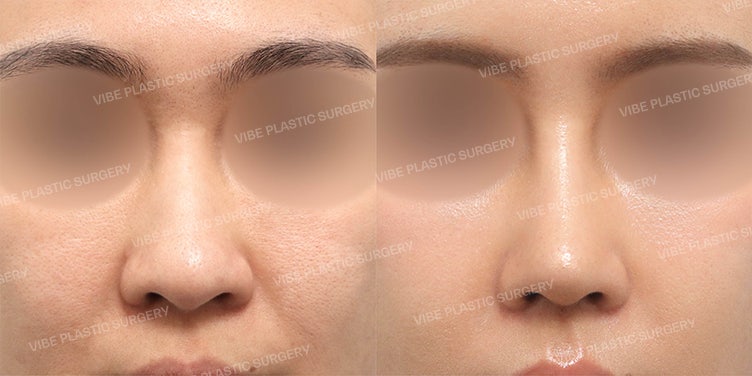
👉 I will introduce a ‘primary rhinoplasty’ case where autologous rib cartilage was used to correct a bulbous nose, a drooping nasal tip, and the nasolabial angle.
👉 I will also explain why more people are choosing autologous rib cartilage starting from their very first nose surgery these days.
👃 Concerns at the Time of Visit
For this patient, it was their first rhinoplasty, but rather than simply raising the bridge, their main concerns were a heavy and dull overall impression caused by:
A bulbous nose where the tip appeared round and blunt
A drooping nasal tip that looked pulled downward even when not smiling
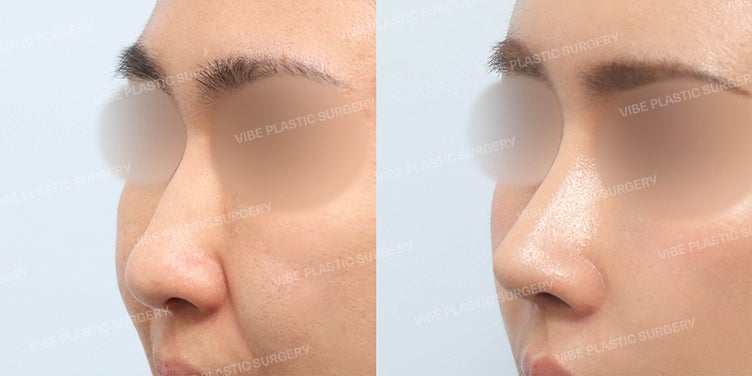
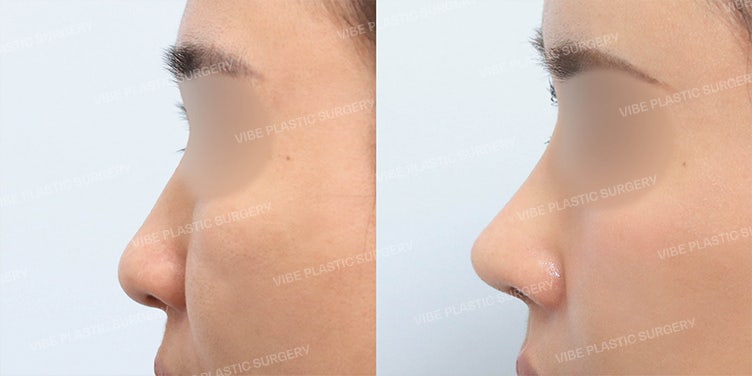
A lack of nasolabial angle volume, making the mouth appear protruded from the side profile
In cases like this where:
✔ The cartilage strength is weak
✔ The nasal tip structure needs to be firmly established
✔ A semi-permanent result is desired
We consider autologous rib cartilage even for a primary surgery.
❓ Why Choose Autologous Rib Cartilage for Primary Rhinoplasty?
In the past, there was a strong perception that rib cartilage rhinoplasty was a ‘method used only for revision surgeries.’
However, recently, the rate of choosing autologous rib cartilage for primary rhinoplasty has been steadily increasing.
The reasons are as follows:
🦴 Advantages of Autologous Rib Cartilage Rhinoplasty
① One’s Own Tissue → Low Risk of Rejection
Since autologous rib cartilage uses your own tissue, it offers significant safety benefits with a very low risk of:
Inflammation
Contracture
Long-term side effects
② Sufficient Strength to ‘Firmly’ Support the Nasal Tip
The biggest cause of a bulbous nose or a drooping tip is 👉 lack of strength in the nasal tip cartilage.
Autologous rib cartilage is much harder and more abundant than septal or ear cartilage, allowing it to:
Provide strong structural support for the nasal tip
Create a tip that is less likely to droop over time
③ Advantageous for Nasolabial Angle Correction
When the nasolabial angle is insufficient, there are limits to what simple cartilage layering can achieve.
Using autologous rib cartilage allows for a natural and definitive correction of the nasolabial angle, making the side profile look much more sophisticated.
④ For Those Who Want a ‘High-Completion Nose’ from the First Surgery
Rather than thinking, ‘I’ll do it simply since it’s my first time and fix it later...’ 👉 autologous rib cartilage is an excellent option for those who want to set the structure properly from the start for a long-lasting result.
🧠 Surgical Points – Key Aspects of This Case
In this primary rib cartilage rhinoplasty case, the surgery focused on:
✔ Forming a solid support structure for the nasal tip using autologous rib cartilage
✔ Refining the soft tissue and structures causing the bulbous appearance
✔ Lifting the drooping tip to complete a clean front and side profile
✔ Naturally improving the nasolabial angle to achieve a sophisticated side view
The goal was to create a balanced nasal line that is not excessive but looks harmonious from both the front and side.
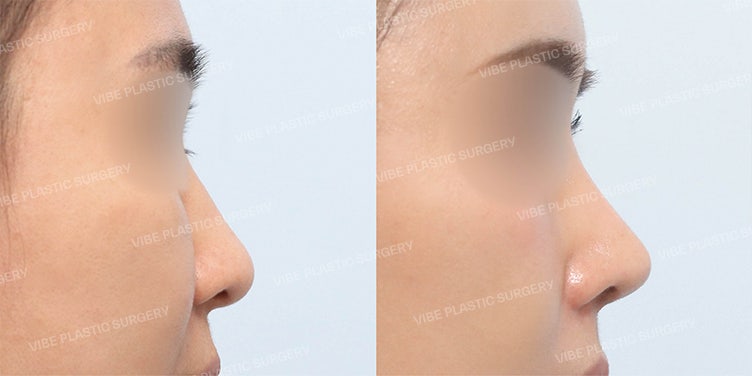
✨ Post-Surgical Changes
After the surgery:
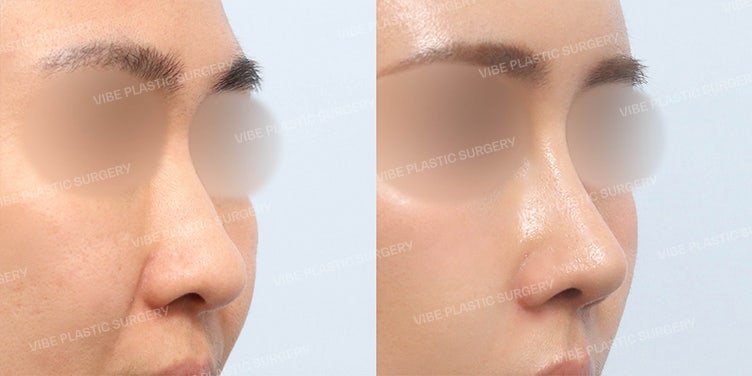
The blunt image of the bulbous nose was improved
The nasal tip became clearly defined, resolving the dull impression
The improved nasolabial angle made the mouth appear less protruded
The overall impression became much more sophisticated and three-dimensional. Most importantly, despite it being a primary surgery, the patient was highly satisfied because it 👉 ‘doesn’t look artificial’ and ‘there is less worry as time passes.’
📌 I Recommend Primary Rib Cartilage Rhinoplasty for Those Who:
✔ Have both a bulbous nose and a drooping nasal tip
✔ Have weak tip support that is likely to droop over time
✔ Definitely need nasolabial angle correction
✔ Want a semi-permanent result from their first surgery
💬 Closing Remarks
Autologous rib cartilage rhinoplasty is a method that fundamentally improves the structure of the nose.
At VIBE Plastic Surgery, even for a first surgery, we accurately analyze the individual’s nasal structure, skin thickness, and cartilage condition to select the most suitable materials and methods.
If you are concerned about a bulbous nose, drooping tip, or nasolabial angle issues, please ensure through a consultation whether the surgery can provide a structural solution rather than just a simple height increase.
Thank you.
Dr. Young-moon Yoo, Director of VIBE Plastic Surgery
Consultations and surgeries should be performed by a board-certified plastic surgeon!
The VIBE that comes from rich experience
Young-moon Yoo, Representative Director of VIBE Plastic Surgery
VIBE Plastic Surgery complies with medical laws. These before-and-after photos were taken under the same conditions with the patient’s consent. Complications and side effects such as bleeding, inflammation, infection, and asymmetry may occur after surgery depending on the individual, and caution is required.
Frequently Asked Questions
What is the reason for using autologous costal cartilage for the first rhinoplasty?
In the past, it was mainly used for revision surgeries, but recently, there has been an increasing trend to choose autologous costal cartilage for primary rhinoplasty to achieve highly satisfactory results. This is because it is safe as it is the patient's own tissue, provides strong support for the nasal tip, and is advantageous for correcting the nasolabial angle.
What are the advantages of autologous costal cartilage rhinoplasty?
Autologous costal cartilage is the patient's own tissue, so there is less risk of rejection or side effects. Additionally, it is stronger and more abundant than septal or ear cartilage, allowing for strong support of the nasal tip and creating a nose with less drooping.
Can autologous costal cartilage correct a bulbous nose or a drooping nasal tip?
Yes, it is possible. Autologous costal cartilage can compensate for the lack of strength in the nasal tip cartilage, which is a major cause of a bulbous nose or drooping nasal tip, by providing sufficient strength to firmly raise the nasal tip and create a clean line.
Is autologous costal cartilage effective for correcting the nasolabial angle?
Yes, it is effective. When the nasolabial angle is insufficient, simply adding cartilage has limitations, but using autologous costal cartilage can naturally and effectively correct the nasolabial angle, creating a sophisticated profile.
In what cases is autologous costal cartilage primary rhinoplasty recommended?
It is recommended when the cartilage strength is weak or the nasal tip structure needs to be firmly established, when a bulbous nose and drooping nasal tip are present, when nasolabial angle correction is needed, or when a semi-permanent result is desired from the first surgery.