2026-05-25
Natural Middle-Aged Eye Surgery!
A case study of a 60-year-old female patient who achieved a youthful, refreshed look through sub-brow lift and lower blepharoplasty.
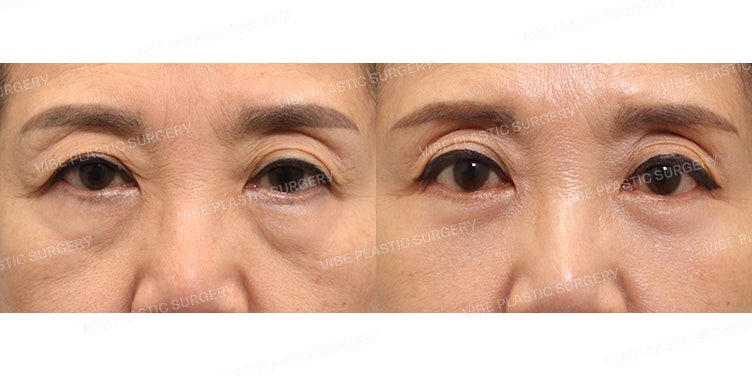
* Basic Information
# Female in her 60s
# Medical History: None
# Current Condition
- Habit of raising eyebrows due to sagging skin on the upper eyelids
- Tired appearance caused by bulging fat under the eyes
* Consultation
# The patient visited the clinic planning for surgery due to significant sagging of the upper eyelid skin, as well as bulging and wrinkles under the eyes.
# Caution is required because performing ‘upper blepharoplasty alone’ (a method of removing sagging skin while creating a double eyelid fold) can make the puffiness of the upper eyelid more prominent and may result in an unnatural or harsh-looking double eyelid.
# It was decided to address the sagging skin by lifting it from beneath the eyebrows.
# For the lower eyelids, it is crucial to reposition the bulging fat pockets and perform orbicularis oculi muscle suspension to prevent ectropion and ensure long-lasting results.
* Surgical Plan
# Sub-brow Lift
# Lower Blepharoplasty
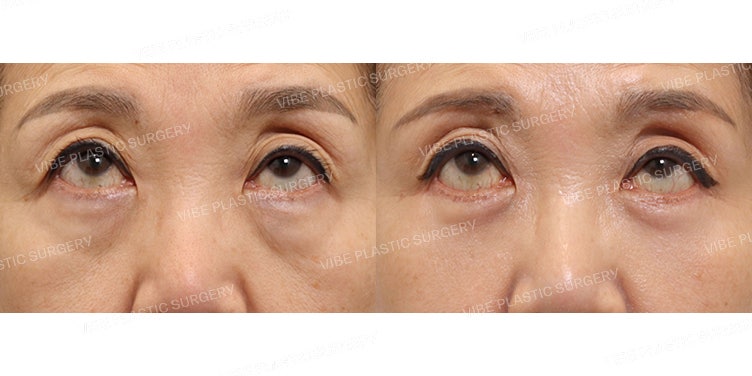
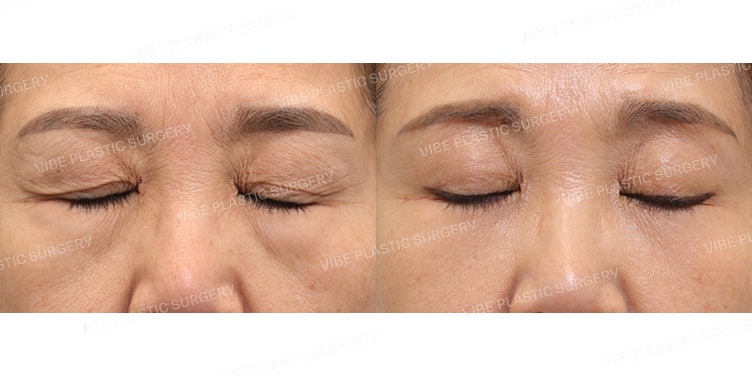
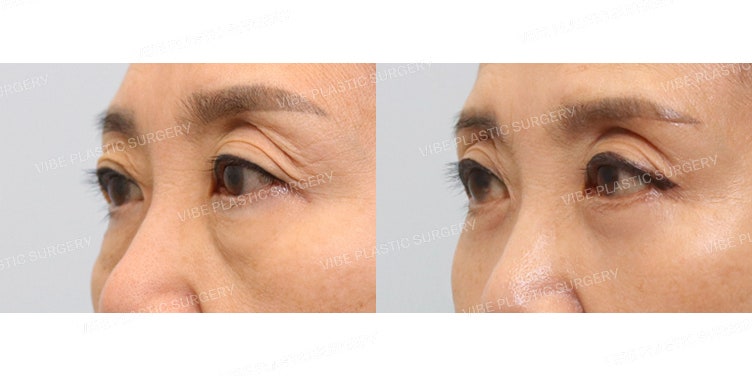
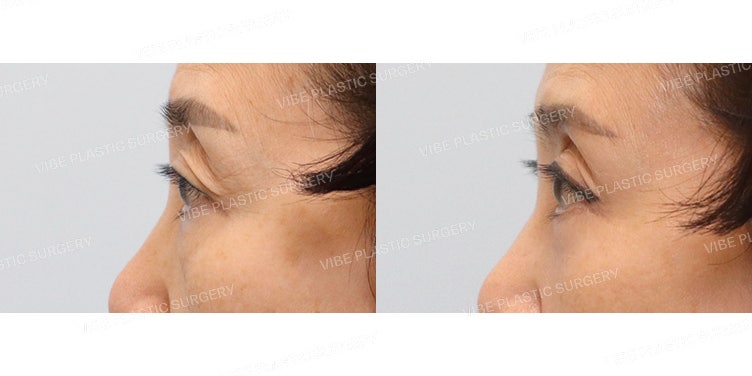
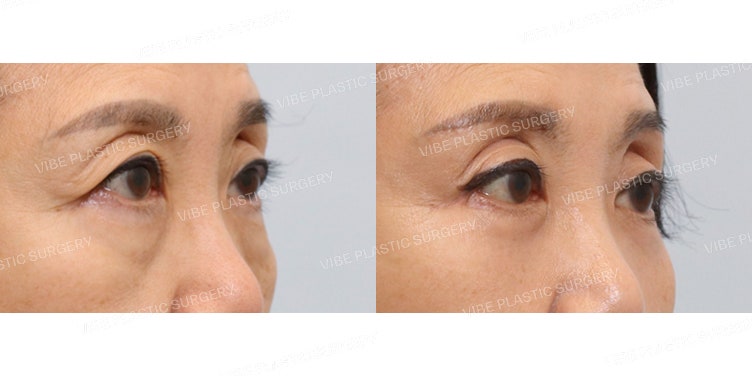
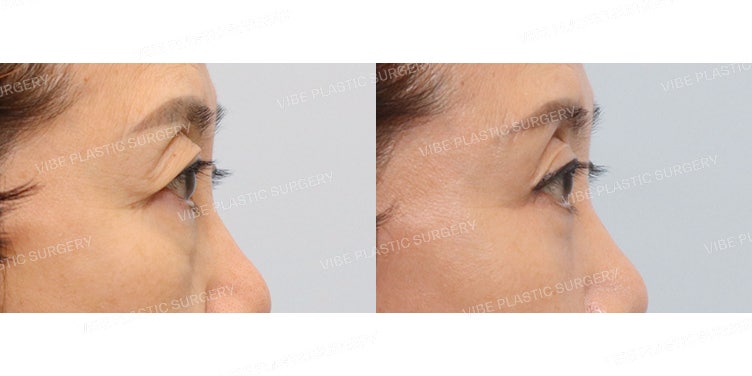
* Post-operative Progress
# We aimed to naturally resolve the sagging through a sub-brow lift.
# When performing a sub-brow lift, it is important not just to excise the skin, but to perform periosteal fixation to prevent re-sagging and ensure the effects last a long time.
# In the case of lower blepharoplasty, the orbicularis oculi muscle suspension must be performed securely to prevent complications like ectropion or easy recurrence.
# Additionally, creating a natural level of ‘aegyo-sal’ (lower lash line volume) during lower eyelid surgery can provide a more vibrant and youthful impression. :)
Consultations and surgeries should be performed by a board-certified plastic surgeon!
The VIBE that comes from rich experience
Dr. Young-moon Yoo, Representative Director of Vibe Plastic Surgery
Vibe Plastic Surgery complies with all medical laws. These before-and-after photos were taken under identical conditions with the patient’s consent. Complications and side effects such as bleeding, inflammation, infection, and asymmetry may occur depending on the individual, and caution is advised.
Frequently Asked Questions
Is it better to only perform upper blepharoplasty for middle-aged eye surgery?
No. If only upper blepharoplasty is performed, the puffiness of the eyelids can become more prominent, creating an unnatural or fierce-looking double eyelid, so caution is needed. It is better to consider other methods.
How can sagging eyelids be resolved?
Sagging eyelids can be resolved through sub-brow lift surgery, which pulls up the skin from under the eyebrow. This method helps achieve natural improvement.
What surgery improves under-eye fat and wrinkles?
Under-eye fat and wrinkles are improved with lower blepharoplasty. This procedure repositions bulging fat pockets and prevents ectropion through orbicularis oculi muscle suspension fixation, allowing the effects to last longer.
Is there a way to prevent re-sagging after a sub-brow lift?
Yes, there is. When performing a sub-brow lift, if periosteal fixation is performed along with skin excision, the effects can last longer without re-sagging.
How can ectropion be prevented after lower blepharoplasty?
During lower blepharoplasty, secure orbicularis oculi muscle suspension fixation must be performed to prevent the occurrence of ectropion and to stop easy recurrence.
Can aegyo-sal (under-eye fat rolls) also be created with under-eye surgery?
Yes, it is possible. If natural-looking aegyo-sal is created simultaneously with under-eye surgery, it can give a more lively and youthful impression.