2026-05-24
Correcting Pinched Nostrils (^ Shape): VIBE Plastic Surgery’s Alar Retraction Surgery Review (Scar-Free Solution)
Learn how VIBE Plastic Surgery corrects pinched nostrils and asymmetry using a scar-free composite graft technique for natural, immediate results.
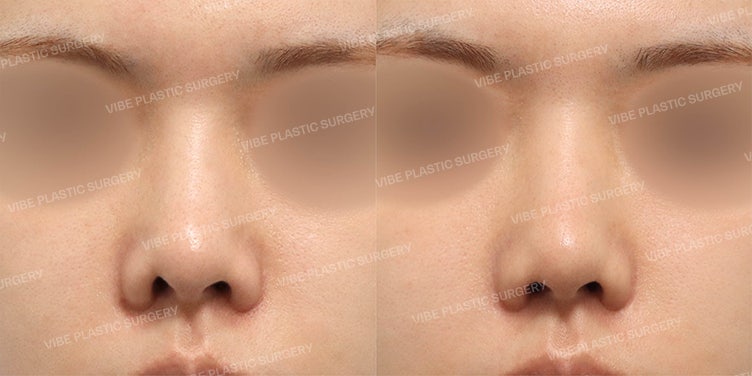
Hello, this is Dr. Yoo Young-moon, Director of VIBE Plastic Surgery.
Today, I would like to introduce a case of ‘Alar Retraction (Nostril Correction),’ a procedure many people are curious about.
Specifically, this is the story of a patient who suffered from ‘pinched nostrils that rose into an ^ shape.’
‘The issue of one nostril appearing pinched after rhinoplasty’ — A common but tricky case to correct.
The patient had already undergone rhinoplasty once, but after the surgery, the right nostril rose significantly, creating an asymmetrical ^ shape.
It was more noticeable when smiling.
It looked obviously ‘operated on’ from the front and side.
It was the first thing people noticed when the mask was removed.
This type of ‘pinched alar’ is difficult to resolve with simple skin correction alone; it requires a technique that reinforces the actual tissue to pull it down.
VIBE Plastic Surgery Alar Retraction: ‘Ear Cartilage + Skin’ Composite Graft
For this patient, we applied a composite graft method that transplants both ear cartilage and skin together.
This method is superior to simply inserting cartilage because:
✔ The shape descends more softly.
✔ The lines are smooth and natural.
✔ High tissue stability reduces the possibility of recurrence.
This is the best choice particularly in cases like ‘pinched nostrils’ where there is a lack of tissue.
Surgery performed via internal incision
Alar retraction is free from the concerns of scarring and recovery that many people worry about.
✔ Incision made only inside the nose
Because the outer skin is not touched, there are no visible scars after surgery.
✔ No external dressing at all
Since the surgery only adjusts functional structures, no external dressings like gauze or bandages are applied.
→ Therefore, you can return to school or work the very next day!
→ In fact, most patients say, ‘No one around me even noticed.’
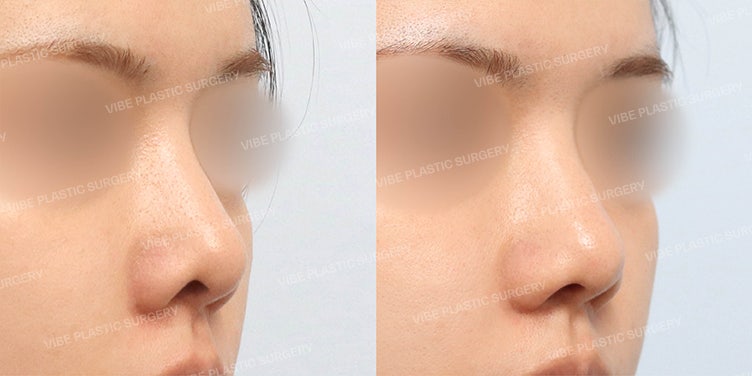
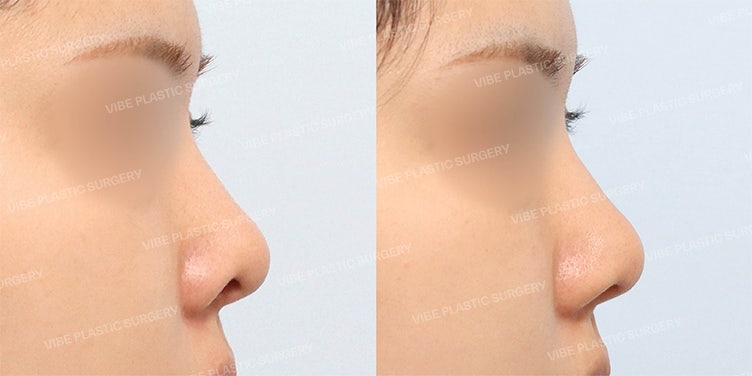
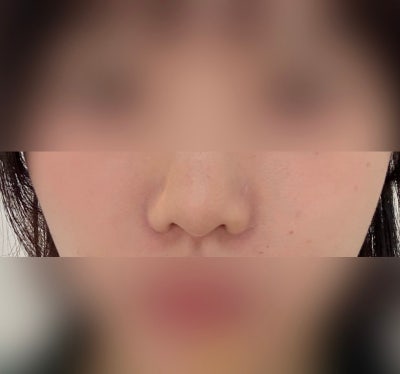
Why correcting pinched nostrils changes your impression
An ^ shaped nostril that rises upward is the most obvious sign of surgery when viewed from the front.
It makes the nose look asymmetrical.
The nostrils appear too exposed.
The overall nose line becomes unnatural.
However, by creating a natural line through alar retraction:
✔ Frontal stability increases.
✔ The tip of the nose looks less upturned.
✔ The overall impression becomes softer.
✔ The ‘surgical look’ disappears.
This was the reason for the high level of satisfaction for this patient as well.
Alar Retraction is VIBE Plastic Surgery’s signature procedure!!
VIBE Plastic Surgery has extensive experience in cases requiring fine adjustments, such as pinched nostrils, nostril asymmetry, and upturned noses.
Ear cartilage + skin composite graft method
Internal incision approach
Rapid recovery system
Recurrence prevention design
Based on these four pillars, we have developed ‘natural and discreet alar retraction’ into our signature surgery.
Summary
Pinched nostrils (^ shape) after rhinoplasty are difficult to correct but can be resolved with an ear cartilage + skin composite graft.
No scarring and no external dressing due to internal incision → extremely fast recovery.
The surgical look disappears, and the overall nose line becomes natural.
One of VIBE Plastic Surgery’s representative signature procedures.
If you are concerned about pinched nostrils, asymmetry, or an upturned nose, regain a natural line through an alar retraction consultation.
Consultation and surgery should be performed by a board-certified plastic surgeon!
VIBE comes from rich experience.
Yoo Young-moon, Representative Director of VIBE Plastic Surgery
VIBE Plastic Surgery complies with medical laws. These before and after photos were taken under the same conditions with the patient’s consent. Complications and side effects such as bleeding, inflammation, infection, and asymmetry may occur after surgery and may vary by individual, so caution is required.
Frequently Asked Questions
How do you correct pinched nostrils?
Correcting pinched nostrils is difficult with simple skin correction alone; it requires techniques that reinforce actual tissue. At Vibe Plastic Surgery, we correct them into a natural and stable shape using a composite tissue grafting method that involves transplanting both ear cartilage and skin. This is particularly effective when there is insufficient tissue.
Will there be scars after nostril lowering surgery?
No, there will be no visible scars after nostril lowering surgery. The surgery is performed with incisions only on the inside of the nose, so the outer skin is not touched. Therefore, you do not need to worry about visible scars after the surgery.
How long is the recovery period after nostril lowering surgery?
Recovery after nostril lowering surgery is very fast. No external dressing is required, so you can return to school or work immediately the day after surgery. Most patients recover so naturally that those around them do not even know they had surgery.
What are the advantages of nostril lowering surgery?
Nostril lowering surgery has several advantages. After the surgery, the nose line becomes smooth and natural, creating a sense of stability when viewed from the front, and the tip of the nose appears less upturned. Additionally, you can expect the surgical appearance to disappear and your overall impression to soften.
In what cases is nostril lowering surgery necessary?
Nostril lowering surgery is mainly needed to correct pinched nostrils or asymmetry. It is particularly effective in cases where the nostrils are pinched upwards in a '^' shape after nose surgery, or when only one nostril is asymmetrical, or for an upturned nose where the tip appears lifted, requiring fine adjustments.