2026-05-24
A beautiful, straight-line nose, just like Kim Ji-young from Heart Signal! (Autologous Costal Cartilage Rhinoplasty)
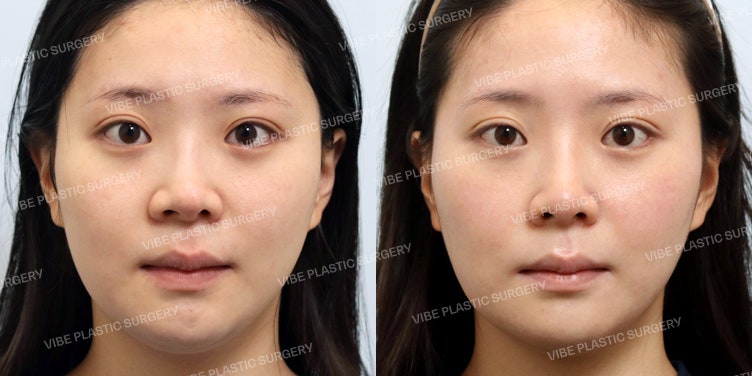
This 20s female, who previously had orthognathic surgery and ear cartilage rhinoplasty, sought correction for a deviated nasal tip. We planned to use autologous costal cartilage to straighten her nose and create a higher, straight-line profile, similar to Kim Ji-young from Heart Signal.
* Basic Information
# Female in her 20s
# Medical History: Orthognathic surgery / Rhinoplasty using ear cartilage
# Current Condition: Dissatisfied with nasal tip height and significant deviation ㅠ
* Consultation
# She had undergone rhinoplasty once before using ear cartilage after orthognathic surgery. She visited us because her nasal tip was severely deviated and she wanted correction.
# Due to her previous orthognathic surgery, the base of her nose was weakened, causing the nasal tip to lose its center and become deviated.
# We planned to correct the deviated nose using autologous costal cartilage and create a higher, straight-line profile.
# I thought I had seen her somewhere before, and doesn't she look exactly like Kim Ji-young from Heart Signal?! ^^


* Plan
# Nasal Bridge Rhinoplasty (Revision)
- Implant replacement
# Nasal Tip Rhinoplasty (Revision)
- Autologous costal cartilage
- Deviated nose correction


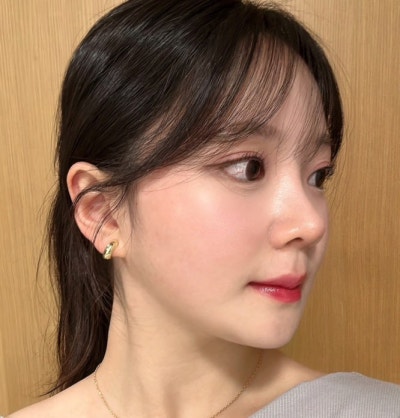


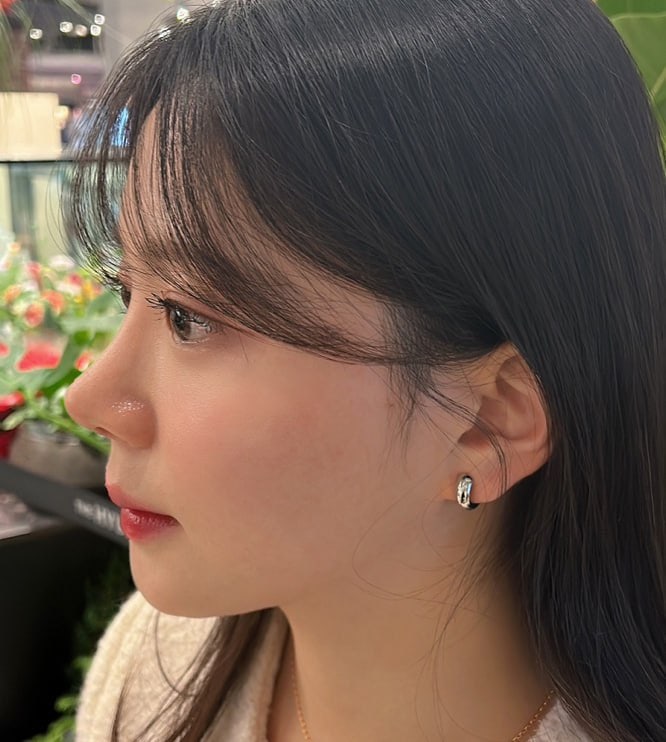
* Post-operative Progress
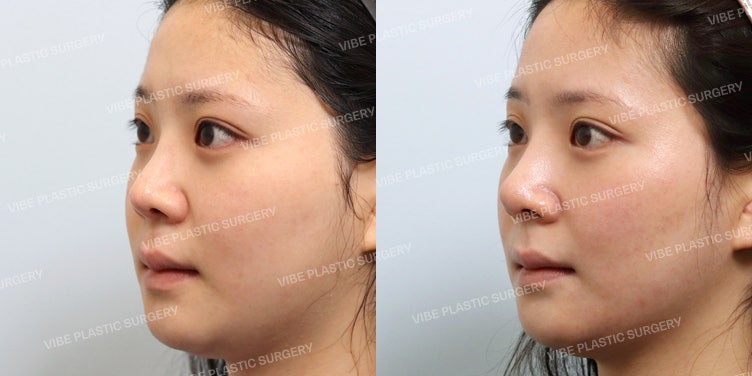
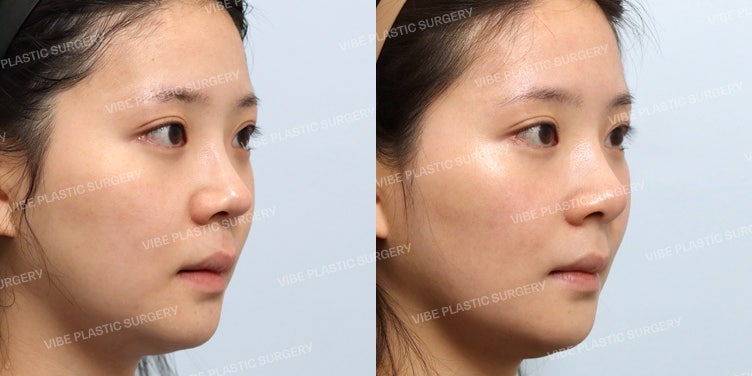
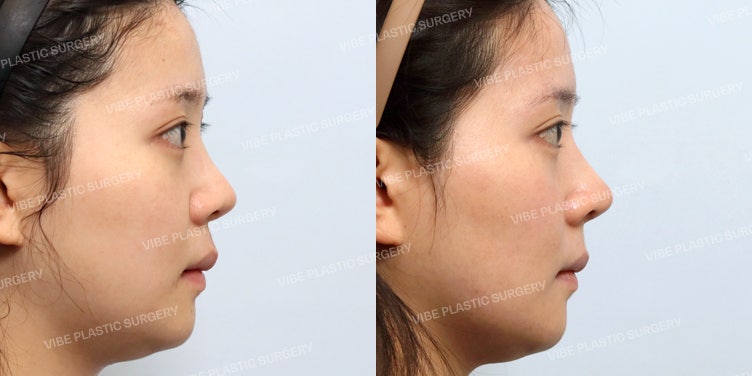
The right 7th costal cartilage was harvested and used. Since autologous costal cartilage is harvested using a short incision of about 2.5 to 3 cm, you don't need to worry much about scars. ^^ In cases like the one above, with a history of orthognathic surgery and significant deviation, it is important to use strong cartilage like autologous costal cartilage for reliable correction.
2. Deviated nose surgery is a difficult procedure, but patient satisfaction is generally high after the operation. This is because the deviated line seen from the front is resolved, creating a straight central axis.
3. If you are curious about deviated nose correction using autologous costal cartilage, please visit VIBE Plastic Surgery for a consultation!
Consultation and surgery should be performed by a board-certified plastic surgeon!
VIBE from extensive experience
Yoo Young-moon, Chief Director of VIBE Plastic Surgery
VIBE Plastic Surgery complies with medical law. The before and after photos were taken under the same conditions and with the patient's consent. Complications and side effects such as bleeding, inflammation, infection, and asymmetry may vary by individual after surgery and require caution.
Frequently Asked Questions
In what cases is autologous costal cartilage rhinoplasty considered?
Yes, autologous costal cartilage rhinoplasty is particularly considered when the nasal base has weakened due to a history of orthognathic surgery, or when the nose is severely deviated and requires strong support. It is also effective for revision surgeries where correction with existing cartilage is difficult.
Will there be a large scar after autologous costal cartilage harvesting?
No, you don't need to worry much about scars, as autologous costal cartilage is usually harvested using a short incision of about 2.5-3cm. It is performed with minimal incision.
Is the satisfaction level for deviated nose correction surgery high?
Yes, deviated nose surgery is considered difficult, but it is among the surgeries with high patient satisfaction. This is because the deviated line seen from the front is resolved, and the central axis is straightened.
Is there a special reason to use autologous costal cartilage for revision rhinoplasty?
Yes, autologous costal cartilage is strong and has excellent supportive power, making it particularly useful for revision rhinoplasty. Especially when the nasal tip is deviated due to a weakened nasal base after orthognathic surgery, it is important to use strong cartilage like autologous costal cartilage for definitive correction.
Can the nose become deviated after orthognathic surgery?
Yes, after orthognathic surgery, the nasal base can weaken, causing the nasal tip to lose its center and become deviated. In such cases, correction using autologous costal cartilage can be effective.