2026-05-24
Do Teenagers Need Incisional Ptosis Correction? | How to Create Permanent Double Eyelids for Thick, Fatty Eyes by Dr. Young-moon Yoo of Vibe Plastic Surgery
Learn why incisional ptosis correction is often necessary for teenagers with thick skin and fatty eyelids to prevent loosening and achieve a clear, permanent result.
Hello.
I am Dr. Young-moon Yoo, Director of Vibe Plastic Surgery.
When consulting for eye surgery, there is a question I hear most frequently from teenage students and their parents.
‘Since they are still young, shouldn’t we go with the non-incisional method?’ ‘Isn’t the incisional method something you do later in life?’
Many people believe that 👉 ‘Young age equals non-incisional method,’ but that is not actually the case.
Today, I will explain in detail why incisional ptosis correction was necessary through a case study of a teenager with ‘very thick skin, high fat content, and sagging eyelids.’
🔎 Pre-operative Eye Condition
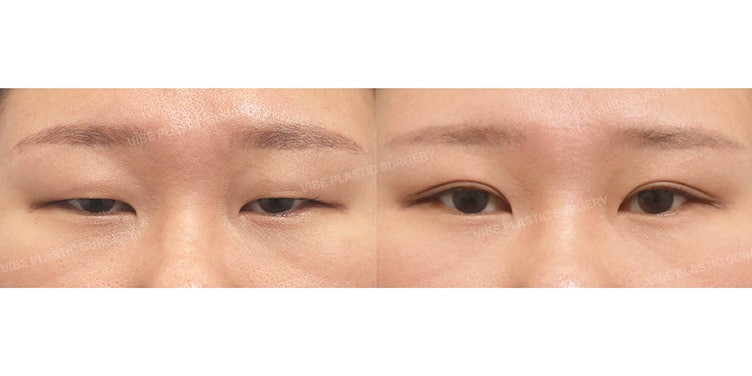
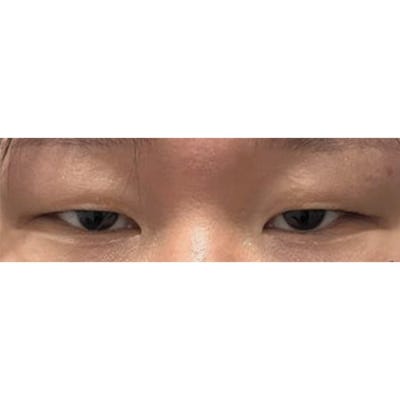
Although the patient was a female in her teens, her eye conditions were more complex than expected.
✔ Very thick eyelid skin
✔ High amount of eyelid fat
✔ Weak eye-opening strength (levator muscle weakness)
✔ Accompanied by eyelid sagging
While it may look like a simple monolid, these were actually 👉 conditions where the line is very likely to loosen.
In such cases, if a non-incisional method is used, there is a very high probability of revision surgery within a few months to a year.
❗ Non-incisional is not always better just because you are a teenager
Non-incisional methods (suture method, natural adhesion, etc.) have advantages such as:
✔ Almost no scarring
✔ Fast recovery
✔ Simple procedure
However, these become disadvantages for the following types of eyes:
- Eyes with thick skin
- Eyes with a lot of fat
- Eyes with sagging
- Eyes with weak opening strength
- Eyes where the line frequently loosens
In these cases, a pattern of ‘non-incisional method → loosening → revision surgery’ is likely to repeat.
For students in particular, revision surgery can be a significant psychological stressor.
That is why I believe it is more important to 👉 create a ‘structure that does not loosen’ from the very beginning.
🔧 Surgical Method
This case was performed using ‘Incisional Ptosis Correction + Fat Removal + Double Eyelid Fixation.’
Procedure Details:
1️⃣ Removal of thick skin and unnecessary fat through an incision
2️⃣ Strengthening the eye-opening muscle through ptosis correction
3️⃣ Improving sagging eyelids
4️⃣ Firmly fixing a clear line
This is not just a surgery to ‘create a line,’ but a surgery to 👉 improve the structure of the eye itself.
💡 Why Ptosis Correction was Essential
This patient had a habit of using her forehead muscles when opening her eyes.
In such cases, problems occur such as:
- A sleepy appearance
- Eyes looking smaller
- Double eyelid line being covered
- Easy loosening of the fold
After Ptosis Correction:
✔ Improved eye-opening strength
✔ Clearer pupil exposure
✔ Improved sleepy appearance
✔ Reduced risk of line loosening
✔ The entire impression becomes vivid
In short, it is a surgery that improves both function and aesthetics simultaneously.
✨ Post-operative Changes
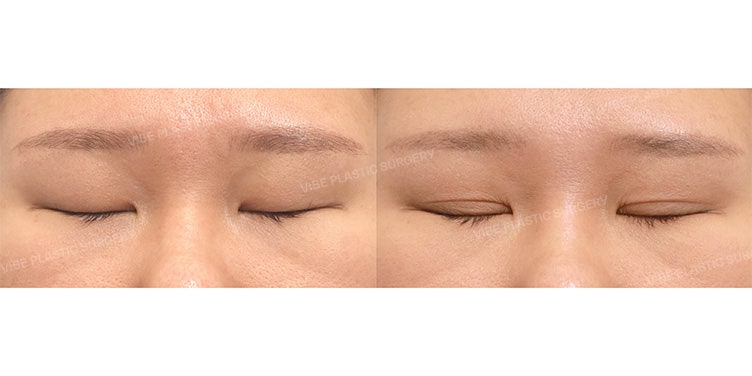
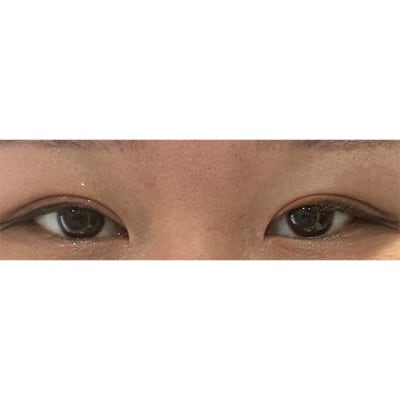
✔ From stuffy eyes → to cool and clear eyes
✔ From thick eyelids → to a slim line
✔ From a sleepy look → to vibrant eyes
✔ Stable double eyelids with no worry of loosening
This was a case where parental satisfaction was particularly high.
I often hear comments like, ‘I’m glad we went with the incision,’ or ‘The eyes look much larger and clearer.’
🔹 Cases where Incisional Ptosis Correction is needed even for teenagers
✔ Eyes with thick skin
✔ Eyes with a lot of fat
✔ Cases with eyelid sagging
✔ Sleepy eyes/weak eye-opening strength
✔ Cases where the suture method has loosened multiple times
✔ Those who want a definitive and long-lasting line
Under these conditions, the structure of the eye is a more important criterion for judgment than age.
📌 Dr. Young-moon Yoo’s Principles of Eye Surgery
Eye surgery is not about ‘which method is trendy,’ but rather 👉 ‘is this the right method for my eyes.’
Even for a teenager, if it is structurally necessary, the incisional method is the answer; if the conditions are right, the non-incisional method is the answer.
Vibe Plastic Surgery designs with the priority of a successful first surgery without revisions and stable results.
Frequently Asked Questions
Do teenagers also need incisional ptosis correction?
Yes, it may be necessary. Structural conditions of the eye, such as eyelid skin thickness, fat amount, eye-opening strength, and sagging, are more important than age, and in certain conditions, the incisional method is more suitable.
For which eyes is incisional ptosis correction recommended?
It is recommended for those with very thick skin, a lot of fat in the eyelids, accompanying eyelid sagging, or weak eye-opening strength. It is also considered for cases where non-incisional methods frequently failed to maintain the line.
How is incisional ptosis correction performed?
It is performed by incising to remove thick skin and unnecessary fat, strengthening the eye-opening muscles through ptosis correction. Subsequently, it improves sagging eyelids and firmly fixes a clear double eyelid line.
What changes can be expected after incisional ptosis correction?
Eye-opening strength improves, transforming a sleepy impression into a clear and lively one, and stuffy eyes become refreshed. Thick eyelids also become slimmer, and you can get a stable double eyelid line without worrying about it coming undone.
Is the non-incisional method always good for teenagers?
No. While the non-incisional method has the advantages of fewer scars and faster recovery, for eyes with thick skin, a lot of fat, and weak eye-opening strength, the line can easily come undone, increasing the likelihood of revision surgery.
Is ptosis correction only for cosmetic purposes?
No. Ptosis correction goes beyond simple cosmetic purposes; functional improvement is also important. It has functional effects such as strengthening eye-opening power to reduce the habit of using forehead muscles, improving a sleepy impression, and reducing line loosening.