2026-05-25
Revision Rhinoplasty for L-Shaped Implant!
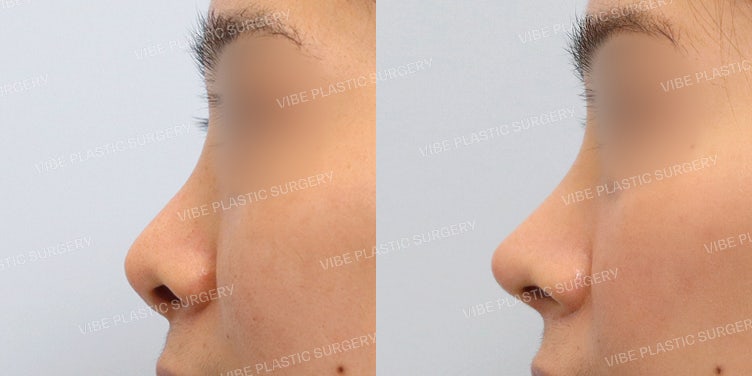
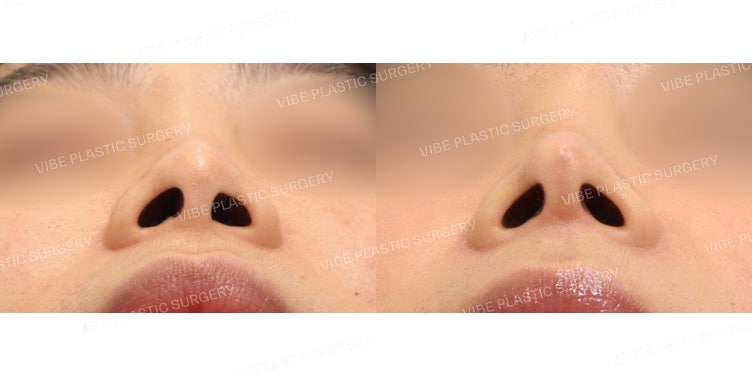
A case study of a female patient in her 30s undergoing revision rhinoplasty to correct a drooping columella and thinning skin caused by an old L-shaped silicone implant.
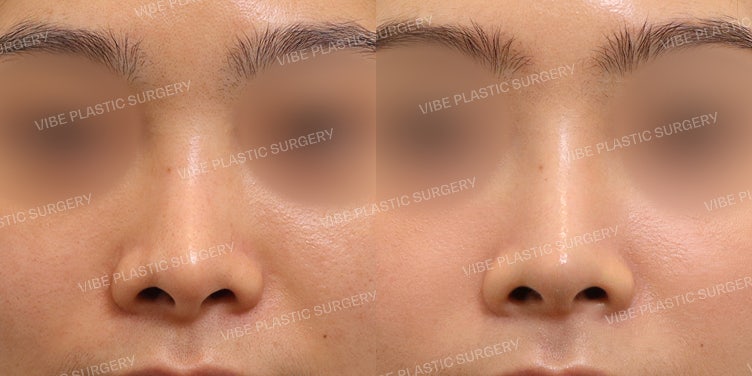
* Basic Information
# Female in her 30s
# History of L-shaped silicone implant surgery several years ago (+)
# The nasal tip is too bulbous and the columella is drooping, making the nostrils overly visible.
* Consultation
# A CT scan performed before surgery confirmed that the L-shaped implant extended long into the nasal tip.
# The implant was causing the nasal tip to look blunt and, in particular, making the columella appear saggy.
# Since the skin at the nasal tip had become very thin, we planned to reinforce the skin thickness using soft tissue and dermis in the thinned areas.
* Surgical Plan
# Nasal Tip Plasty (Reinforcing thinned skin, septal extension graft)
# Bridge Rhinoplasty (Implant replacement)
* Surgical Findings
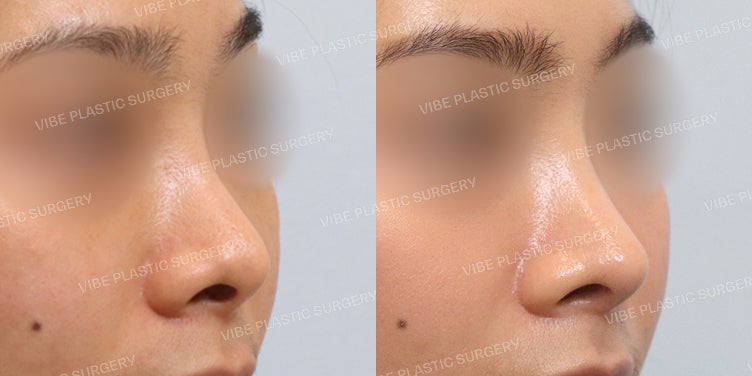
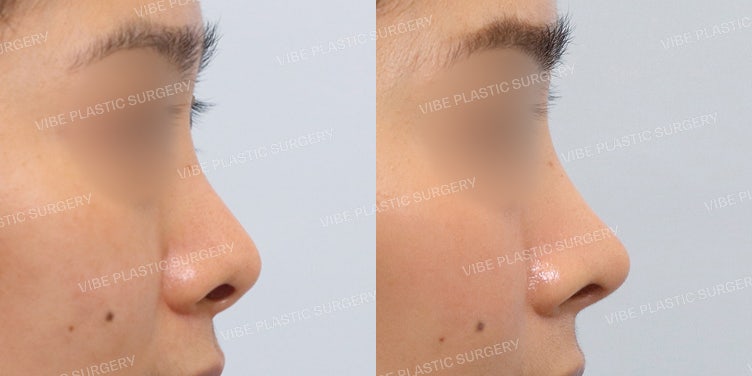
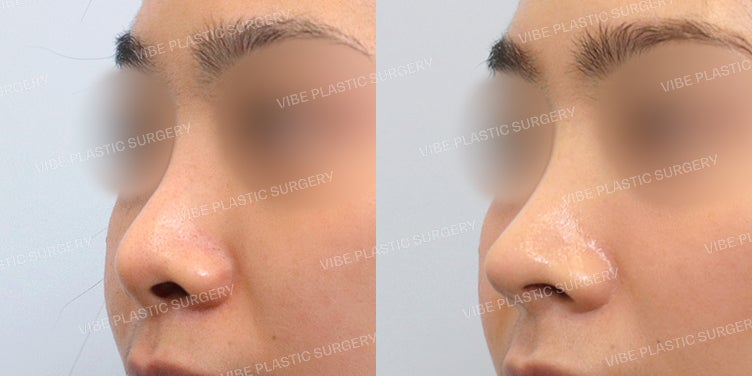
# After removing the implant while preserving as much skin as possible, the thinned skin was reinforced with cartilage and soft tissue.
# The nasal tip cartilage had been severely compressed and distorted by the implant. We focused on reconstructing it to its original state as much as possible.
# By correcting the drooping columella caused by the implant pressing down on the tip cartilage, the nostrils have also become less visible!
# When performing revision surgery, it is crucial to establish a perfect plan and prepare thoroughly beforehand. One must consider various variables in advance to respond flexibly to unexpected situations that may arise during surgery!
Consultations and surgeries should be performed by a board-certified plastic surgeon!
VIBE that comes from rich experience.
Dr. Young-moon Yu, Head Physician at VIBE Plastic Surgery
VIBE Plastic Surgery complies with medical laws. These before-and-after photos were taken under the same conditions with the patient’s consent. Complications and side effects such as bleeding, inflammation, infection, and asymmetry may occur after surgery and vary by individual, so caution is required.
Frequently Asked Questions
In what cases is L-implant nose revision surgery necessary?
L-implant nose revision surgery may be considered if the tip of the nose is blunt or the columella is drooping, causing the nostrils to be overly exposed, or if the skin at the tip of the nose has thinned due to a previous L-silicone implant. It is especially necessary when the implant extends too far into the nasal tip, pressing on and deforming the tip cartilage.
How is thinned skin at the nasal tip compensated for during nose revision surgery?
Thinned skin at the nasal tip can be improved during nose revision surgery by supplementing its thickness using soft tissue or dermis. This is planned after checking the skin condition through a CT scan before surgery.
Can nasal tip cartilage deformed by an L-implant be reconstructed?
Yes, it is possible. Nasal tip cartilage that has been severely compressed and distorted by an L-implant can be improved by focusing on reconstructing it to its original cartilage state as much as possible. This can also improve columella drooping.
Can nostril exposure be improved after nose revision surgery?
Yes, it can be improved. If the nasal tip cartilage was pressed down by an implant, causing the columella to appear droopy, reconstructing the nasal tip cartilage and improving the columella can reduce the visibility of the nostrils.
What is the most important aspect of nose revision surgery?
The most important aspect of nose revision surgery is to plan and prepare perfectly before the surgery. Various variables should be considered in advance to flexibly respond to unexpected situations during surgery.