2026-05-25
3rd Revision No-Implant Rhinoplasty!
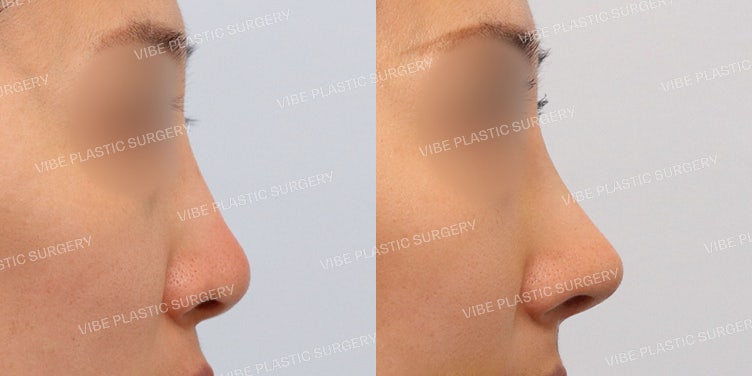
A case study of a 40-year-old female undergoing her third rhinoplasty using a no-implant technique to correct a blunt tip and achieve a refined straight-semi-curved profile.
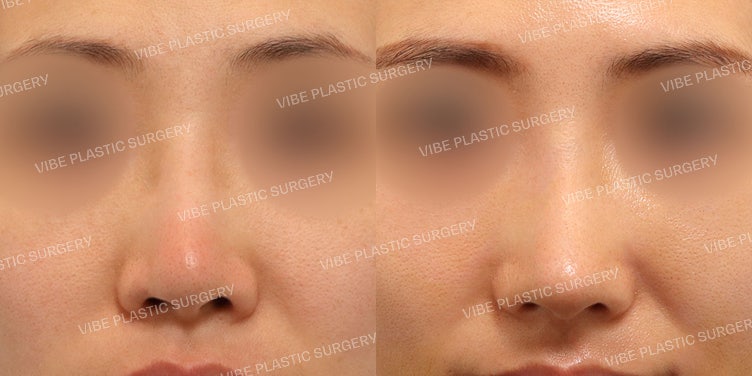
* Basic Information
# Female in her 40s
# Previously underwent two surgeries using hip dermis and ear cartilage years ago, but the materials were absorbed, leaving the nose blunt and undefined.
* Consultation
1. Despite two previous surgeries, the patient was dissatisfied because her nose remained low and blunt.
2. The plan was to improve the blunt nasal tip and create a ‘straight-semi-curved’ (Jik-ban) line to achieve a more sophisticated appearance.
* Surgical Plan
1. Bridge Rhinoplasty
- Osteotomy
- No-implant technique
2. Tip Rhinoplasty
- Septal extension graft
- Bulbous nose correction
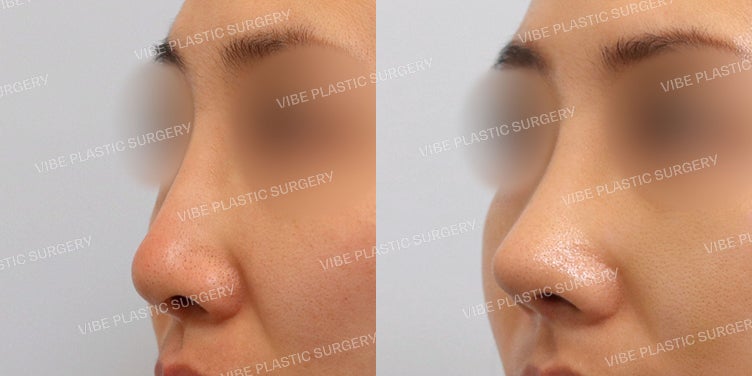
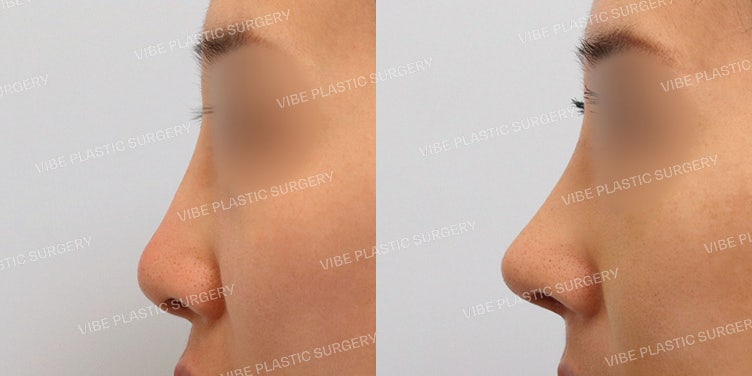
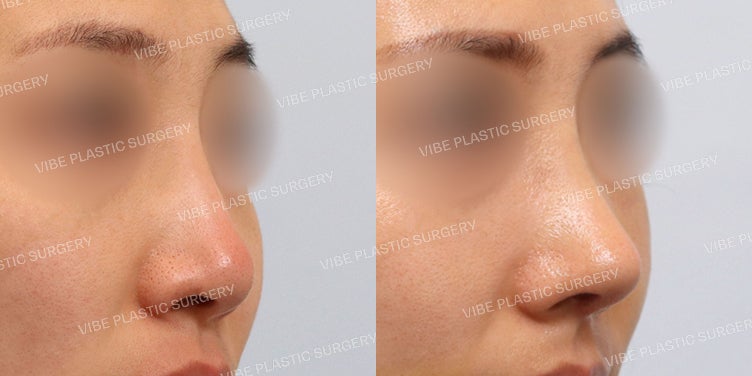
* Post-operative Progress
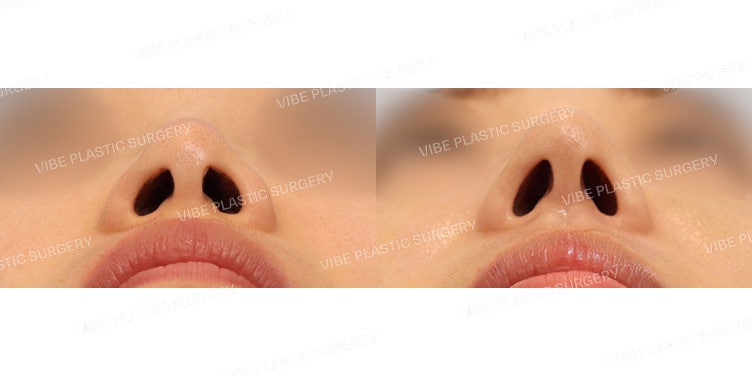
1. In the post-operative results, the bulbous nose was corrected, resulting in a natural yet feminine, well-defined nasal tip.
2. While hip dermis is a good material, it has limitations due to its high absorption rate.
3. If the bridge is not significantly low, a no-implant technique combined with tip surgery can produce highly satisfying results. :D
Always consult a board-certified plastic surgeon for consultations and surgery!
VIBE coming from extensive experience.
Vibe Plastic Surgery Clinic - Representative Director, Dr. Yoo Young-moon
Vibe Plastic Surgery complies with all medical laws. These before-and-after photos were taken under identical conditions with the patient’s consent. Complications and side effects such as bleeding, inflammation, infection, and asymmetry may occur after surgery and vary by individual; caution is advised.
Frequently Asked Questions
In what cases is non-implant rhinoplasty suitable?
Yes, if the bridge of the nose is not very low, satisfactory results can be achieved with non-implant rhinoplasty and tip plasty alone. In this case, even after previous surgery, the low and blunt nose was not improved, so a natural, straight-line nose was completed with a non-implant approach.
What are the characteristics of buttock dermis used in past rhinoplasty?
Buttock dermis is a good material, but it has limitations due to its high absorption rate. This patient also used buttock dermis in the past, but most of it was absorbed, making the nose blunt.
What was the specific plan for this third rhinoplasty?
This surgery involved osteotomy for the nasal bridge and proceeded without implants, while the tip plasty aimed to create a sophisticated, straight-line nose through septal extension grafting and correction of a bulbous tip.
What changes can be expected after non-implant rhinoplasty?
After surgery, a bulbous tip can be corrected, resulting in a natural yet feminine, sharp nasal tip. In this case, satisfactory changes were observed 2 months after surgery.
How can a blunt nasal tip be improved?
A blunt nasal tip can be improved through tip plasty, including correction of a bulbous tip. This patient achieved a sophisticated nasal tip line through septal extension grafting and bulbous tip correction.
What are the possible side effects after rhinoplasty?
After surgery, complications and side effects such as bleeding, inflammation, infection, and asymmetry may vary depending on the individual and require caution. It is important to consult sufficiently with a plastic surgeon.