2026-05-25
Bulbous Nose, Deviated Nose (Revision Rhinoplasty)
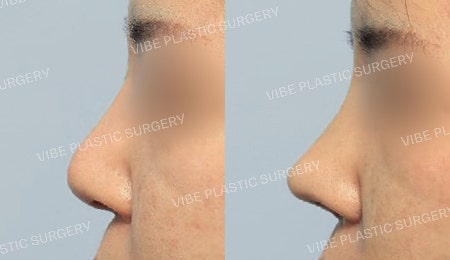
A revision case for a 20s female addressing a bulbous tip and deviated implant using donated rib cartilage for a more refined and straight profile.
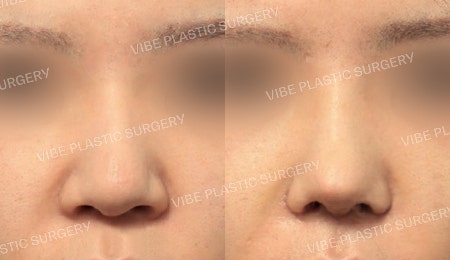
* Basic Information
# Female in her 20s
# Had rhinoplasty 6 years ago using septal cartilage
# The blunt, bulbous tip was not improved at all and seems to be getting ‘fatter’ over time :(
# The implant also appears deviated
* Consultation
# Although she underwent rhinoplasty using septal cartilage, she was dissatisfied with the tip becoming increasingly blunt and drooping over time.
# We planned to correct the drooping tip using donated rib cartilage and refine the ‘fat’ bulbous nose into a slimmer shape.
# Naturally, the deviated nose also needed to be straightened.
* Plan
# Tip Plasty (Correction of drooping tip & bulbous nose)
# Bridge Rhinoplasty (Implant replacement & deviation correction)
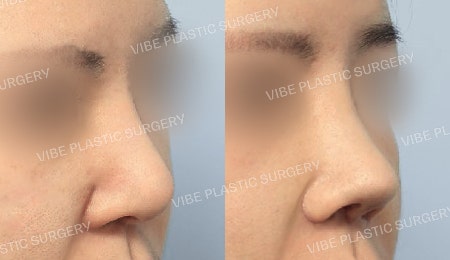
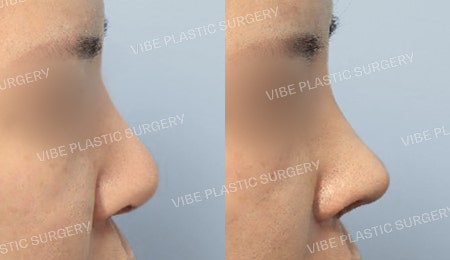
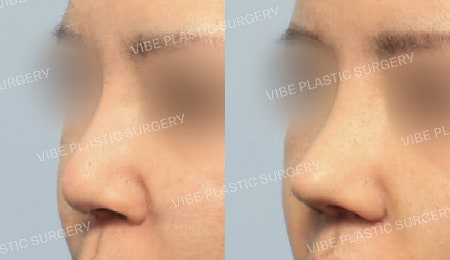
* Intraoperative Findings
# Scar tissue was severe, so it was cleanly removed, and the area was washed with a scar tissue inhibitor.
# The septum was reconstructed. A sturdy septal pillar was newly created using the existing septal cartilage and new donated rib cartilage.
# There are several types of bulbous noses: 1. Thick skin 2. Thick soft tissue (subcutaneous fat, etc.) 3. Splayed and wide cartilage. In revision cases like this, surgery is even more difficult because scar tissue is added to these three factors.
# Since these issues usually occur in combination, it is best to correct each factor appropriately. This involves sculpting the skin and soft tissue to make them thinner and creating a sharp shape while extending the cartilage.
* Postoperative Findings
# You can see that the deviated nose has been corrected, and the drooping tip and bulbous appearance have been sufficiently resolved.
# Correcting the bulbous nose gives a much more sophisticated impression ^^
# When performing revision surgery, it is crucial to establish a perfect plan and prepare thoroughly beforehand. One must consider various variables in advance to respond flexibly to unexpected situations that may arise during surgery!
Consultations and surgeries should be performed by a board-certified plastic surgeon!
Wishing you both health and beauty today :)
Right Thinking, Right Plastic Surgery - Dr. Yu Young-moon
Complications and side effects such as bleeding, inflammation, infection, and asymmetry may occur after surgery, and caution is required as individual results may vary.
Frequently Asked Questions
In what cases is revision surgery for a bulbous nose necessary?
Yes, it may be necessary. Revision surgery for a bulbous nose can be considered if the nasal tip remains blunt after a previous surgery, becomes more bulbous over time, or if the implant appears deviated. Revision surgery is particularly needed when problems with the skin, soft tissue, and cartilage, along with scar tissue, act in combination.
What materials are used in revision surgery for a deviated nose?
Yes, various materials can be used. In this case, a strong septal column was newly created using existing septal cartilage and new donated costal cartilage, and the deviated nose was corrected. Donated costal cartilage was also utilized to correct the drooping nasal tip.
Is revision nose surgery more difficult than the first surgery?
Yes, it is usually more difficult. In the case of revision surgery, in addition to skin thickness, soft tissue thickness, and cartilage spread, scar tissue from the previous surgery is present, which increases the difficulty of the operation. Thorough planning considering various variables is important.
What are the types of bulbous noses?
Yes, a bulbous nose can be divided into several types. These primarily include cases where the skin is thick, where soft tissue such as subcutaneous fat is thick, and where the cartilage is spread out and wide. These types can also appear in combination.
How long is the recovery period after revision nose surgery?
This post does not specifically mention the recovery period. However, a photo taken 1 month after surgery is presented, and caution is needed due to the possibility of complications such as bleeding, inflammation, and infection.
What is the most important consideration for revision nose surgery?
Yes, it is most important to plan and prepare perfectly before surgery. Since revision surgery can involve various variables, thorough prior preparation is essential to flexibly respond to unexpected situations.