2026-05-25
Contracted Nose, Deviated Nose, and Hump Nose (Revision Surgery)
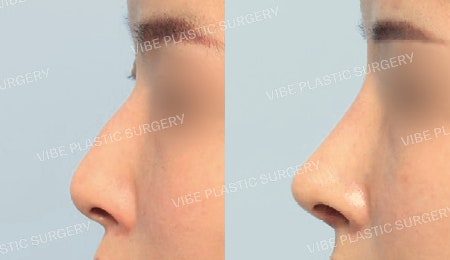
A case study of a 20-year-old female patient undergoing revision rhinoplasty to correct a persistent hump, nasal contraction, and deviation.
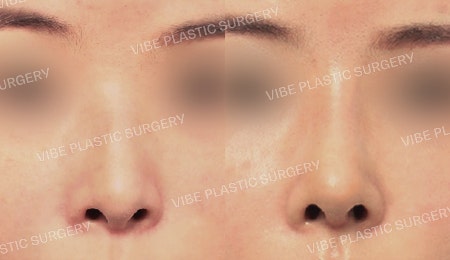
* Basic Information
# Female in her 20s
# Previously underwent rhinoplasty using the nasal septum, but the hump was not resolved, the nose appeared to be gradually turning upward (contracting), and it looked deviated to one side.
* Consultation
# The patient visited us because, despite having surgery using the nasal septum, over time: 1. The hump remained unresolved, 2. The nasal tip gradually turned upward, and 3. The nose began to deviate to one side.
# While the primary issue was that the initial surgery was performed incompletely, smoking also plays a significant role in such poor outcomes. Therefore, it is essential to quit smoking for at least two weeks before and after surgery, and it is highly important to avoid smoking thereafter as well.
* Surgical Plan
# Nasal Tip Plasty (Correction of deviated and contracted nose)
# Bridge Rhinoplasty (Hump correction)
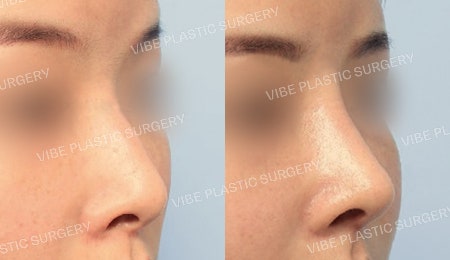
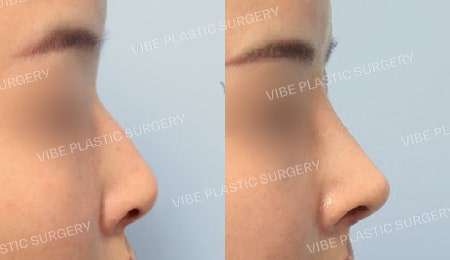
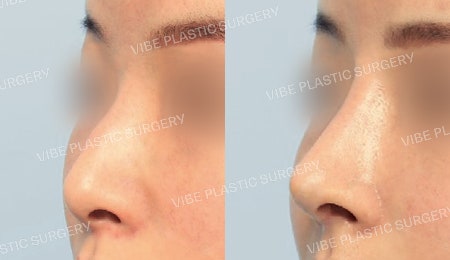
* Intraoperative Findings
# Severe scar tissue was present, which was cleanly removed, followed by irrigation with an anti-scarring agent. The soft tissues were sufficiently dissected to extend the shortened nasal tip.
# The remaining hump was further refined.
# The nasal septum was severely deviated, and the septal extension graft was weakly fixed to that area. This was the cause of the deviated nasal tip.
# The nasal septum was reconstructed. A sturdy septal pillar was newly created using the existing septal cartilage combined with new donated costal (rib) cartilage.
* Postoperative Findings
# You can see that the deviated nose has been corrected and the short nasal tip has been sufficiently extended!
# When performing revision surgery, it is crucial to plan and prepare perfectly beforehand. One must consider various variables in advance to flexibly handle unexpected situations that may arise during surgery!
Consultations and surgeries should be performed by a board-certified plastic surgeon!
Take care of both your health and beauty today :)
Right Mind, Right Plastic Surgery – Dr. Yu Young-moon
Complications and side effects such as bleeding, inflammation, infection, and asymmetry may occur after surgery depending on the individual, and caution is required.
Frequently Asked Questions
What problems can occur after septal rhinoplasty?
Yes, even after septal rhinoplasty, problems such as an unresolved dorsal hump, a gradually upturned nose tip, or a deviated nose to one side can occur. These primarily arise when the surgery itself is incompletely performed.
Does smoking affect the results of revision rhinoplasty?
Yes, smoking can adversely affect the results of revision rhinoplasty. Therefore, it is crucial to abstain from smoking for about two weeks before and after surgery, and the text emphasizes that avoiding smoking thereafter is also very important.
How are revision surgeries for contracted nose, deviated nose, and dorsal hump nose performed?
Revision surgeries for contracted nose, deviated nose, and dorsal hump nose are performed by correcting the deviated and contracted nose through tip plasty and refining the dorsal hump with bridge plasty. This may include removing severe scar tissue, extending a shortened nasal tip, and reconstructing the septum.
What materials can be used for septal reconstruction during revision rhinoplasty?
For septal reconstruction during revision rhinoplasty, a strong septal pillar can be created using existing septal cartilage along with new donated costal cartilage. This is an effective method when the existing septum is weak or deviated.
Why is thorough planning important for revision rhinoplasty?
Yes, it is very important to plan and prepare perfectly before revision rhinoplasty. Considering various potential variables in advance allows for flexible responses to unexpected situations during surgery, leading to successful results.