2026-05-25
Correction of Hump Nose and Bulbous Tip
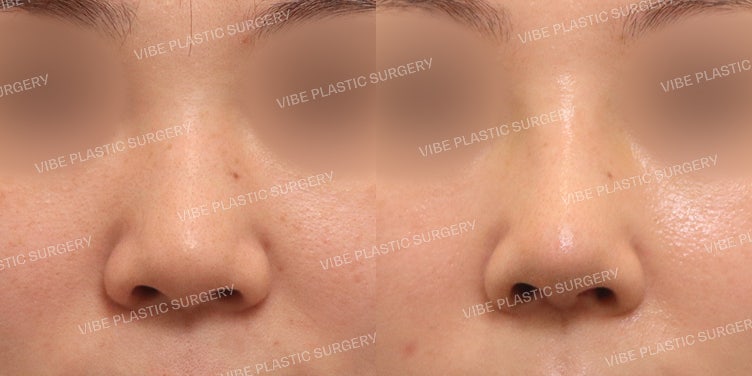
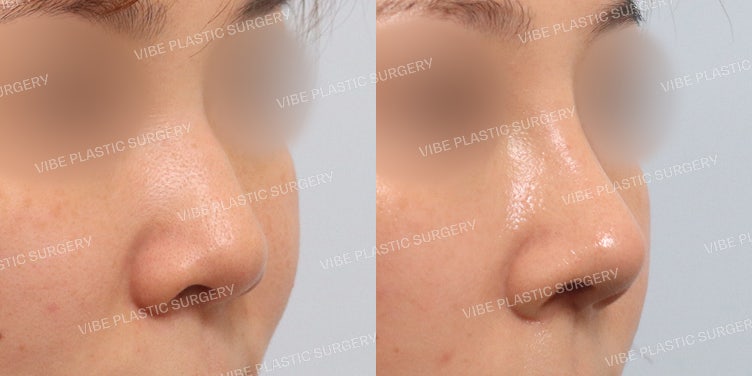
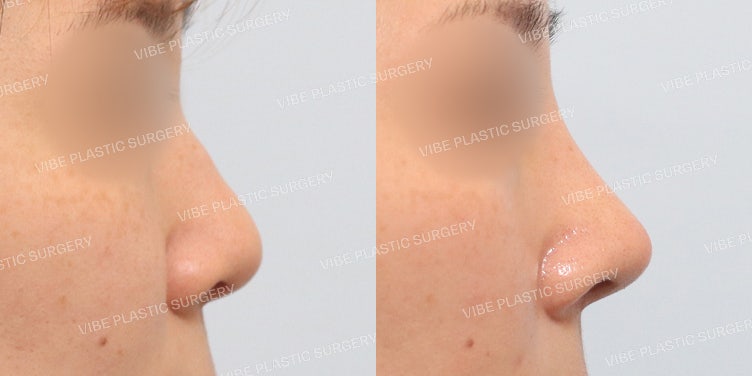
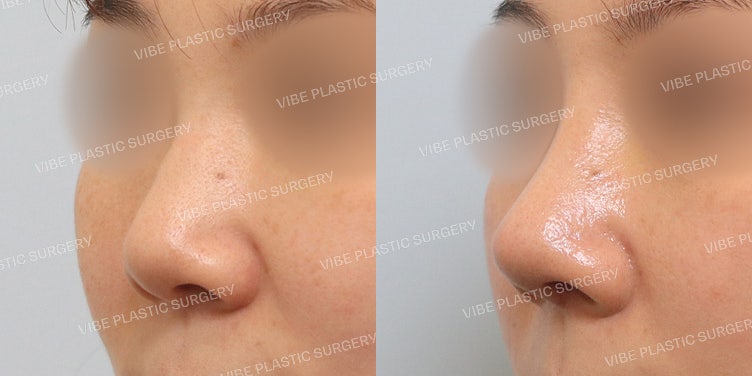
A case study of a female patient in her 30s who underwent rhinoplasty to correct a low, bumpy nasal bridge and a bulbous tip using septal and ear cartilage.
* Basic Information
- Female in her 30s
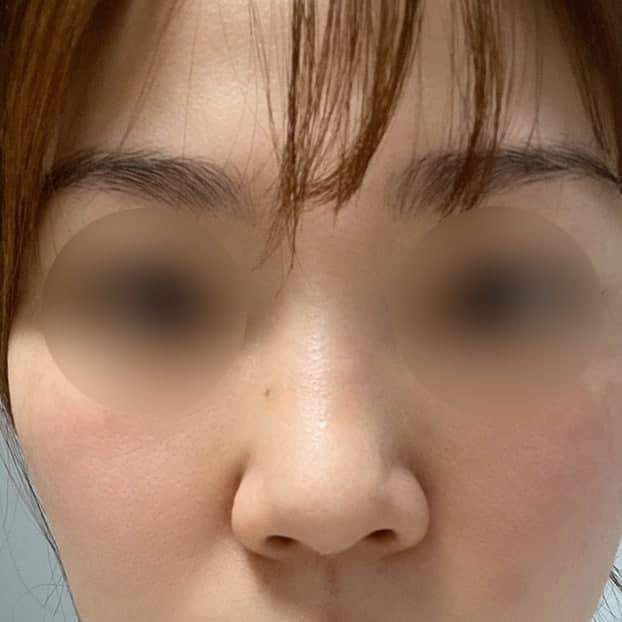
- Low nasal bridge with an uneven surface due to a hump
- Bulbous nasal tip
* Consultation
- The nasal bridge was low and appeared uneven due to a hump.
- The patient desired improvement for her blunt, bulbous tip.
- Pre-operative CT scans showed a straight septum of sufficient size. We decided to use a septal extension graft to elevate the tip and a silicone implant to raise the bridge.
* Surgical Plan
- Bridge Rhinoplasty (Hump correction, silicone implant)
- Tip Rhinoplasty (Septal cartilage: extension graft + Ear cartilage: onlay graft)
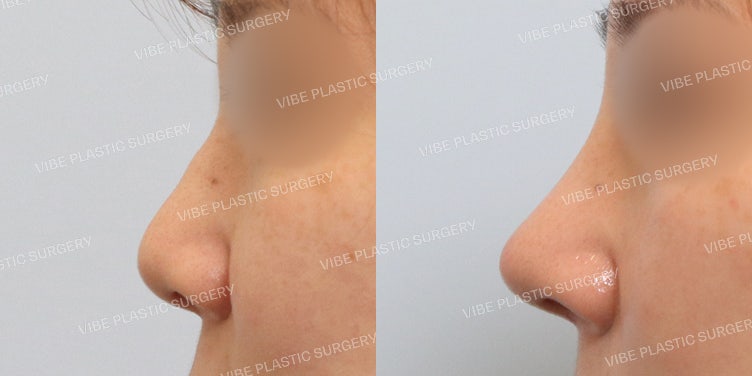
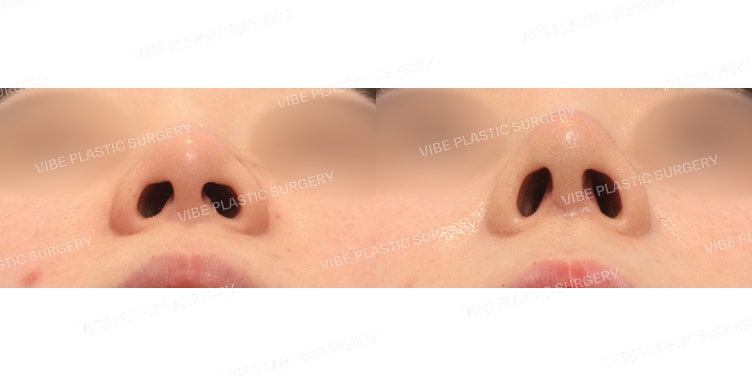
* Post-operative Progress
- An ideal tip angle was achieved using septal and ear cartilage.
- With the bulbous tip corrected, her overall impression has become much more sophisticated!
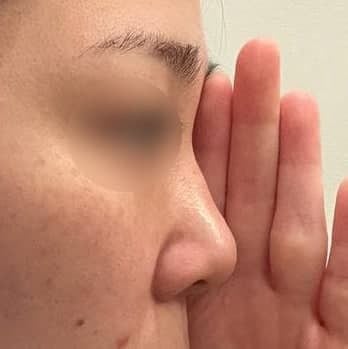
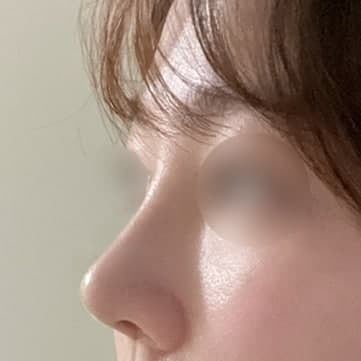

Always consult a board-certified plastic surgeon for your surgery!
The ‘VIBE’ that comes from extensive experience.
Dr. Yoo Young-moon, Representative Director of Vibe Plastic Surgery
Note: Complications and side effects such as bleeding, inflammation, infection, and asymmetry may occur after surgery depending on the individual, and caution is required.
Frequently Asked Questions
How is a hooked nose corrected?
A hooked nose refers to a nose with an uneven, protruding bridge. In this case, the surgical plan involved raising the low and uneven nasal bridge using a silicone implant and correcting the hook.
How is a bulbous nose corrected?
A bulbous nose refers to a nose with a blunt tip. In this case, the nasal tip was raised to an ideal angle and the bluntness corrected by using septal cartilage for extension grafting and ear cartilage for overlapping grafting.
What materials are used for rhinoplasty?
In this case, a silicone implant was used for the nasal bridge augmentation, and the patient's own septal cartilage and ear cartilage were harvested and used for the nasal tip augmentation.
When can I see changes after rhinoplasty?
Initial changes can be observed through photos taken approximately one month after surgery. In this case, it can be seen that the bulbous nose was corrected and the overall impression became more refined just one month after surgery.
Why is a CT scan necessary before rhinoplasty?
Yes, a CT scan before rhinoplasty is important for checking the condition of the septal cartilage and establishing an accurate surgical plan. In this case, the size and straightness of the septum were also determined through CT.