2026-05-24
Escape the Blunt and Short Nose: Transforming into a Sophisticated Image by Dr. Young-moon Yoo of VIBE Plastic Surgery
A detailed analysis of a rhinoplasty case for a 20-something female patient seeking to correct a blunt bulbous nose and short nose length using rib cartilage.
Hello. I am Dr. Young-moon Yoo, Director of VIBE Plastic Surgery.
The nose is located at the center of the face and is the most important feature in determining three-dimensional depth. Because of this, even if the nose is only slightly low or short, the face can appear flat, and a blunt shape can easily give off a somewhat unsophisticated impression.
Today, I would like to introduce a detailed rhinoplasty analysis of a female patient in her 20s who had been stressed for a long time due to a ‘somewhat unsophisticated-looking blunt and short nose.’
■ Pre-operative Concerns: Blunt Bulbous Nose and Short Nose Appearance
The patient had a ‘bulbous nose’ shape where the overall length of the nose was short and the tip was blunt. When the nose is short and low, the center of the face appears sunken, which can fail to give off a refined look.
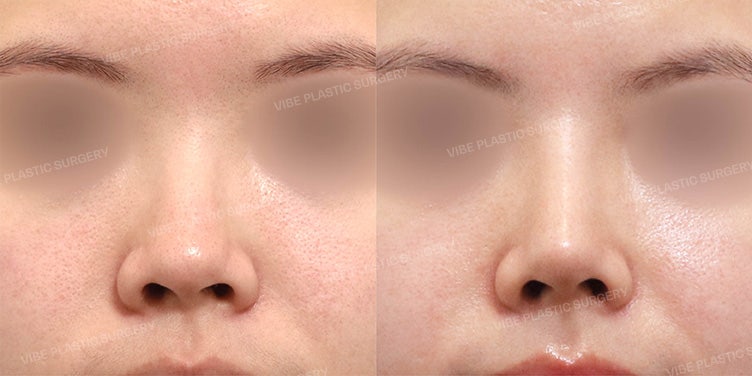
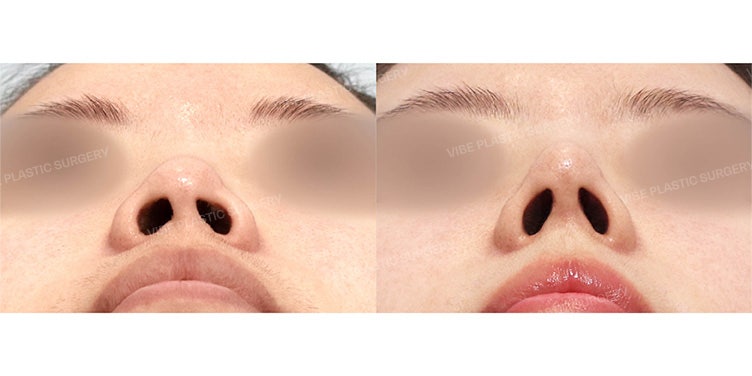
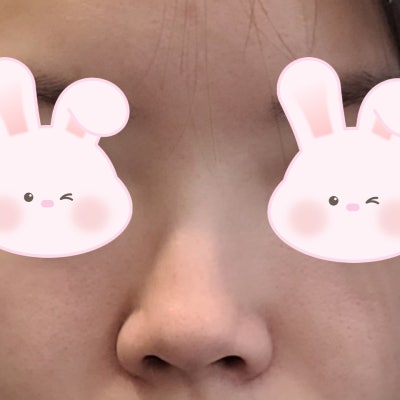
1. Front View: Wide-spread Nasal Tip and Alae. When viewed from the front, the nasal tip cartilage was spread to both sides and the skin was thick, making the tip look blunt and wide. This made the nose appear overall low and large, causing the visual focus on the face to be dispersed.
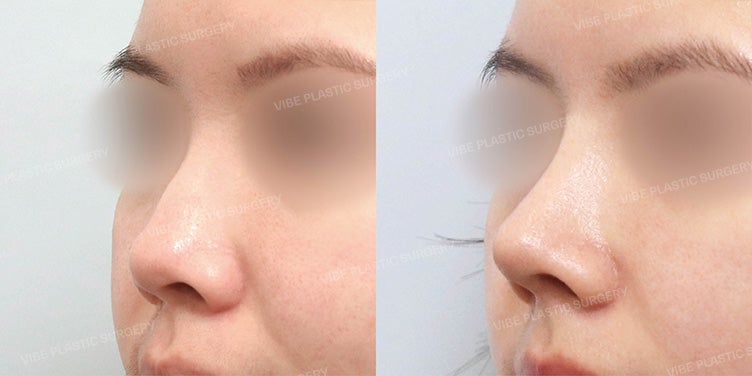
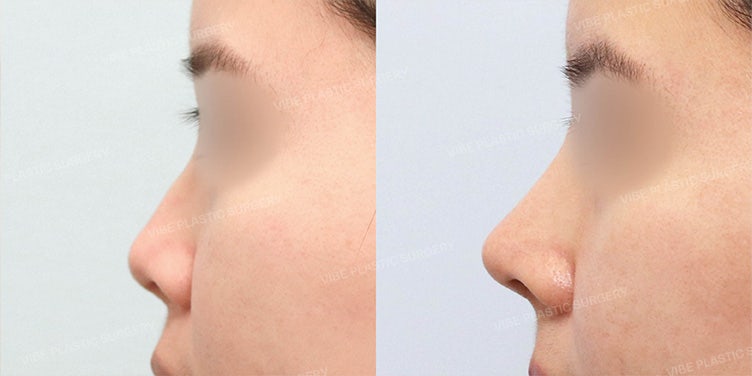
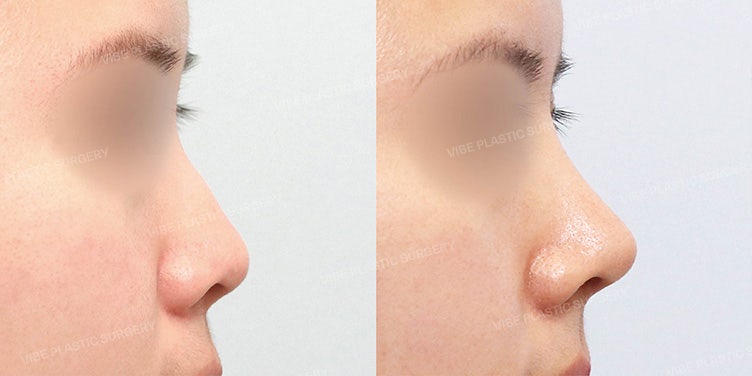
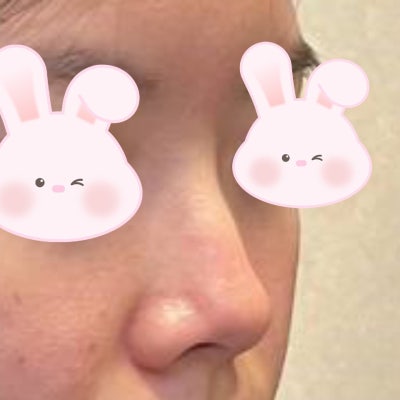
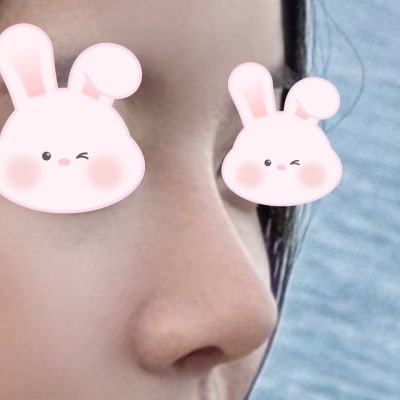
2. Side View: Short Length and Sunken Nasolabial Angle. The biggest issue was the length of the nose. The length from the glabella to the tip was short compared to the facial proportions, making it look ‘cute’ but lacking a sophisticated feel. In particular, the angle where the nasal tip meets the philtrum (nasolabial angle) was narrow, making the nose look more upturned and the mouth appear relatively protruded.
[Comprehensive Diagnosis] This was not a problem that could be solved by simply raising the bridge. A high-difficulty surgery was required to gather the spread nasal tip cartilage, thin out the thick skin layer (bulbous nose correction), and simultaneously extend the short nasal tip downward (length extension).
[Check Points]
Bulbous Nose Correction: Necessary to remove excessive soft tissue from the nasal tip and gather the spread alar cartilage.
Length Extension: Securing a length that fits the facial proportions by adjusting the starting and ending points of the short-looking nose.
■ [VIBE’s Solution] Why Choose ‘Rib Cartilage’?
To extend a short nose while creating a sophisticated height, a ‘strong support’ that can firmly hold the nasal tip is essential. In this patient’s case, it was determined that septal cartilage alone would lack the strength to support the desired length extension and tip height.
Building a Sturdy Support (Rib Cartilage): To firmly lower and fix the nasal tip, donated rib cartilage was used to build a solid pillar. This is a key surgical technique that prevents the nasal tip from turning up or sagging again over time.
Bulbous Nose and Nasolabial Angle Correction (Septum & Ear Cartilage): The spread alar cartilage was gathered, and unnecessary fat layers under the tip skin were removed. Afterward, septal and ear cartilage were used to refine the natural shape of the tip, and the narrow nasolabial angle was widened to create the effect of the mouth appearing more recessed.
■ [After Analysis] ‘The Standard of a Sharp, Slim, and Sophisticated Nose’
Now, shall we look at how she changed after the surgery?
1. Slimmer Nasal Tip, Clearer Frontal Effect
: As the spread bulbous nose was corrected to be slim, the nose looks much sharper and more defined. As the horizontal width of the nose decreased, the entire face looks smaller and more three-dimensional, and the gaze is focused toward the center, giving a clear impression.
2. Ideal Nasolabial Angle, Sophisticated Side Profile
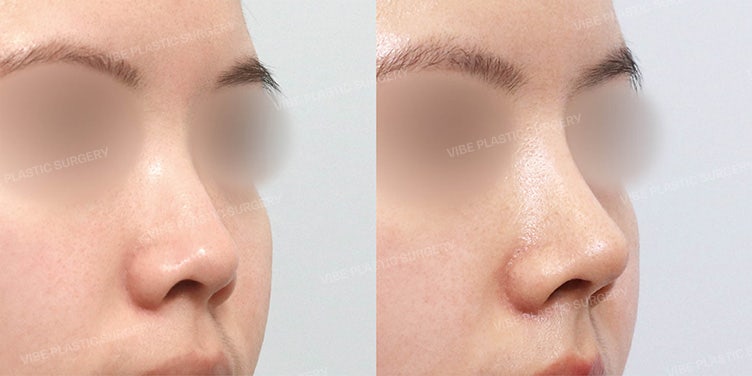
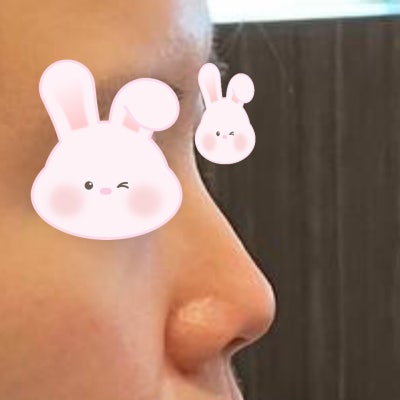
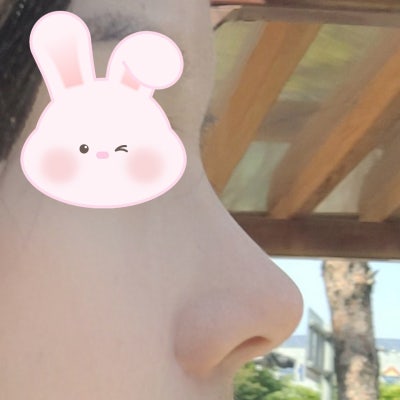
: This is a very remarkable change. The short length of the nose has been sufficiently extended to match the facial proportions. In particular, as the sunken nasolabial angle was improved, the side profile became much more elegant and sophisticated. The line leading from the nasal tip to the philtrum and lips became natural, also alleviating the appearance of a protruding mouth.
3. Glamorous yet Natural ‘Straight-Semi-Curved’ Line
: To harmonize with the patient’s features, a ‘straight-semi-curved’ line was applied, where the bridge extends straight and then lifts slightly at the tip. This completed a luxurious image most preferred by women in their 20s, adding a spoonful of glamour without looking artificial.

■ A Word from Dr. Young-moon Yoo of VIBE Plastic Surgery
‘Correcting a bulbous and short nose is not just about raising it; it is like a delicate sculpture work of gathering what is spread and extending what is short. Choosing the optimal materials according to each individual’s skin thickness and cartilage condition and using them in the right places determines the outcome of the surgery.’
Plastic surgery is not just about changing one’s appearance; it is a process of overcoming insecurities and regaining confidence. If you are worried about a blunt and short nose, please consult with a specialist who has rich clinical experience and aesthetic sense.
We will help you find the beautiful nose line that is perfect for you at VIBE Plastic Surgery.
Frequently Asked Questions
How can a blunt, bulbous nose be corrected?
Yes, correction is possible. A bulbous nose can be improved to be slimmer and more defined by removing excessive soft tissue from the nasal tip and gathering the spread alar cartilages.
Can the length of a short nose be extended?
Yes, it is possible. A short nose can be extended to a length that matches facial proportions by adjusting the starting and ending points of the nose, and robust support, especially using costal cartilage, is utilized to ensure length.
What materials are mainly used for nose surgery?
Various materials are used for nose surgery depending on the patient's nose condition. In this case, costal cartilage was used to build the nasal tip support, and septal cartilage and ear cartilage were utilized to refine the nasal tip shape and correct the nasolabial angle.
In what cases is costal cartilage used?
Costal cartilage is used when a strong support is needed to firmly support the nasal tip, such as when extending a short nose or creating a sophisticated height. It is effective when septal cartilage alone is deemed insufficient for support.
What will the nose line look like after surgery?
After surgery, a 'straight-upward' line, where the bridge of the nose extends straight and then slightly rises at the tip, can be applied to harmonize with the patient's features, completing a glamorous yet natural and sophisticated image.
Is nasolabial angle correction also possible?
Yes, nasolabial angle correction is also possible. By widening a narrow nasolabial angle, the appearance of an upturned nose can be improved, and an effect of the mouth appearing to recede can be induced, making the profile more elegant and sophisticated.