2026-05-25
Functional Improvement Through Deviated Nose Correction!
A case study of a 30s female patient who achieved both aesthetic and functional improvements through deviated nose correction and functional rhinoplasty.
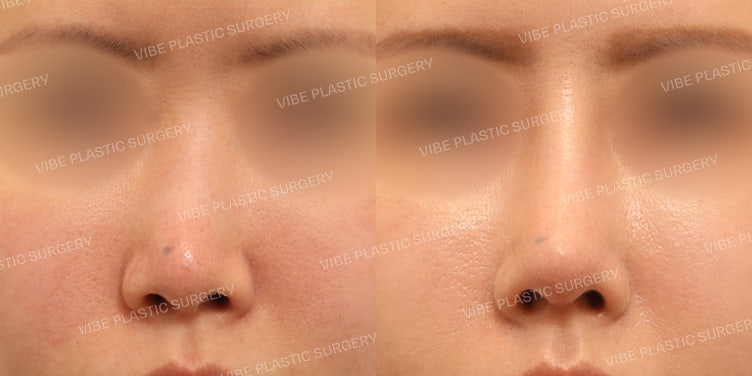
* Basic Information
# Female in her 30s
# History of multiple nose filler procedures (+)
# Severe septal deviation causing breathing discomfort
* Consultation
# Despite multiple filler injections to the bridge, she remained dissatisfied with the shape and decided to undergo surgery.
# Pre-operative CT scans revealed a severely deviated septum (septum deviation), which caused significant breathing difficulties. We decided to proceed with functional rhinoplasty simultaneously.
* Surgical Plan
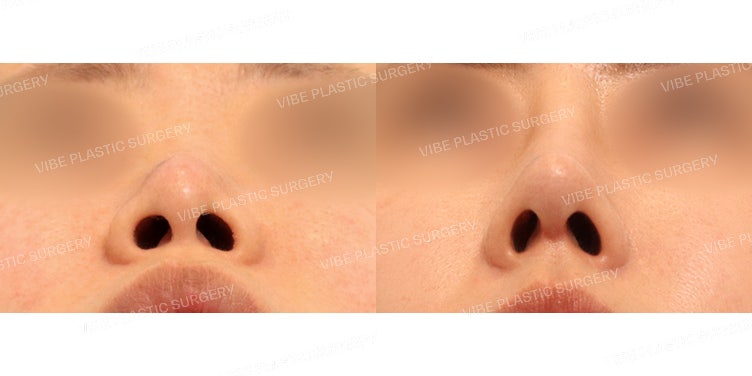
# Tip Plasty (Deviated & Long Nose Correction)
# Bridge Augmentation (Implant)
# Functional Rhinoplasty
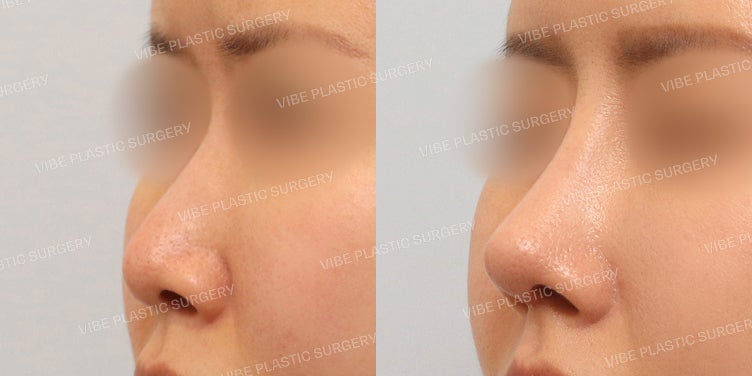
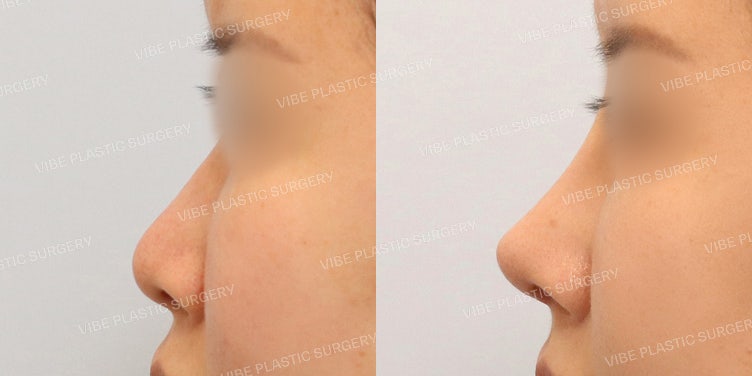
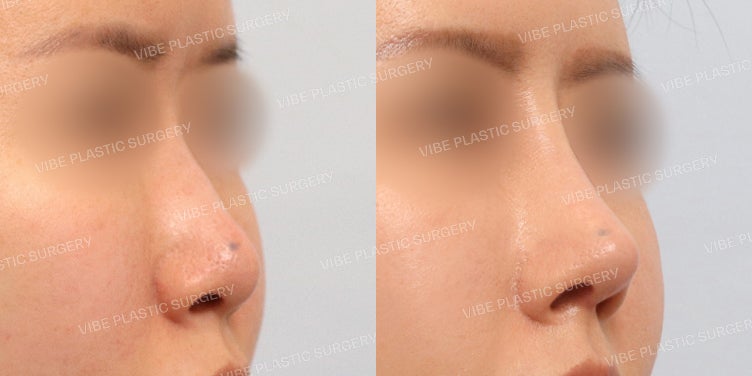
* Intraoperative Findings
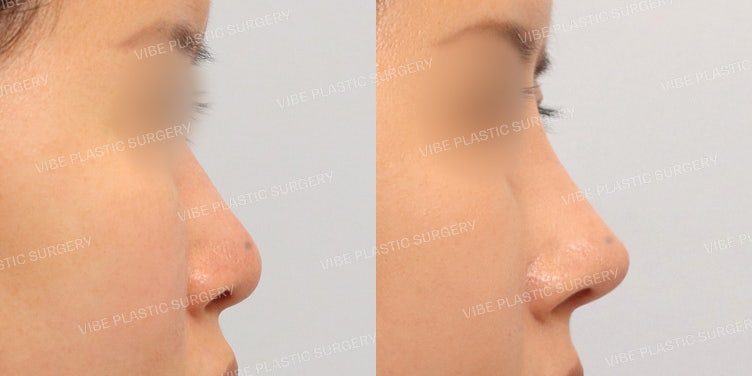
# After dissolving the fillers, the bridge was quite low. We used an implant to achieve a defined, straight-semi-curved (Jik-ban) bridge line.
# For the tip, we used donated rib cartilage, septal cartilage, and ear cartilage to create a defined look! We built a sturdy support structure to ensure the tip does not droop over time.
# The septum was severely deviated, and the mucosal area known as the inferior turbinate was hypertrophied. We corrected the deviated septum and performed a turbinate reduction to improve the functional aspect of breathing.
# It is even better when functional improvements accompany a perfected straight-semi-curved line from the bridge to the tip!
Consultations and surgeries should be performed by a board-certified plastic surgeon!
VIBE that comes from extensive experience.
Dr. Yoo Young-moon, Representative Director of VIBE Plastic Surgery
VIBE Plastic Surgery complies with all medical laws. These before-and-after photos were taken under identical conditions with the patient’s consent. Complications and side effects such as bleeding, inflammation, infection, and asymmetry may occur depending on the individual, and caution is required.
Frequently Asked Questions
When should I consider crooked nose correction surgery?
Crooked nose correction surgery can be considered not only for dissatisfaction with the nose shape but also when there are functional problems such as difficulty breathing due to a deviated septum. The patient in this case also decided on surgery due to dissatisfaction after fillers and a deviated septum.
Is rhinoplasty possible even if I have had nose filler procedures?
Yes, it is possible. The patient in this case also had several nose filler procedures, but after dissolving the filler before surgery, a nose bridge rhinoplasty was performed. After filler removal, the nose bridge can be completed using implants.
What aspects does functional rhinoplasty improve?
Functional rhinoplasty corrects a deviated septum and improves functional aspects of breathing, such as nasal congestion, through turbinate reduction surgery for enlarged inferior turbinates. It can resolve breathing discomfort along with aesthetic improvements.
What materials are used for tip plasty?
For tip plasty, strong support that is sharp and does not easily droop can be formed using donated costal cartilage, septal cartilage, or ear cartilage. Appropriate materials are selected and used according to the patient's condition.
How do the nose bridge and tip change after surgery?
After surgery, the nose bridge is completed in a sharp, semi-straight line using an implant after filler removal. The nasal tip is made sharp with donated costal cartilage, etc., allowing for a natural line from the bridge to the tip.
How is deviated septum surgery performed?
Deviated septum surgery is performed by correcting the severely deviated septal area. Along with this, turbinate reduction surgery for enlarged inferior turbinates can be performed to effectively improve the functional aspects of the nose.