2026-05-24
Incisional Double Eyelid Revision Case (Restoring Faded Lines from 10 Years Ago) by Dr. Young-moon Yoo, VIBE Plastic Surgery
A case study of an incisional double eyelid revision for a patient whose lines faded after 10 years, resulting in a sharp and tired look.
Hello.
I am Dr. Young-moon Yoo, Director of VIBE Plastic Surgery.
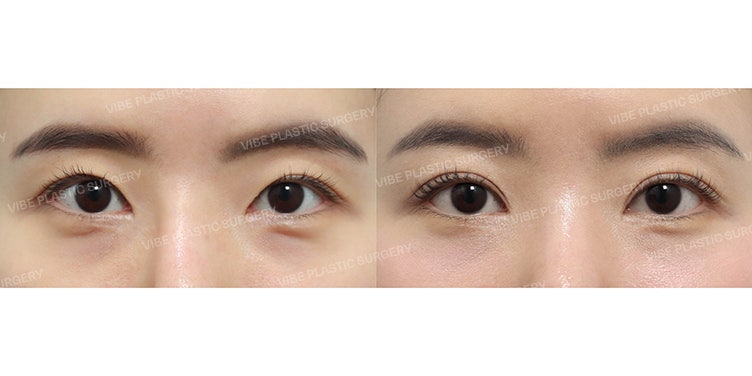
Today, I would like to introduce an incisional double eyelid revision case for a patient who had incisional double eyelid surgery and epicanthoplasty about 10 years ago, but whose lines became thin and faded at the front over time, making their impression look sharp.
Incisional Double Eyelids from 10 Years Ago: Why Did Problems Reappear?
This patient had undergone:
- Incisional double eyelid surgery
- Epicanthoplasty
about 10 years ago. While the initial results were relatively satisfactory, as time passed, the double eyelid lines gradually became thinner. Specifically, the lines at the inner corners of the eyes faded, which was their biggest concern as it made the eyes look ‘fierce and tired’.
Why Incisional Double Eyelid Revision is More Difficult
Incisional revision surgery is significantly more challenging than the first surgery. This is because:
- Tissue adhesions and scars already exist from the previous incision.
- The structure of the levator muscles, skin, and fat has been altered unnaturally.
- In cases where epicanthoplasty was performed, balancing the inner corner lines is even more delicate.
In other words, it is not just a matter of resetting the line, but a surgery that requires accurate analysis and redesign of the eye structure altered by the previous procedure.
Key Surgical Points for This Case
The focus for this patient’s incisional double eyelid revision was as follows:
① Correcting the faded inner corner lines
- The blurred front lines made the impression look harsh.
- We re-formed a clear double eyelid line that flows naturally from the inner corner.
② Enhancing the existing lines that had become too thin
- Adjusted the line thickness to an appropriate level so the eyes look distinct without being excessively thick.
③ Designing for a softer impression
- The goal was not just a ‘clear double eyelid’ but a design that makes the overall impression look comfortable and soft.

Changes After Incisional Double Eyelid Revision
After the surgery:
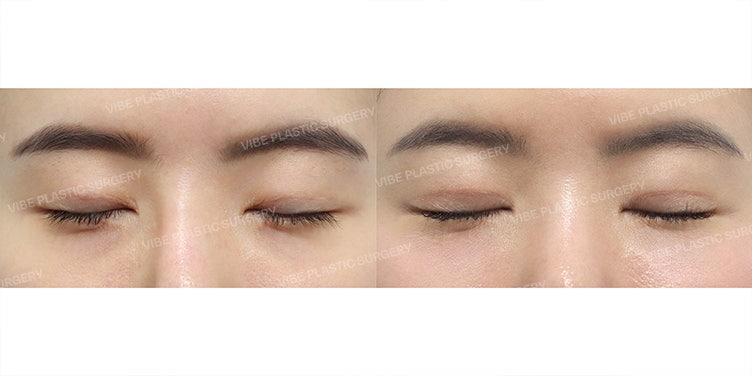
- ✔ The blurred double eyelid lines became clear.
- ✔ The eye shape, which looked faded at the front, became stable.
- ✔ The previously sharp impression changed to a soft and comfortable one.
Most importantly, the result was not a ‘surgical-looking double eyelid,’ but a natural yet well-defined line.
Why Should You Be Careful with Incisional Revision?
Incisional double eyelid revision is a procedure where:
- There is often limited skin laxity.
- The structure must be rebuilt in a state where tissue damage already exists.
👉 Therefore, the experience and expertise of the surgeon greatly determine the outcome. A poorly executed revision can lead to worsening scars, increased asymmetry, or even more unnatural-looking eyes, making the choice of surgeon critical.
We Recommend Incisional Double Eyelid Revision for Those Who:
- Have previous incisional double eyelids that have gradually faded.
- Have a sharp impression because the inner corner lines have disappeared.
- Have double eyelid lines that are too thin, making the eyes look weak.
- Want to recreate natural yet clear-looking eyes.
Closing Remarks
Incisional double eyelid revision is not just a ‘line correction’ but a surgery to redesign the impression and structure of the eyes. VIBE Plastic Surgery accurately understands the difficulties of revision surgery and aims for stable results without over-correction.
This has been Dr. Young-moon Yoo, Director of VIBE Plastic Surgery.
Consultations and surgeries should be performed by a board-certified plastic surgeon!
VIBE coming from rich experience.
Young-moon Yoo, Representative Director of VIBE Plastic Surgery
VIBE Plastic Surgery complies with medical laws. These before-and-after photos were taken under the same conditions with the patient’s consent. Complications and side effects such as bleeding, inflammation, infection, and asymmetry may occur after surgery and vary by individual, so caution is required.
Frequently Asked Questions
Why is incisional double eyelid revision surgery difficult?
Yes, incisional double eyelid revision surgery is more difficult than the initial surgery. This is because there is already tissue adhesion and scarring from the incision, and the structure of the eye-opening muscles, skin, and fat has been altered. If epicanthoplasty was also performed, it is even more challenging to balance the inner corner line.
What were the main surgical points for this revision case?
The surgical points for this case were correcting the loosened front part of the line, adjusting the excessively thin existing line to an appropriate thickness, and designing it to create a softer impression. The goal was not just clarity, but also a comfortable impression.
What changes can I expect after revision surgery?
After the surgery, the blurry double eyelid line will become clearer, and the loose-looking front part of the eye will stabilize. Additionally, a fierce impression will transform into a soft and comfortable one, completing a natural yet prominent line.
In what cases should I consider incisional double eyelid revision surgery?
We recommend it when a previously performed incisional double eyelid has loosened, or the front part of the line has disappeared, making the impression sharp, or when the double eyelid line is too thin, making the eyes look weak, and you want to create a natural and clear eye line again.
Why is it important to be cautious when considering incisional double eyelid revision surgery?
Revision surgery requires recreating the structure in a state where there is less skin elasticity and tissue damage, so the surgeon's experience and know-how are crucial. Incorrect revision surgery can lead to unnatural results such as worsening scars and increased asymmetry, so careful selection is necessary.