2026-09-24
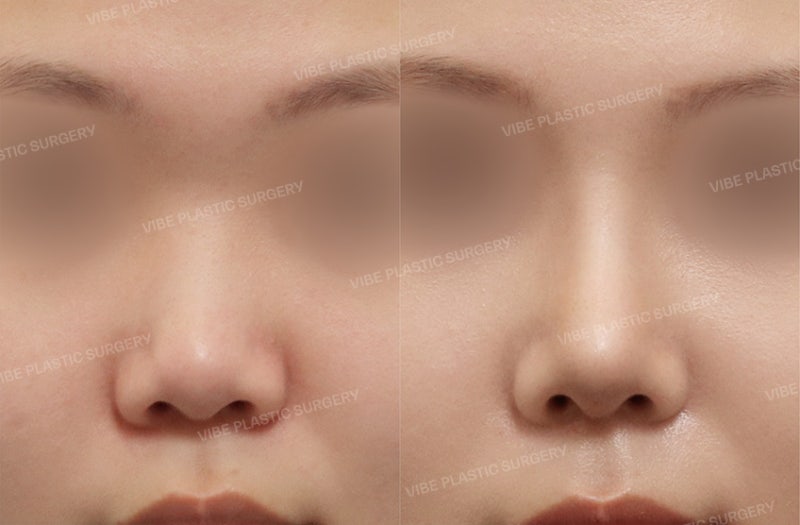
Low, Bulbous Nose to a Refined, Feminine Straight-Curved (Jikban) Nose Line by Dr. Young Moon Yoo at VIBE Plastic Surgery, Sinnonhyeon Station
Dr. Young Moon Yoo of VIBE Plastic Surgery demonstrates how a low, bulbous nose can be transformed into an elegant, feminine straight-curved nose line using tailored cartilage and bridge implants.
Hello.
I am Dr. Young Moon Yoo of VIBE Plastic Surgery.
During rhinoplasty consultations,
one of the most common concerns patients have is a "low and bulbous nose."
When the bridge is low and the tip is rounded and bulbous,
it can create an "overall youthful and cute impression."
However, on the other hand, it can lack facial dimension,
and for those seeking a more sophisticated and feminine ambiance, it may leave something to be desired.
This was also the case for the patient featured today.
While she had a cute image, she wanted a more "refined and distinct impression,"
as well as a nose line that is naturally beautiful without looking overdone.
Today, through the rhinoplasty case of a woman in her 20s who was concerned about her low, bulbous nose,
let's explore who tends to have the highest satisfaction after rhinoplasty.
Why consider rhinoplasty for a low, bulbous nose?
Because the nose is located right at the center of the face,
even the slightest change can have a significant impact on one's overall impression.
In particular, many people consider rhinoplasty when:
✔ The face appears flat due to a low nasal bridge
✔ The tip is rounded and bulbous, lacking a refined look
✔ The nose looks wider in photographs than it actually is
✔ The profile lacks three-dimensional projection
✔ One has a cute image but desires a more feminine, sophisticated appearance
For this patient, a low bridge and a bulbous nasal tip were her main concerns.
Rather than simply wanting an overly high nose,
the primary goal was to achieve natural harmony with her facial features
while transforming her look into a naturally elegant image.
In rhinoplasty, 'overall proportion' matters more than sheer height.
When considering rhinoplasty, many people immediately ask, "How many millimeters will it be raised?"
However, I believe the most crucial aspect of rhinoplasty is not simple height.
Harmony with the entire face, balance between frontal and lateral profiles,
and a line that naturally connects the tip and bridge are far more important.
Raising only the nasal bridge does not create a beautiful nose.
Especially when the tip is low and bulbous,
raising only the bridge makes it difficult to achieve the desired level of refinement.
1. A natural dimension was created along the bridge using an implant.
An implant was used to augment the low nasal bridge.
In rhinoplasty, an implant does not simply serve to raise the height of the nose.
The height between the forehead and eyes, skin thickness, nasal tip height, and overall facial proportions must all be considered
to determine the appropriate height and line.
If it is too high, it can look artificial,
while if it is too low, the patient may feel that the postoperative improvement is insufficient.
Taking the balance of the entire face into account, we designed a height for this patient
that adds natural dimension without looking excessive.
2. The bulbous tip was corrected using rib cartilage and septal cartilage.
The nasal tip is one of the most critical elements determining the outcome of rhinoplasty.
In particular, to improve a low and bulbous tip,
rather than merely projecting the tip upward,
the process of "building a sturdy support framework and sculpting the tip in the intended direction" is paramount.
In this surgery, rib cartilage and septal cartilage were utilized to construct the nasal tip framework.
Rib cartilage provides sufficient structural rigidity when needed
and helps establish the tip's height and contour with greater stability.
Septal cartilage can also be utilized to shape the tip structure
and create a smooth, natural contour.
By selecting and applying them appropriately based on the patient's existing nasal anatomy, skin condition, and desired design,
the tip was sculpted into a more defined and refined shape.
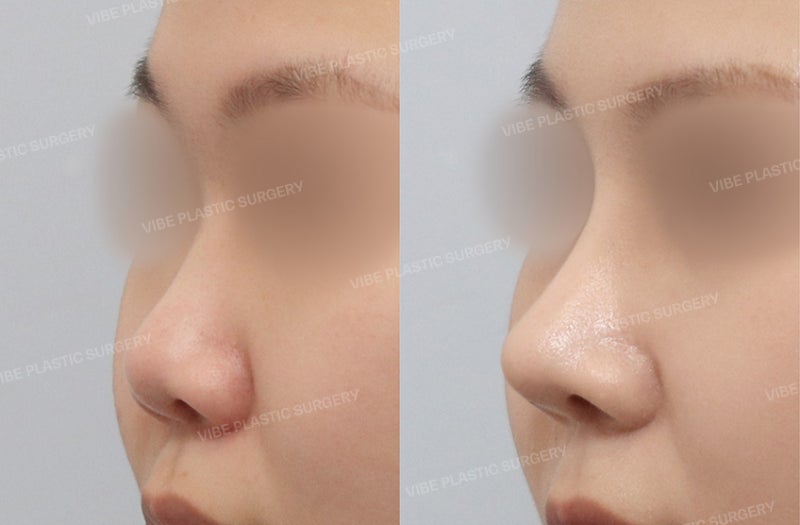


The completed contour: A sophisticated and feminine 'straight-curved (Jikban) nose line'
What the patient wanted from this rhinoplasty was not an overly dramatic or artificial look.
Therefore, we aimed for a "feminine straight-curved nose line" that connects naturally from the bridge to the tip
while projecting a sophisticated feel.
A straight-curved line is not simply a rigid straight slope;
it is crucial to strike a delicate balance between gentle curves and straight contours in tune with the facial vibe.
In this case,
we naturally elevated the low, flat bridge
and refined the bulbous tip into a clearer, more delicate definition,
aiming to add a sophisticated, feminine touch
to her inherently cute image.
Rather than an excessively high nose, we pursued a natural harmony with her features
that remains comfortable and flattering over time.
Who experiences the highest satisfaction after rhinoplasty?
Those who report high satisfaction from rhinoplasty are not merely those seeking a "high nose."
Rather, patients who clearly recognize which specific areas of their face they wish to improve
often achieve the greatest satisfaction.
You may want to consider rhinoplasty if:
1. Your face looks flat due to a low bridge
If a low bridge is your concern,
a surgical plan can be tailored to introduce natural three-dimensional depth to the central face.
2. The tip is bulbous and rounded, lacking refinement
Rather than simply shrinking the tip indiscriminately,
it is important to refine it into a neater, more sophisticated shape in proportion to the entire face.
3. The nose looks wide in photographs
If the tip looks bulky or the area around the alar base appears wide from the front,
refining the form and structural support of the tip can transform the entire facial impression.
4. You want to shift from a cute look to a more mature and sophisticated image
Rhinoplasty is not merely an operation that changes the shape of the nose.
It creates harmony among the eyes, lips, and facial contours, shifting the entire impression.
Just like this patient, it can offer a wonderful transformation for those who wish to maintain their gentle charms
while adopting a more feminine and elegant ambiance.
Rhinoplasty cannot be performed with the exact same method for everyone.
Even among individuals with a low nose, skin thickness, cartilage strength, and tip structure all differ.
Some may achieve total satisfaction simply by refining the bridge,
while others need structural enhancement of the nasal tip to attain their desired results.
That is why at VIBE Plastic Surgery, rather than applying a fixed formula,
we formulate a tailored surgical plan by considering:
What the current nasal structure is
How the face shape and overall proportions align
What image transformation is desired
Which nose line naturally suits the face
Crucially, it is not just about making the nose look good from the front or the side alone;
it must blend harmoniously from multiple angles.
Why is individualized design so important at VIBE Plastic Surgery?
Every individual considering rhinoplasty has a unique facial structure.
Therefore, even if you bring a photo of a nose you like,
copying it identically is often unrealistic and ill-advised.
The key is understanding the direction of the image the patient desires
and finding the design that can be expressed most naturally within their existing facial and nasal anatomy.
From the initial consultation to the surgical plan,
VIBE Plastic Surgery thoroughly takes into account the existing nasal anatomy and overall facial harmony.
We do not simply raise a nose because it is low,
nor do we sharpen a tip excessively just because it is bulbous.
We prioritize what transformation genuinely complements the face
and what structure will hold up naturally and stably post-surgery.
Looking to transform a low, bulbous nose into an elegant image?
A low, bulbous nose has the charm of looking cute and youthful.
However, if you desire more dimension, sophistication, and a feminine aesthetic,
rhinoplasty can help redefine your impression.
For this female patient in her 20s, the goal was never an excessively high, artificial nose.
We introduced natural dimension to the low bridge
and delicately refined the bulbous tip using rib and septal cartilage.
As a result, while preserving her soft initial impression,
we were able to complete a far more refined and feminine straight-curved nose line.
Rhinoplasty is not just about making the nose taller.
Only when considering the ideal height, shape, and balance tailored to the individual
can one expect the most natural and satisfying outcome.
If you are contemplating rhinoplasty due to a low and bulbous nose,
we invite you to have an in-depth consultation tailored to your current nasal anatomy and aesthetic goals.
Dr. Young Moon Yoo of VIBE Plastic Surgery consults directly with each patient
to help find the most natural, sophisticated nose line suited specifically to your face.
Frequently Asked Questions
What materials are used to correct a low, bulbous nasal tip?
Rib cartilage and septal cartilage are used. The nasal tip is a crucial area where creating a stable support framework is essential; rib cartilage secures reliable height and shape, while septal cartilage helps design a smooth, distinct nose line in harmony with it.
What are the criteria for selecting an implant when raising the bridge?
The patient's forehead-to-eye height, skin thickness, and nasal tip height are comprehensively considered. Rather than simply boosting height, the implant must be chosen according to overall facial harmony and proportions so the final bridge looks natural and not artificial.
What is a straight-curved (Jikban) nose line?
It is a nose contour that combines straight and softly curved elements to create an elegant and feminine look. Rather than being strictly linear, it connects seamlessly from the bridge to the tip, imparting a dimensional yet unexaggerated aesthetic to the face.
Is it always best to make the nose as high as possible in rhinoplasty?
No, overall harmony and proportion with the face are far more critical than simple elevation. If the tip is low and bulbous, excessively raising only the bridge can look unnatural and fail to provide refinement, making frontal and profile balance the key priority.