2026-05-25
Partial Incision Ptosis Correction
A case study of a teenage patient who achieved clear, refreshed eyes through partial incision ptosis correction, avoiding full incision while removing excess fat.
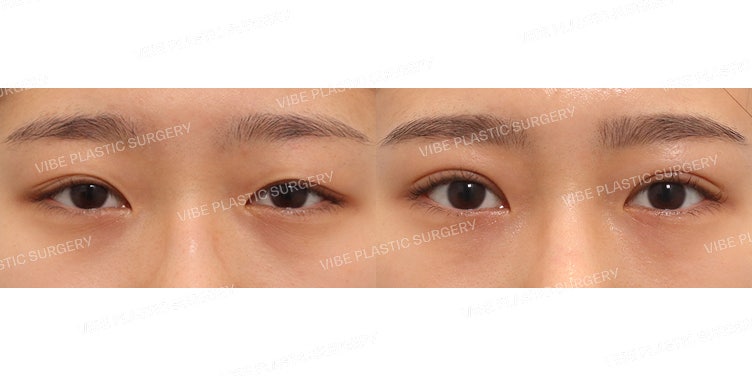
* Basic Information
# Female in her teens
# Eye-opening strength: Slightly weak
# Skin thickness: Moderate
# Eyelid fat (+)
# Skin sagging: Minimal
# Primary complaint: Eyes look sleepy and small.
* Consultation
# The patient did not want a full incision method, but she visited us in a somewhat frustrated state because other clinics had only recommended the full incision technique. haha
# However, based on the judgment that the partial incision method was sufficiently possible, I recommended partial incision ptosis correction! We planned to remove the slightly puffy eyelid fat and create a clear, defined impression.
* Plan
# Partial Incision Ptosis Correction
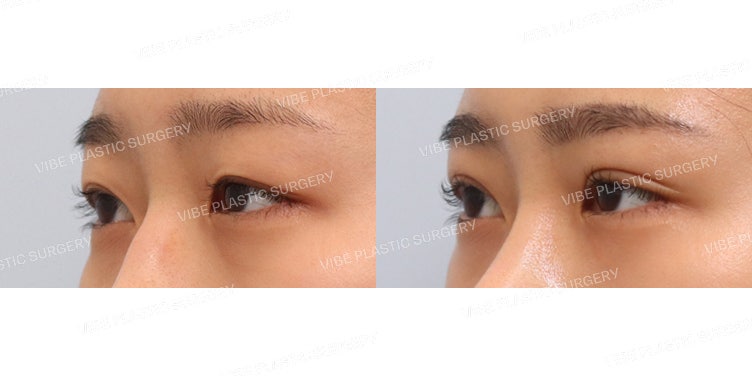
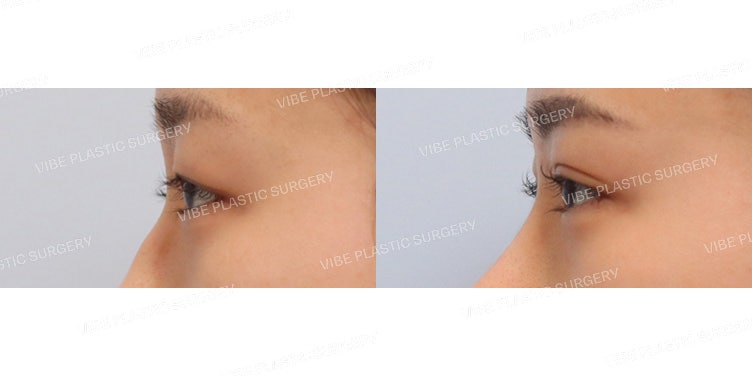
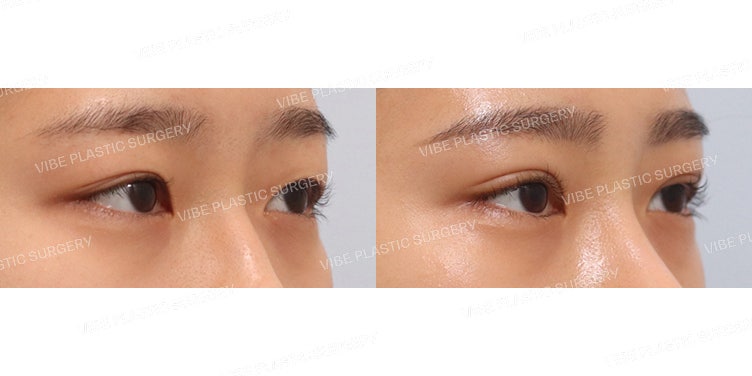
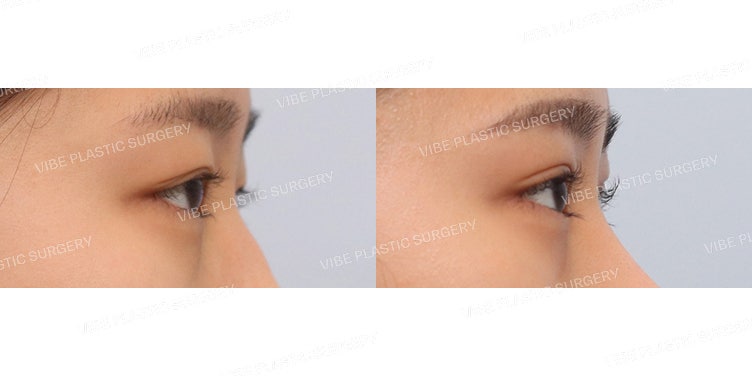
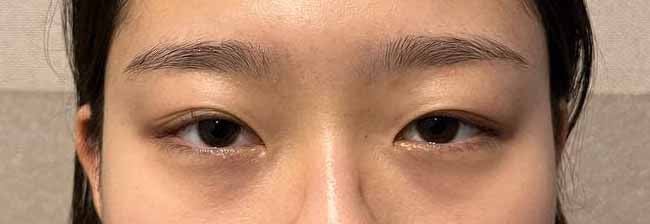
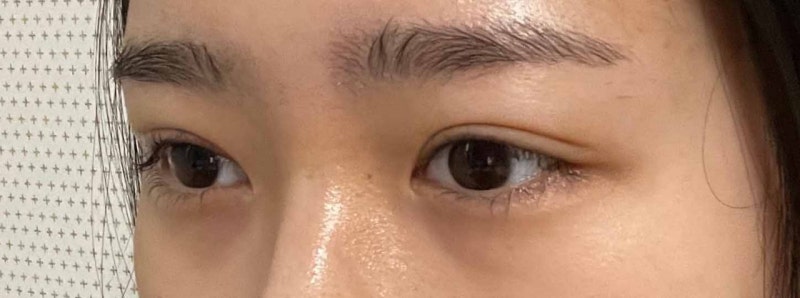
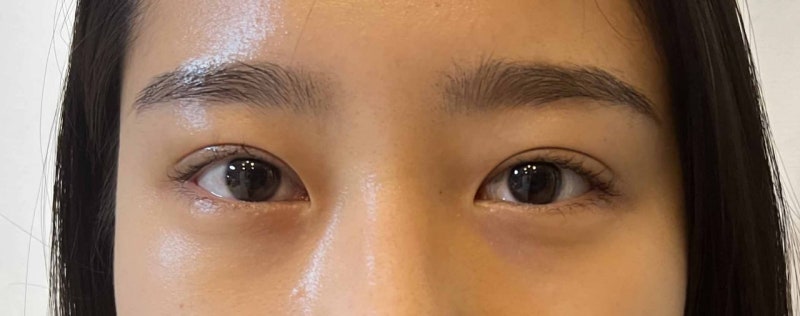
* Post-operative Progress
# Compared to before the surgery, a refreshed and clear eye shape seems to have been achieved.
# Like the non-incision method, partial incision ptosis correction is a surgical technique that has the advantages of 1. minimal post-operative swelling and fast recovery, while also 2. allowing for fat removal and 3. increasing the strength of the adhesion.
* Review written by the patient
I absolutely did not want to do a full incision, but other hospitals insisted on it because my eye-opening strength was too weak and I had a history of using double eyelid tape/glue. However, VIBE said that partial incision was possible. My eye-opening strength was so weak that my eyes felt very tired normally, and they especially stung and felt uncomfortable when wearing lenses, but after the surgery, my eyes don’t feel tired even when I wear lenses! Since I no longer use my forehead to open my eyes, they are definitely less fatigued, and my eyebrows don’t lift upward, which helped correct my complex of having a long mid-face. I asked for an in-out line that gets wider toward the end! Once in the operating room, the doctor was very meticulous in designing the line and let me check the mirror continuously. Right before the surgery, he asked if there was anything I wanted to emphasize or if I had photos of the line I wanted; he was so careful that I didn’t worry at all about the line turning out strange. ☆ If you have photos, be sure to send them to the clinic beforehand!! He tries to pull them up on the computer, but I didn’t send mine so I couldn’t show them (even though I didn’t show photos, it turned out beautifully just as I wanted ㅠㅠ). ☆ Anyway, the line came out so, so pretty exactly as I wanted, so I am very satisfied :) The consultant mentioned that bruising and swelling might vary depending on the suturing technique, and even though I usually swell a lot, I had almost no swelling. I had zero bruising, and the swelling dropped significantly starting from the 3rd day!! I didn’t even put in much effort like drinking pumpkin juice to reduce swelling, so seeing how fast it faded, I truly believe it’s due to the difference in suturing skill… bb
Consultations and surgeries should be performed by a plastic surgery specialist!
VIBE that comes from rich experience
Dr. Yoo Young-moon, Representative Director of VIBE Plastic Surgery
Complications and side effects such as bleeding, inflammation, infection, and asymmetry may occur after surgery and can vary by individual, so caution is required.
Frequently Asked Questions
What is partial incision ptosis correction?
Partial incision ptosis correction is a surgical method that improves the strength of opening the eyes by making only a partial incision in the eyelid. Similar to the non-incisional method, it has the advantages of less swelling and faster recovery, while also allowing for eyelid fat removal and strengthening of adhesion.
What is the swelling and recovery period after partial incision ptosis correction?
Partial incision ptosis correction, like the non-incisional method, generally involves less swelling and faster recovery after surgery. The patient in this case mentioned that despite usually swelling easily, there was almost no bruising and the swelling reduced quickly from the third day.
Is it possible to remove eyelid fat with partial incision ptosis correction?
Yes, it is possible. Partial incision ptosis correction can help create a clearer eye shape by removing fat when there is a lot of eyelid fat. In this case, the plan included removing fat from the puffy eyelids.
Can eye fatigue be reduced after partial incision ptosis correction?
Yes, it can be reduced. If you had a habit of opening your eyes with your forehead due to weak eye-opening strength, after ptosis correction, you will use your eye muscles to open your eyes, which can reduce eye fatigue. The patient's review also mentioned reduced discomfort when wearing contact lenses and less eye fatigue.
Can I create my desired line with partial incision ptosis correction?
Yes, it is possible. Through pre-operative consultation, you can sufficiently convey your desired line (e.g., in-out line, line that gets larger towards the back) to the medical staff and carefully design it to achieve satisfactory results. The patient was also satisfied that the line came out beautifully as desired after consulting about it right up until the surgery.
I was recommended full incision surgery at another hospital, but is partial incision also possible?
Yes, it may be possible. The patient in this case was also recommended full incision surgery at another hospital, but proceeded with partial incision surgery after it was determined that sufficient improvement was possible with the partial incision method. The appropriate surgical method can vary depending on the individual's eye condition, so it is important to consult with a specialist.