2026-05-25
Partial Incision Ptosis Correction, Epicanthoplasty, and Under-Eye Fat Repositioning
A case study of a woman in her 20s who achieved a clearer, more refreshed look through partial incision ptosis correction and under-eye fat repositioning.
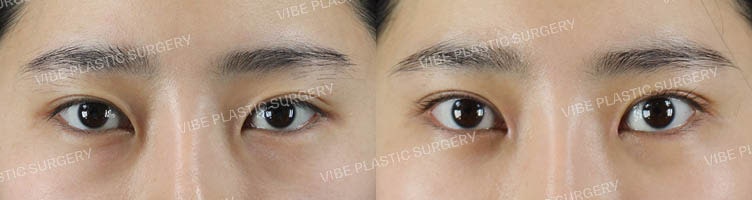
* Basic Information
# Female in her 20s
# Eye-opening muscle strength: Slightly weak
# Skin thickness: Moderate
# Skin sagging: Slight
# Medical history: Natural adhesion (non-incisional) surgery
# Primary concerns: ‘I want to improve my slightly sleepy-looking appearance. I also want to fix the bulging fat under my eyes (dark circles).’
* Consultation
# Ptosis correction is needed to improve the strength of the eye-opening muscles.
# The slightly puffy appearance of the upper eyelids can be improved through fat removal.
# The shadows created by bulging under-eye fat can be smoothed out through under-eye fat repositioning for a cleaner, brighter look!
* Surgical Plan
# Partial incision ptosis correction
# Epicanthoplasty
# Under-eye fat repositioning
* Post-operative Progress
# A much clearer and more defined eye shape has been achieved.
# Partial incision ptosis correction, like the non-incisional method, has the advantages of 1. minimal swelling and fast recovery, while also 2. allowing for fat removal and 3. providing stronger adhesion.
# Under-eye fat repositioning does not require stitch removal and involves minimal bruising and swelling, allowing for a quick return to daily life. If you have about 2 to 3 days of downtime, it won’t significantly affect your routine, so there is no need to hesitate!
Consultations and surgeries should be performed by a board-certified plastic surgeon!
Wishing you both health and beauty today :)
Right Mind, Right Plastic Surgery – Dr. Yoo Young-moon
Complications and side effects such as bleeding, inflammation, infection, and asymmetry may occur after surgery and vary by individual, so caution is required.
Frequently Asked Questions
What are the advantages of partial incision ptosis correction?
Partial incision ptosis correction has the advantage of less swelling and faster recovery after surgery. In addition, it can remove fat from the eyelids and increase adhesion, which is effective in creating clear eye lines.
How long is the recovery period after under-eye fat repositioning?
After under-eye fat repositioning surgery, stitches do not need to be removed, and bruising or swelling is not severe, allowing for a quick return to daily life. Usually, if you have about 2-3 days of free time, you can live without much inconvenience.
In what cases is partial incision ptosis correction suitable?
Partial incision ptosis correction is suitable for those who want to improve a sleepy impression due to weak eye-opening strength, or who have slightly plump fat on their eyelids. It can also be considered for those with a history of natural adhesion.
What effects can I expect from under-eye fat repositioning?
Under-eye fat repositioning helps to create a clean and bright impression by smoothly improving the shadows (dark circles) caused by bulging under-eye fat.
How does partial incision ptosis correction differ from non-incisional methods?
Partial incision ptosis correction shares the advantages of less swelling and faster recovery, similar to non-incisional methods. However, partial incision has the additional advantages of being able to remove fat and increase adhesion.
What side effects can occur after surgery?
Complications and side effects such as bleeding, inflammation, infection, and asymmetry may occur after surgery, and these may vary depending on the individual, so caution is required.