2026-05-25
Revision Rhinoplasty for Dragon Nose Caused by Implants
A case study of a 30-year-old female patient who underwent revision rhinoplasty to correct a ‘dragon nose’ and elongated tip caused by an excessively long implant.
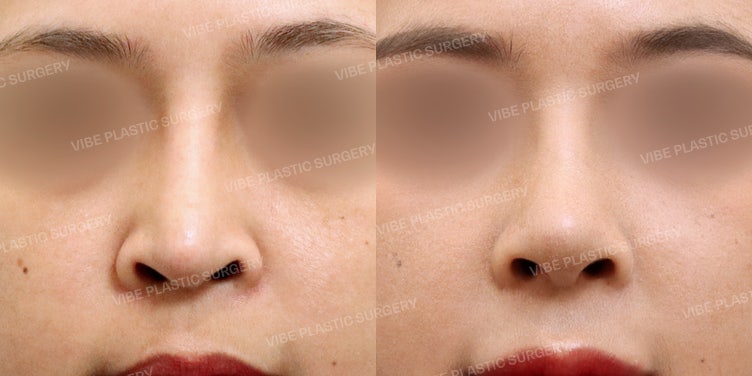
* Basic Information
# Female in her 30s
# After a previous nose surgery, the tip of the nose looks pressed down and the nose appears too long.
# Dissatisfied with the flared nostril shape, resembling a ‘dragon nose’.
* Consultation
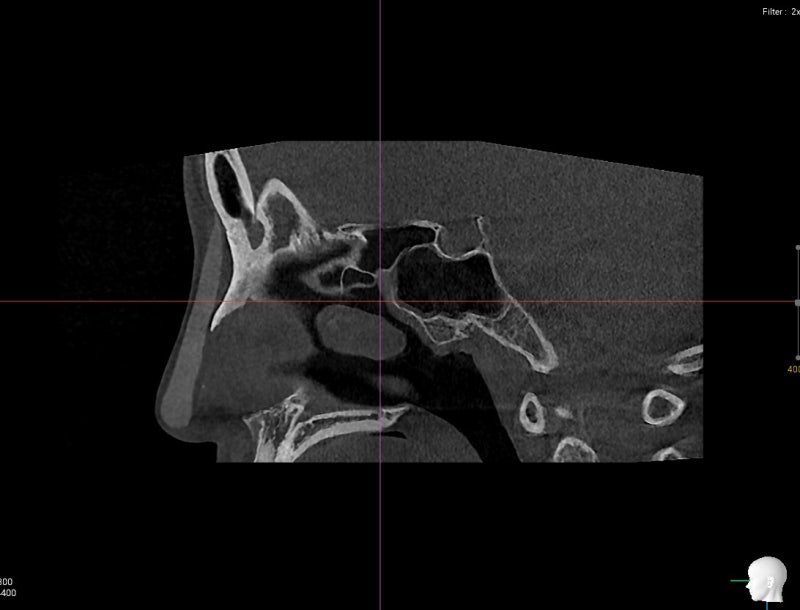
# A pre-operative CT scan confirmed that the implant was inserted too far down into the nasal tip. It appears the implant pressed against the tip, causing deformation.
# We planned to use cartilage to create a sleek, elevated tip while correcting the deformed nostrils and columella.
# The starting point of the implant was too high and thick, giving a masculine (somewhat ‘Avatar-like’) appearance. We planned to lower the implant to create a more natural and feminine nasal line.
* Surgical Plan
# Nasal Tip Surgery (Correction of pressed tip, nasolabial angle, and dragon nose)
# Bridge Surgery (Lowering the implant)
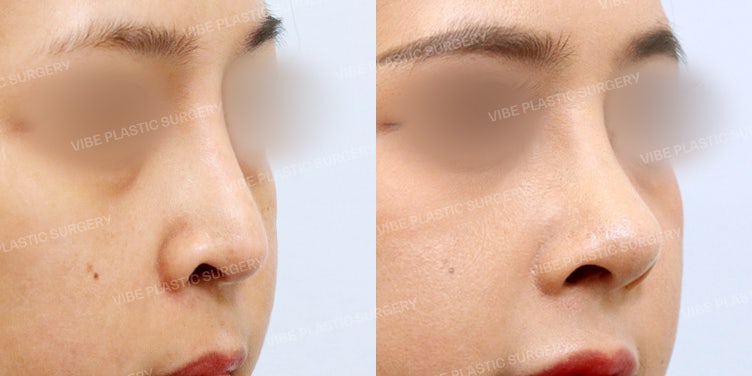
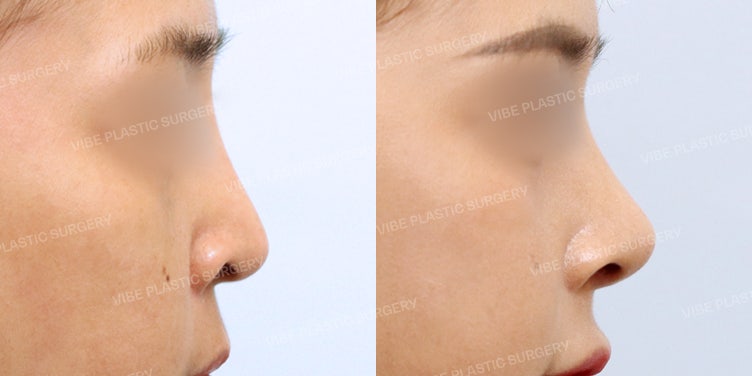
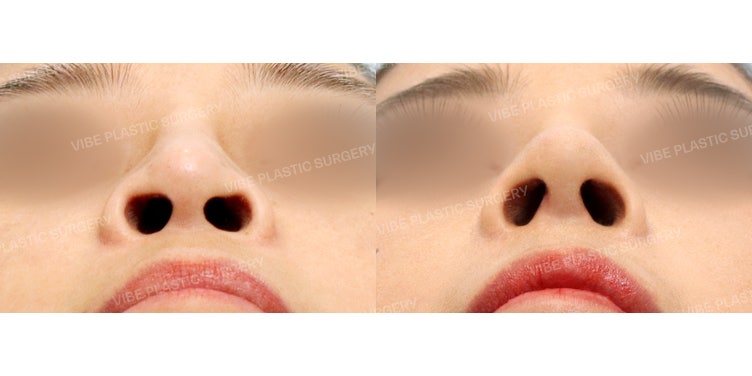
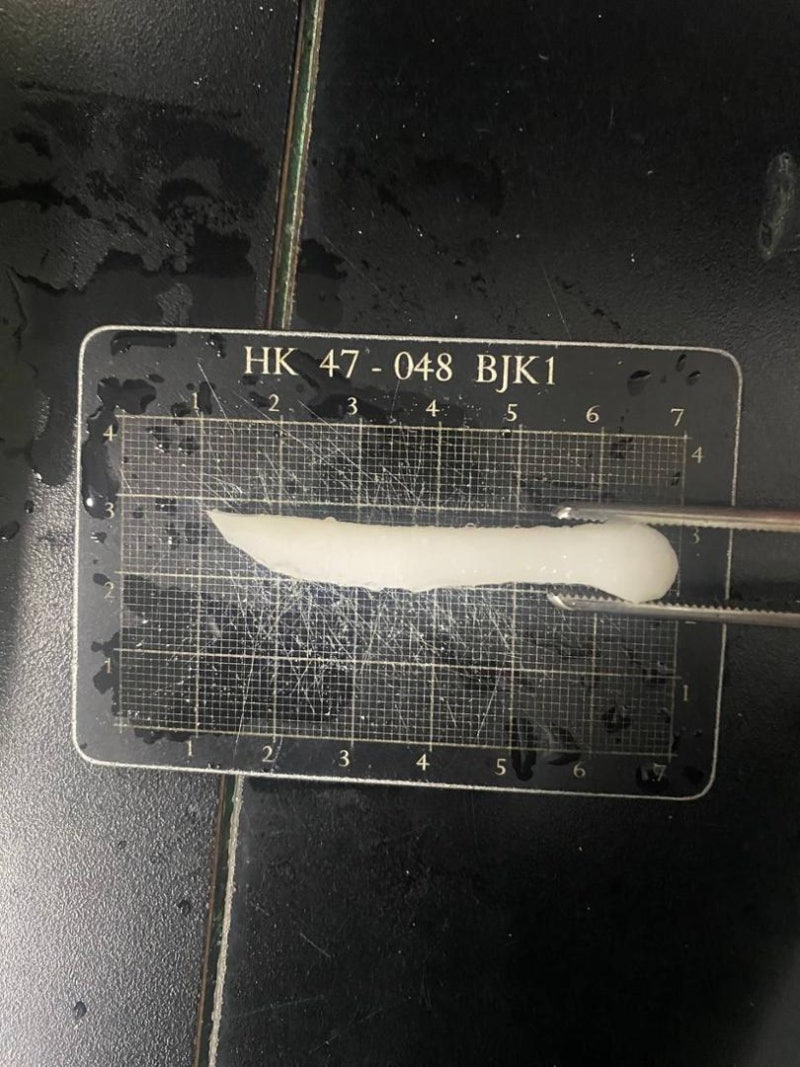
* Intraoperative Findings
# The implant had been inserted so long that it reached the tip, thinning the skin and severely compressing the tip cartilage.
# Scar tissue was thoroughly removed, and the area was irrigated with a scar tissue inhibitor.
# The remaining septal pillar was too thin and lacked strength. A sturdy tip support was created using donated rib cartilage. During this process, the nasolabial angle and dragon nose were also corrected.
* Post-operative Findings
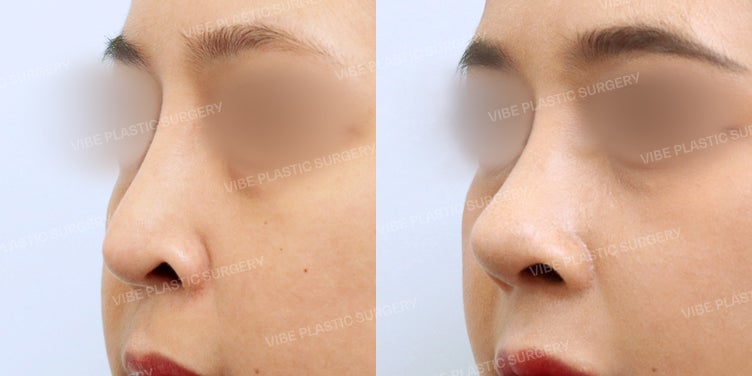
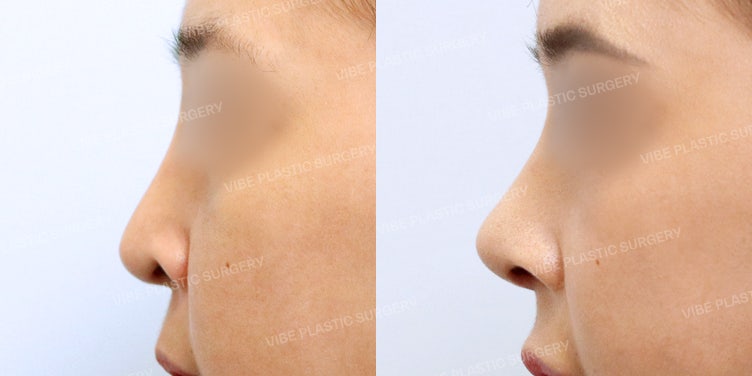
# By correcting the tip deformation caused by the excessively long implant, an ideal nasal tip was achieved.
# When performing revision surgery, it is crucial to establish a perfect plan and prepare thoroughly beforehand. Considering various variables in advance allows for flexible responses to unexpected situations during surgery!
Consultations and surgeries should be performed by a board-certified plastic surgeon!
The VIBE that comes from rich experience.
Dr. Yoo Young-moon, Director of VIBE Plastic Surgery
VIBE Plastic Surgery complies with medical laws. These before-and-after photos were taken under the same conditions with the patient’s consent. Complications and side effects such as bleeding, inflammation, infection, and asymmetry may occur after surgery and vary by individual; caution is advised.
Frequently Asked Questions
Why did the 'dragon nose' deformity occur?
It was confirmed that the deformity occurred because the implant inserted during the previous nose surgery was too long, extending to the nasal tip and continuously pressing it. This can cause the nostril shape to widen and the nasal tip to appear flattened.
What aspects were primarily corrected during the revision rhinoplasty?
During the revision rhinoplasty, we focused on correcting the flattened nasal tip and improving the nasolabial angle and the 'dragon nose' deformity. Additionally, we lowered the existing overly high and thick nasal bridge implant to create an overall natural and feminine nose line.
What material was used for the nasal tip support?
The nasal tip support was robustly constructed using donated costal cartilage. This was necessary because the remaining septal column from the previous surgery was thin and weak.
How was the nasal tip deformity improved after revision surgery?
The nasal tip deformity, which was caused by an overly long implant, was corrected, resulting in an ideal nasal tip. The flattened nasal tip became sharply elevated, and the nostril shape also improved.
What are important preparations before revision rhinoplasty?
When undergoing revision rhinoplasty, it is crucial to plan and prepare thoroughly before the surgery. Considering various potential variables in advance allows for flexible responses to unexpected situations during the operation.
In what cases can revision rhinoplasty be considered?
Revision surgery can be considered if you are dissatisfied with deformities such as a 'dragon nose,' where the nasal tip appears flattened or elongated, and the nostril shape widens after a previous nose surgery.