2026-05-25
Rhinoplasty for a Low Nose Bridge
A case study of a female patient in her 20s who achieved a defined, straight-semi-curved nasal profile using autologous cartilage and silicone implants.
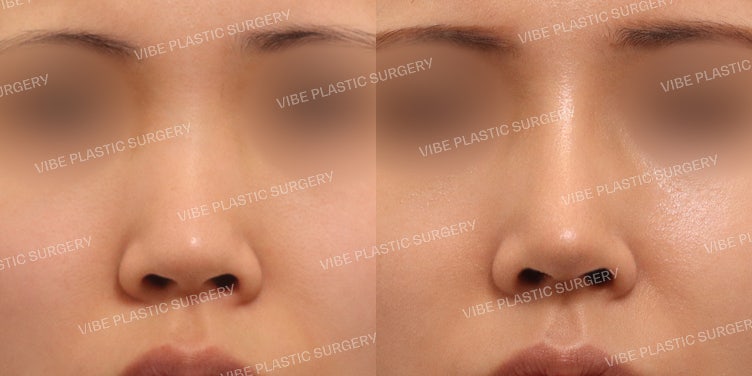
* Basic Information
# Female in her 20s
# Low nose bridge and short nasal tip
* Consultation
# The patient had a naturally low nose and relatively small septal cartilage. However, she did not wish to use external materials such as donated rib cartilage. We established a surgical plan reflecting her preference to elevate the nasal tip using only autologous cartilage as much as possible.
# She desired a ‘straight-semi-curved’ (Jik-ban) line that extends clearly without making the nostrils overly visible.
* Surgical Plan
# Bridge Rhinoplasty (Silicone implant, Osteotomy)
# Tip Rhinoplasty (Septal extension graft)
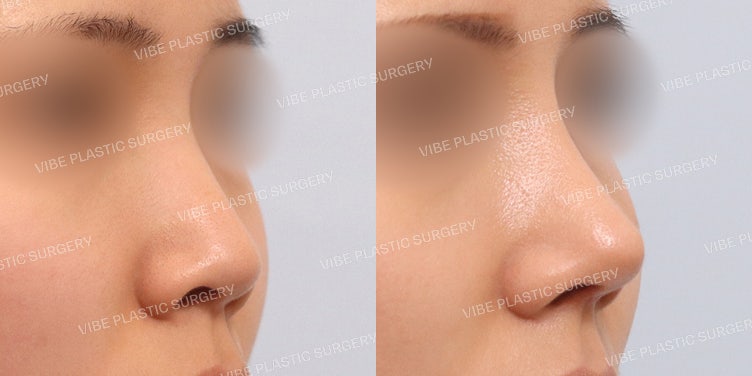
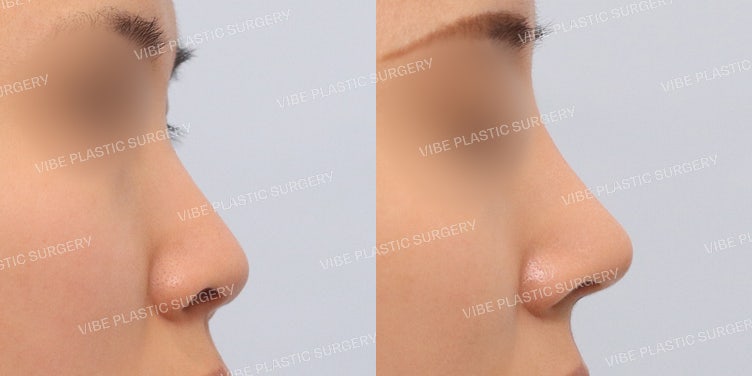
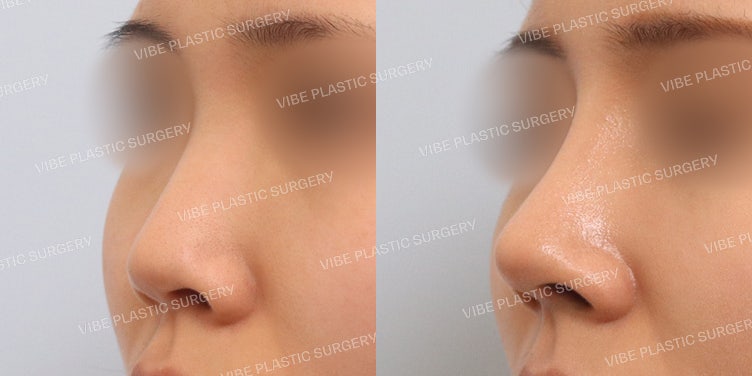
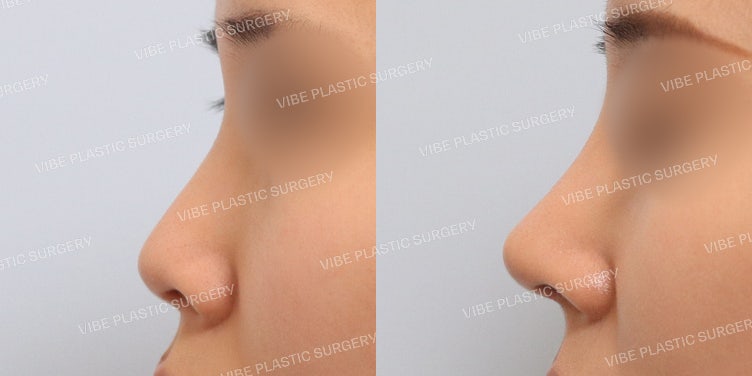
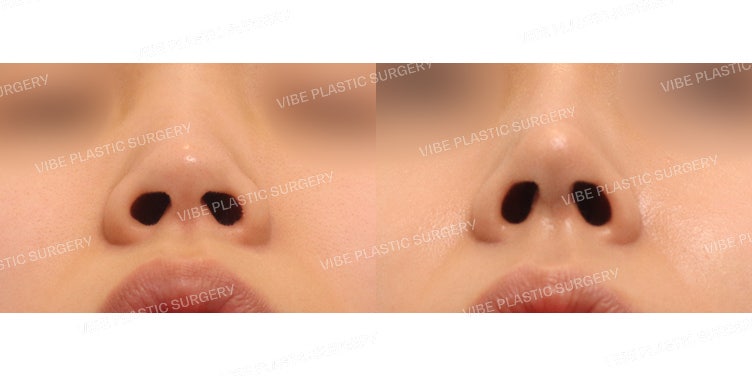
* Post-operative Progress
1. In the post-operative results, a natural yet sharp straight-semi-curved nasal tip was achieved without excessive nostril exposure, exactly as requested.
2. As the bridge became smoothly elevated, drawing focus to the center of the face, the previously flat appearance gained three-dimensional depth. The patient was highly satisfied as this also created the illusion of a smaller face.
Consultations and surgeries should be performed by a board-certified plastic surgeon!
The VIBE that comes from extensive experience.
Dr. Young Moon Yoo, Representative Director of VIBE Plastic Surgery
Complications and side effects such as bleeding, inflammation, infection, and asymmetry may occur depending on the individual, and caution is required.
Frequently Asked Questions
What materials are mainly used for low nose augmentation?
In this case, silicone implants and osteotomy were used for the bridge of the nose, and autologous cartilage was used for the tip of the nose through septal extension grafting. According to the patient's request, a plan was made to raise the tip of the nose as much as possible using only autologous cartilage.
What kind of nose line can I achieve after rhinoplasty?
In this case, the patient wanted a semi-straight nose tip that extended clearly without the nostrils being overly visible. After the surgery, a natural yet sharp semi-straight nose tip was achieved.
Can low nose augmentation improve the overall impression of the face?
Yes, it can be improved. In this case, the bridge of the nose was smoothly raised, drawing attention to the center, which created a more three-dimensional look for the previously flat-looking face and also had the effect of making the face appear smaller, leading to high patient satisfaction.
Is it possible to perform rhinoplasty using only autologous cartilage?
Yes, it is possible. If a patient, like in this case, does not want other materials such as donated rib cartilage and wishes to raise the tip of the nose as much as possible using only autologous cartilage, a surgical plan can be established in consultation with the medical staff to reflect those wishes.
What are the possible side effects after rhinoplasty?
Various complications and side effects such as bleeding, inflammation, infection, and asymmetry may occur after surgery, and these may vary depending on the individual, so caution is required.