2026-05-25
Rhinoplasty for Low Bridge and Hump Nose
A case study of a 20-year-old female patient who underwent rhinoplasty to correct a low bridge, dorsal hump, and bulbous tip, achieving a refined ‘straight-semi-curved’ profile.
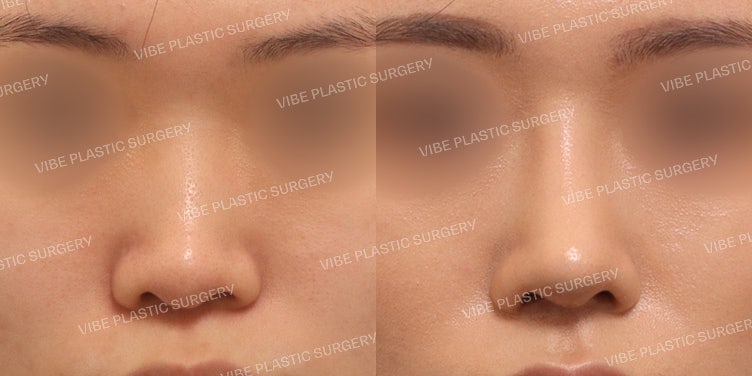
* Basic Information
# Female in her 20s
# Low nasal bridge and dorsal hump
# Bulbous tip creating a blunt appearance
* Consultation
# The patient wanted to improve the unevenness caused by the dorsal hump on her low bridge.
# She expressed stress over the blunt impression caused by her bulbous nose.
# Due to a retracted columella, the nose appeared even lower and more blunt. We planned to create an ideal nasolabial angle through columella correction.
* Surgical Plan
# Bridge Rhinoplasty
- Hump correction
- Use of silicone implant
# Tip Rhinoplasty
- Septal extension graft
- Bulbous tip correction
- Columella correction (columella pull-out/down)
* Post-operative Progress
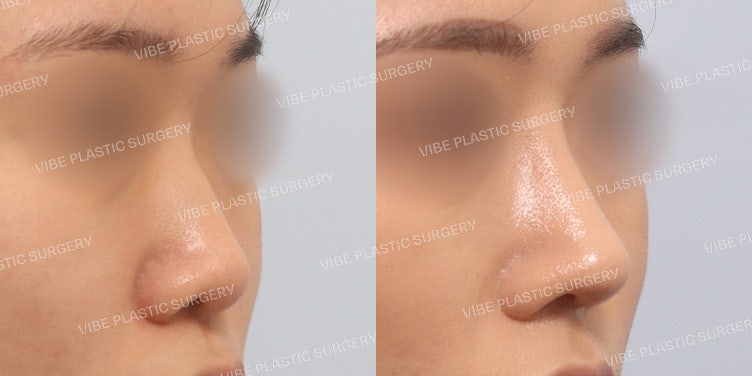
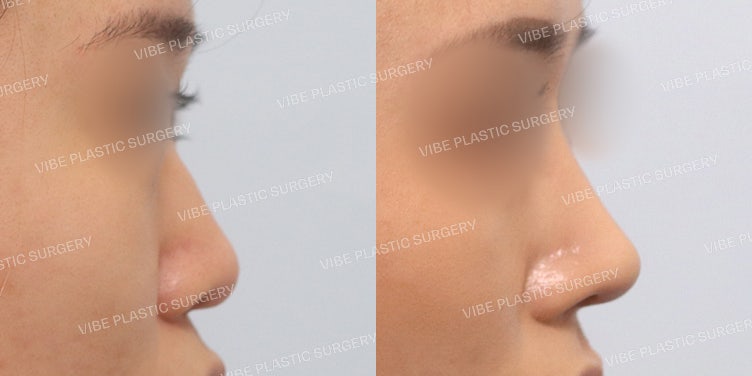
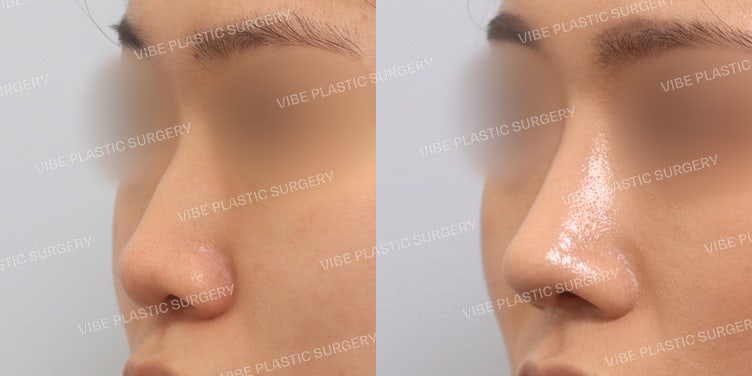
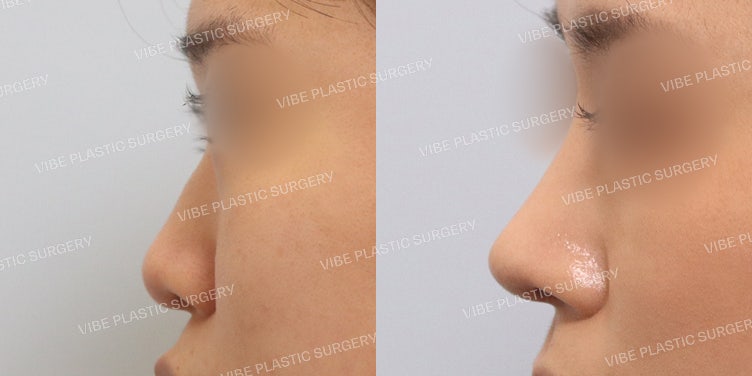
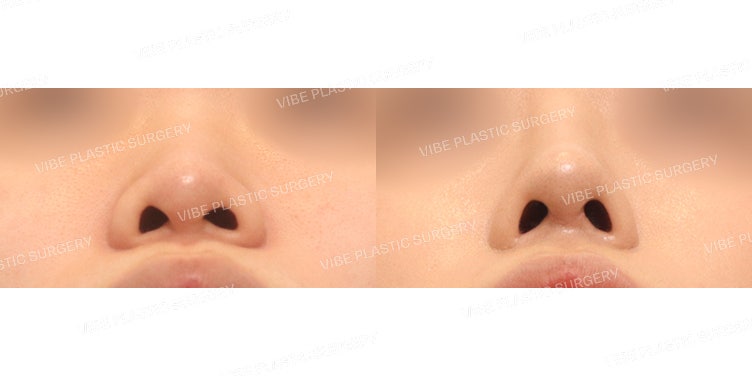
1. The nasal septum was harvested while preserving as much as possible. Using septal cartilage and ear cartilage, we performed an extension graft along with columella correction. As a result, a natural yet sharp ‘straight-semi-curved’ tip line was achieved.
2. To correct the bulbous tip, some fatty tissue was removed to create a more sophisticated look.
Consultations and surgeries should be performed by a board-certified plastic surgeon!
VIBE that comes from rich experience
Dr. Yoo Young-moon, Representative Director of VIBE Plastic Surgery
Complications and side effects such as bleeding, inflammation, infection, and asymmetry may occur after surgery depending on the individual, and caution is required.
Frequently Asked Questions
What improvements are made during surgery for a low nose and a hooked nose?
Surgery for a low nose and a hooked nose improves the unevenness of the nasal bridge and adjusts the overall height of the nasal bridge. In this case, a silicone implant was used to raise the nasal bridge and correct the hump, creating a smooth line.
How is bulbous nose correction performed?
Bulbous nose correction is performed to improve the impression of a blunt nasal tip. In this case, some fatty tissue from the nasal tip was removed to create a more refined and sharp nasal tip.
What materials are used for nasal tip surgery?
Autologous cartilage is mainly used for nasal tip surgery. In this case, septal cartilage and ear cartilage were harvested and used for extension grafting, creating a natural yet prominent nasal tip line.
What is columella correction and what are its effects?
Columella correction is performed when the columella, the nasal column, is retracted, making the nose appear low and blunt. In this case, columella retraction and lowering were performed to create an ideal nasolabial angle and make the nasal tip appear more prominent.
How did the nose line change after surgery?
After surgery, a natural yet prominent straight-to-upturned nasal tip line was completed. The unevenness caused by a low nasal bridge and hooked nose, and the bluntness caused by a bulbous nose, were improved, resulting in an overall more refined impression.