2026-10-06
Why Does a Double Chin Remain Even After Dieting?
A double chin can persist after weight loss due to fat distribution, skin elasticity, and jaw or neck structure. Learn when facial liposuction may help and why proper assessment matters.
Understanding facial fat distribution and liposuction
It is easy to assume that your face will naturally look slimmer as you lose weight.
In reality, however, even after losing weight,
there are cases in which fat under the chin remains relatively intact and the double chin persists.
In such cases, the situation is difficult to explain by body weight alone,
and several factors need to be considered together, including fat distribution around the face and neck, skin elasticity, and the shape of the muscles and bone structure.
Why does a double chin develop?
Not all double chins are caused by the same factors.
Common contributing factors include the following:
Increased subcutaneous fat under the chin
Reduced elasticity of the skin and soft tissue
The bone structure of the chin and lower jaw
The shape of the muscles and soft tissue around the neck
Individual differences in fat distribution
Tissue changes associated with aging and changes in body weight
Therefore, having a double chin does not necessarily mean that liposuction is needed.
In particular, when sagging skin is the main cause, removing fat alone may not achieve the desired result.
Conversely, if skin elasticity is relatively well maintained and fat is concentrated locally under the chin,
a method that directly reduces the fat may be worth considering.
Ultimately, what matters most is first identifying the cause of the double chin.
Fat lost through dieting vs. fat that remains in localized areas
Dieting reduces overall body fat, but the order and extent of fat loss vary from person to person.
It is not easy to selectively remove fat from a specific area through exercise or dietary control alone.
For example, if fat remains under the chin even after a considerable amount of weight loss,
it is hard to say that additional weight loss will necessarily lead to the desired change in that area.
In such cases, it is more important to comprehensively evaluate the amount and distribution of fat and the condition of the skin, rather than focusing only on current body weight.
How does facial liposuction work?
Liposuction involves accessing the subcutaneous fat layer, where fat cells are densely distributed,
and directly removing unnecessary fatty tissue.
The approach to the face differs from liposuction of larger areas such as the abdomen or thighs.
Because even small changes can significantly alter the overall impression of the face,
deciding which areas to treat and how much fat to remove is more important than simply removing as much fat as possible.
In particular, the area under the chin connects the jawline and the neck,
so balance with the surrounding tissue must be considered along with fat distribution.
What is ultrasound-assisted liposuction?
There are various liposuction techniques, including approaches that use ultrasound energy, such as “Liposound.”
This method delivers ultrasound energy to fat tissue to gently break down and emulsify the fat before it is suctioned out.
This approach can be used on a variety of areas that require liposuction,
and it can also be used in relatively narrow and delicate areas such as the face.
That said, the surgical outcome is not determined by the type of equipment alone.
In actual surgery, it is important to assess the patient’s fat layer thickness and distribution, skin elasticity, and facial shape, and then choose the appropriate method.
When facial liposuction may be considered
In general, facial liposuction may be considered in the following cases:
① Body weight is relatively stable, but fat is concentrated under the chin
② Localized fat under the chin remains even after dieting
③ The boundary between the jawline and neck is unclear due to fat
④ Skin elasticity is relatively well maintained, and the amount of subcutaneous fat is judged to be the main cause
Conversely, when skin sagging is severe or structural causes other than fat are significant,
other methods may be considered alongside liposuction, or a different treatment approach may be more suitable.
Removing more fat isn’t always better!
This is an especially important point to keep in mind with facial liposuction.
Just because there is a lot of fat does not mean that removing a large amount will automatically lead to a better result.
Subcutaneous fat in the face also helps maintain soft facial contours,
so removing too much may instead result in hollowing or uneven contours.
Therefore, in facial liposuction, it is important to distinguish between the fat that should be removed and the fat that should be preserved.
In addition, since fat distribution is not perfectly symmetrical on both sides, it is also necessary to check any left-right differences in the face before surgery.
Points to consider through a real case
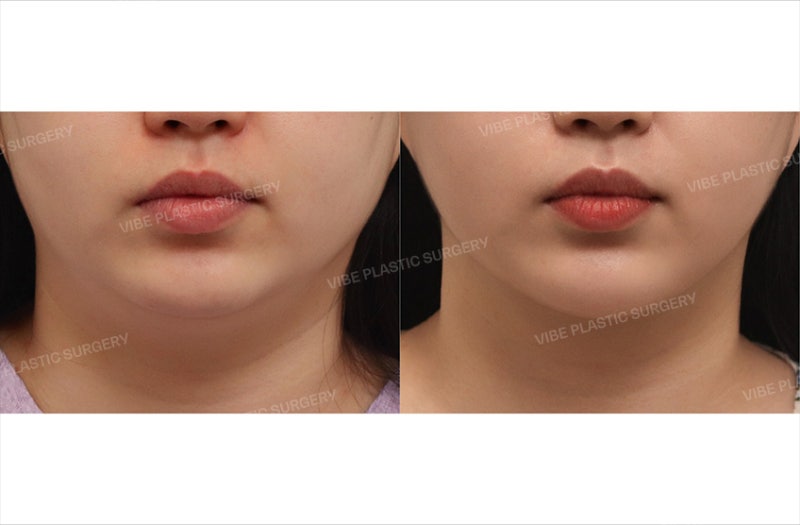
The case below involves fat under the chin that did not sufficiently improve despite dieting,
for which facial liposuction was considered.
The patient was a woman in her 30s who had localized fat under the chin that persisted despite weight management, and she came in for a consultation
.
When looking at the photos, what matters is not simply judging whether the face looks ‘smaller,’
but how to understand the distribution of fat under the chin and the anatomical boundary between the chin and neck.
As this shows, even when the same condition is described as a ‘double chin,’ the underlying causes can differ from person to person.
Therefore, rather than simply comparing someone else’s case with your own face,
it is important to have your own fat distribution and skin condition evaluated by a medical professional.
※ The progress and visible changes in the case above may vary depending on each individual’s condition and recovery process, and this material should not be regarded as a guarantee of any specific result.
Front view of the lower face, side by side: fuller under the chin on the left, a slimmer, tighter chin line on the right.

Three-quarter view comparison: fullness under the jaw on the left, a clearer jaw-to-neck line on the right.
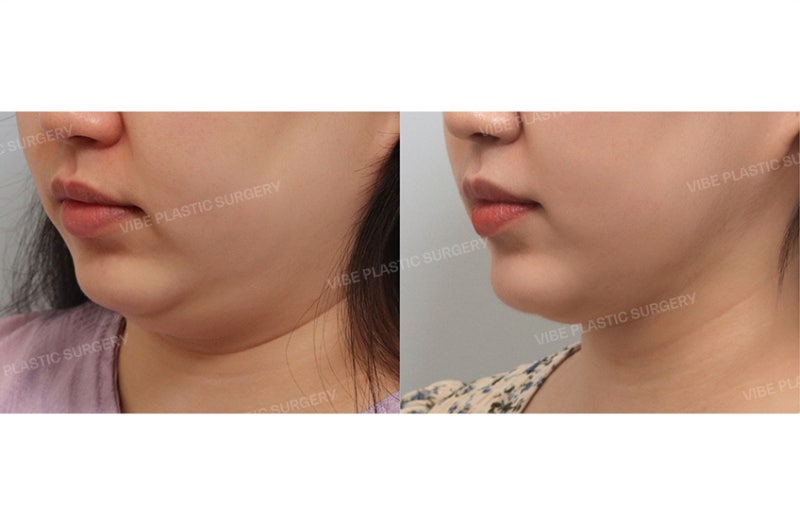
Another three-quarter view: a rounded double chin on the left versus a more defined jawline on the right.
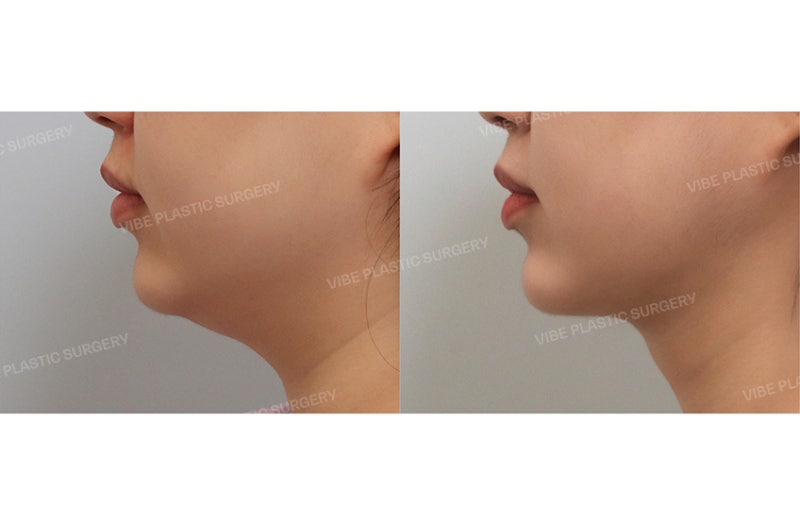
Side profile comparison: a soft bulge under the chin on the left, a sharper chin-to-neck angle on the right.

Another side profile: a pronounced double chin on the left, a flatter, more defined area under the chin on the right.

Three-quarter view from the other side: fuller under the jaw on the left, a slimmer jawline on the right.
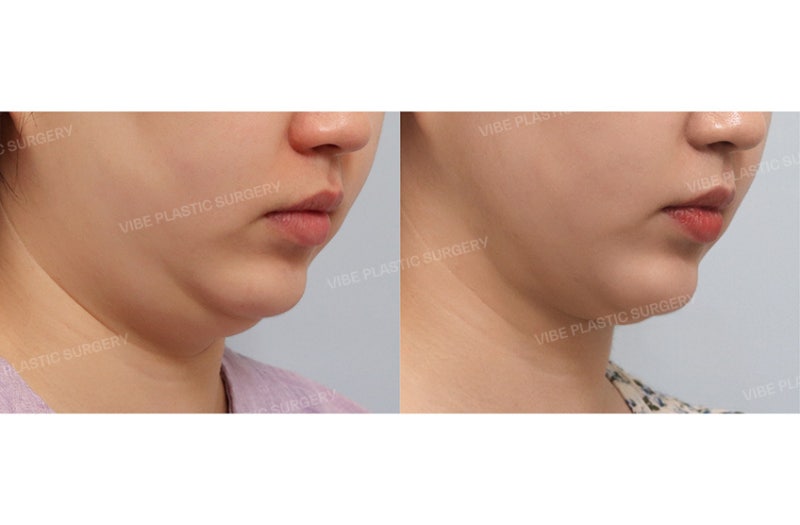
Another angled view: a noticeable double chin on the left compared with a smoother, defined jawline on the right.
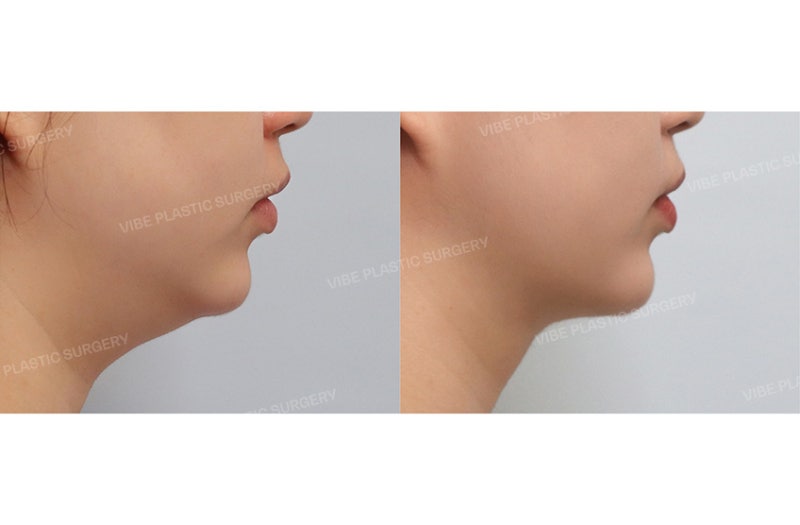
Side profile from the other side: fullness under the chin on the left, a cleaner chin-to-neck line on the right.
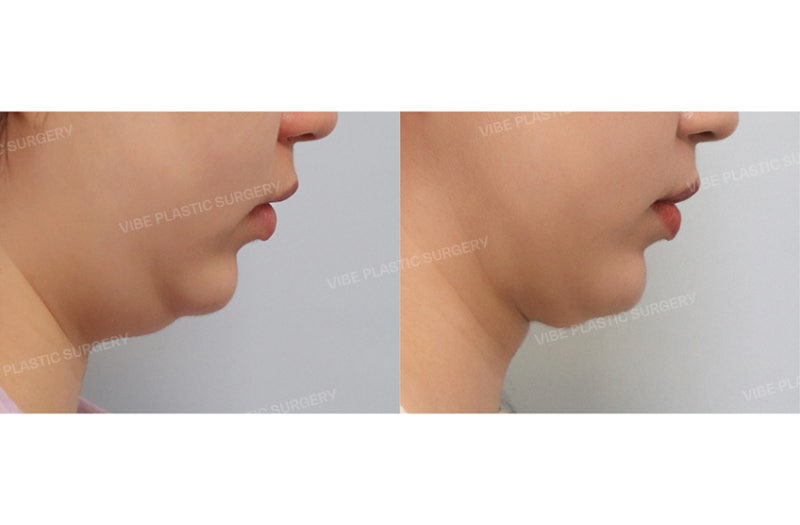
Another side profile: a rounded double chin on the left versus a flatter area under the chin on the right.
In summary
Even if a double chin remains after dieting, that does not automatically mean additional weight loss is necessary.
Conversely, not everyone with a double chin is a candidate for liposuction.
It is important to first identify the underlying causes of a double chin, such as the amount and location of fat, skin elasticity, and muscle and bone structure,
and then choose the appropriate treatment accordingly.
Facial liposuction and ultrasound-assisted liposuction are also just among several options,
and the most suitable approach can vary depending on the individual’s condition.
Ultimately, when improving facial contours, what matters most is not the specific device or technique itself,
but accurately assessing your current facial structure and fat distribution and choosing an appropriate treatment.
※ This article is intended to provide general medical information about facial fat and liposuction. Actual treatment methods and eligibility may vary depending on individual conditions.
※ All cosmetic surgeries and procedures may cause side effects depending on the individual, such as bleeding, infection, inflammation, pain, swelling, scarring, sensory changes, and asymmetry, and recovery and results may vary from person to person. Thorough consultation with a medical professional before surgery is necessary.
Frequently Asked Questions
Why does a double chin remain even after dieting?
A double chin can be influenced by several factors, including increased subcutaneous fat under the chin, reduced skin elasticity, and jaw bone structure, so it cannot always be explained by body weight alone. The shape of the muscles and soft tissue around the neck and individual differences in fat distribution can also contribute.
Do I have to get liposuction if I have a double chin?
No. Having a double chin does not necessarily mean you need liposuction. If sagging skin is the main cause, removing fat alone may not achieve the desired result, so it is important to first identify the cause.
Why is fat under the chin hard to lose after dieting?
Dieting reduces overall body fat, but the order and extent of fat loss vary from person to person, so it is not easy to reduce fat in one specific area. Even if your weight has dropped considerably, if fat remains under the chin, it is hard to say that further weight loss will necessarily change that area.
What is ultrasound-assisted liposuction?
This technique delivers ultrasound energy to fat tissue to gently break down and emulsify the fat before suctioning it out. Liposound is mentioned as an example of this approach, but the type of equipment alone does not determine the surgical outcome.
Is it better to remove more fat during facial liposuction?
No. Removing more fat does not always lead to a better result. Subcutaneous fat in the face also helps maintain soft contours, so removing too much can result in hollowing or uneven contours.
When might facial liposuction be considered?
In general, it may be considered when body weight is relatively stable but fat is concentrated under the chin, or when localized fat under the chin remains after dieting. If sagging skin is severe or structural causes other than fat are significant, other methods may be more suitable.