2026-05-24
Asymmetrical Nostrils? Pinched Nostrils? Solve it with Alar Rim Lowering!
Correct pinched nostrils and asymmetry caused by previous surgery using composite tissue grafting for a natural, balanced look.
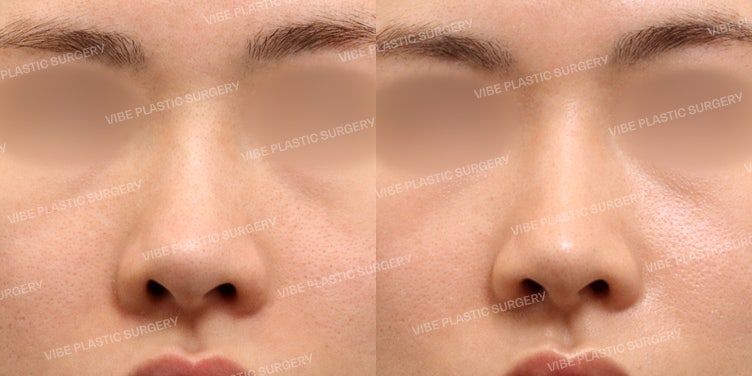
* Basic Information
# Female in her 20s
# Surgical History: 1 rhinoplasty 10 years ago
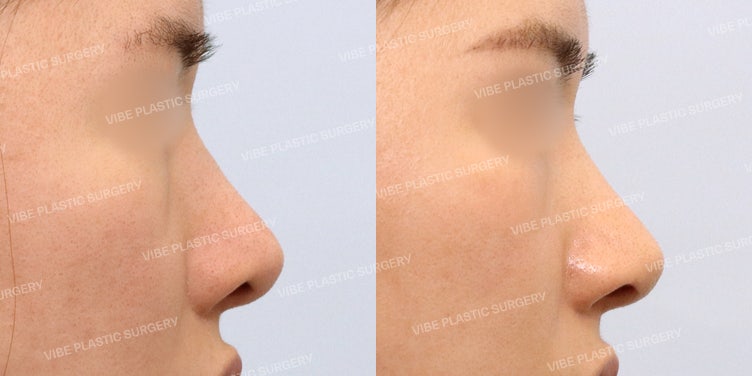
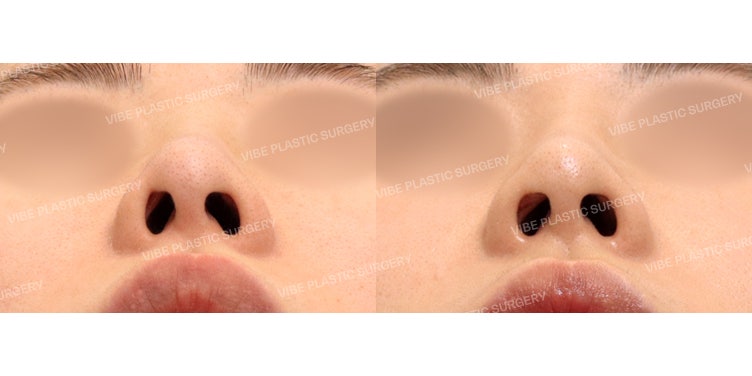
# Current Status and Main Complaints: The right alar (nostril wing) appears pinched and retracted after surgery, making the nostril look lifted.
* Consultation
# The patient visited because the pinched appearance of the nostrils gave an unnatural, ‘operated’ look and she desired correction.
# As this is a deformity that occurred after a previous rhinoplasty, the scar tissue is firm, making it a challenging case for correction.
# Since a significant amount of correction was required, the plan was to achieve sufficient lowering using both ear skin and cartilage (composite tissue graft).
* Plan
# Alar Rim Lowering (Right side only)
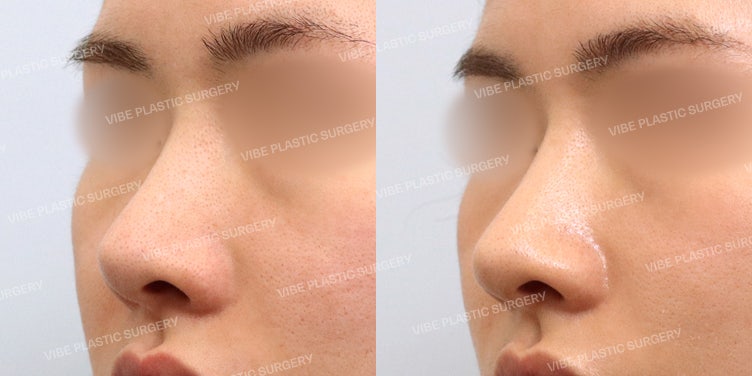
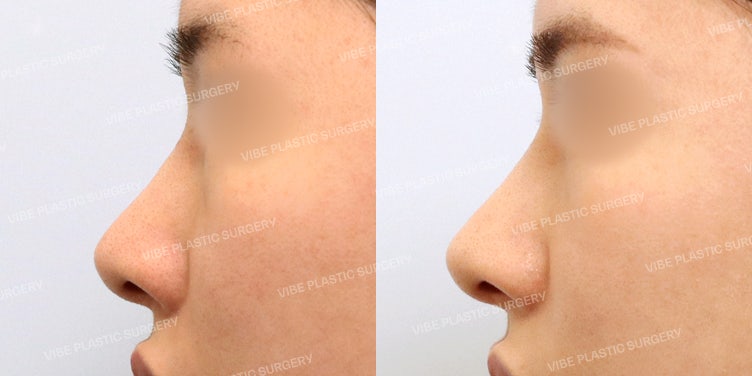
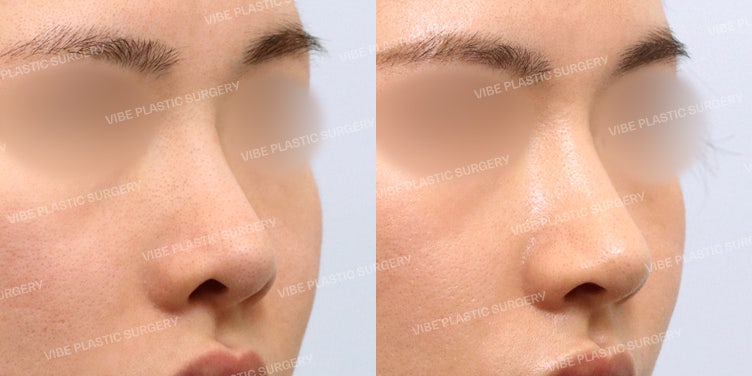
* Post-operative Progress
# Patient satisfaction is high because correction is possible using only internal incisions inside the nostril, leaving no visible external scars.
# The surgical method varies depending on the degree of retraction. In mild cases, correction is possible through lower lateral cartilage suturing or simple cartilage grafting. However, in moderate to severe cases, cartilage grafting alone has limits, so skin tissue must be grafted together for satisfactory results.
# In this patient’s case, a skin-cartilage composite tissue graft was performed. To ensure no changes in ear shape or visible scarring after harvesting the graft, careful design is required. Therefore, the tissue was harvested from the innermost part of the ear where scars are least noticeable.
# The overall nose shape and impression have become softer, and the nostrils were corrected to a satisfactory level of symmetry.
# There are limitations to the alar rim lowering procedure, so it is important to decide on surgery after fully understanding these points!
(1) Perfect bilateral symmetry of the nostril shape cannot be guaranteed.
(2) The horizontal width of the nose may slightly increase.
(3) The alar area may feel slightly firm to the touch.
(4) The graft may be slightly visible when viewed from below.
(5) The area of the ear where cartilage was harvested may fold slightly.
Consultations and surgeries should be performed by a board-certified plastic surgeon!
The VIBE that comes from rich experience.
VIBE Plastic Surgery, Chief Surgeon Young-moon Yoo
VIBE Plastic Surgery complies with medical laws. These before-and-after photos were taken under the same conditions with the patient’s consent. Complications and side effects such as bleeding, inflammation, infection, and asymmetry may occur depending on the individual, and caution is required.
Frequently Asked Questions
In what cases is nostril asymmetry correction necessary?
Correction can be considered when the alar cartilage is pinched after nose surgery, making the nostrils appear upturned, or when they give an unnatural impression. This is especially applicable to cases of deformation caused by previous surgeries.
What materials are used for nostril lowering surgery?
For mild cases, only alar cartilage suturing or cartilage grafting may be sufficient, but for moderate to severe cases or when scar tissue is firm, a composite tissue graft using both skin and cartilage from the ear is performed.
What is the satisfaction level after nostril lowering surgery?
Satisfaction is generally high because correction is possible without visible scars, using only an incision inside the nostril. The overall nose shape and impression can become softer and more symmetrical.
What are the limitations of nostril lowering surgery?
It is difficult to achieve perfect left-right symmetry. Additionally, the horizontal width of the nose may slightly widen, the alar area may feel firm to the touch, and there is a possibility that the graft may be slightly visible when viewed from below.
Does harvesting graft material from the ear change the ear's shape?
When harvesting the graft, it is designed and taken from the innermost part of the ear so that the scar is not noticeable. We strive to prevent changes in ear shape or visible scars through this method.