2026-09-12
Implant-Free Rhinoplasty & Rhinitis Surgery in One Go! By Dr. Young Moon Yoo of VIBE Plastic Surgery
Discover how Dr. Young Moon Yoo of VIBE Plastic Surgery combines implant-free rhinoplasty with rhinitis surgery to fix a dorsal hump, deviated tip, and nasal congestion simultaneously for natural results.

Hello.
I am Dr. Young Moon Yoo, Director at VIBE Plastic Surgery.
Among those considering rhinoplasty,
many are troubled not only by the appearance of their nose
but also by nasal congestion or chronic rhinitis symptoms.
Especially if preoperative CT imaging reveals structural issues like a deviated septum or hypertrophic inferior turbinates in a patient seeking cosmetic rhinoplasty,
we can simultaneously improve both the aesthetic contours and functional breathing aspects of the nose.
This patient also experienced chronic discomfort due to rhinitis,
and preoperative CT findings confirmed a deviated septum alongside inferior turbinate hypertrophy.
Therefore, rather than merely focusing on crafting an attractive nose,
this procedure combined:
1. Functional rhinoplasty to address breathing issues
2. Implant-free rhinoplasty to smooth the hump and uneven nasal bridge
3. Costal cartilage (rib cartilage) rhinoplasty to correct a deviated, drooping tip
all in a single surgical session.
As a result, we preserved the patient's natural facial harmony
while achieving a smooth, refined semi-straight (straight-curved) nasal profile.
Can cosmetic rhinoplasty and rhinitis surgery be performed together?
Many people believe rhinoplasty is solely for appearance, while rhinitis surgery is purely functional.
In reality, aesthetic concerns and functional breathing issues frequently coexist.
This patient sought to improve the bridge and tip shape
while continually suffering from rhinitis,
and CT scans confirmed septal deviation combined with inferior turbinate hypertrophy.
In cases like this, assessing the structural anatomy of the nose
allows us to develop a surgical plan that addresses cosmetic enhancement and functional relief at the same time.
The benefits of combining functional evaluation with rhinoplasty are undeniable.
Beyond simply creating an attractive nose profile,
identifying the structural causes of persistent nasal congestion and addressing them functionally
greatly enhances overall postoperative satisfaction.
If you regularly suffer from nasal obstruction or rhinitis symptoms,
it is vital to have the internal nasal anatomy thoroughly evaluated before undergoing rhinoplasty.
Who should consider functional rhinoplasty?
✔ Those who frequently experience nasal congestion
If breathing is difficult due to frequent blockage in one or both nostrils,
an internal nasal examination is recommended.
✔ Those whose daily life is disrupted by rhinitis symptoms
When persistent congestion or rhinitis impairs everyday comfort,
evaluating the underlying functional causes is just as critical as addressing external appearance.
✔ Those with a deviated septum
The septum is the central dividing wall inside the nose.
Severe curvature in this structure
can restrict airflow and become a primary cause of nasal blockage.
✔ Those with hypertrophic inferior turbinates
The inferior turbinates are mucosal structures lining the nasal cavity;
when swollen or thickened, they can obstruct the nasal airway.
In this patient's case, CT scans clearly identified these structural issues,
prompting a combined approach addressing both function and form.
Why combining functional rhinoplasty and cosmetic rhinoplasty is advantageous
When planning rhinoplasty, it is essential to look beyond surface aesthetics
and take nasal airflow and functionality into account.
Especially when preexisting nasal blockage or rhinitis is paired with confirmed structural anomalies on a CT scan,
aesthetic improvements and functional restoration can be mapped out in a unified surgical plan.
For the patient, a single operation can
relieve troublesome nasal congestion,
smooth down a dorsal hump,
and correct tip deviation or drooping,
delivering far greater overall satisfaction.
Of course, rhinitis stems from diverse causes,
so surgery alone may not cure every type of rhinitis symptom.
Hence, designing the surgical plan requires careful assessment of individual symptoms, CT scans, and internal nasal structures.
Implant-free rhinoplasty: Preserving sufficient native bridge height
Many believe synthetic implants are an absolute requirement for nose surgery.
However, implants are not necessary for every patient.
This patient already possessed adequate height along the nasal bridge.
Rather than placing an artificial implant to raise the bridge higher,
it was far more critical to maintain native bridge height while smoothing out the dorsal hump and irregular contours.
Through this implant-free rhinoplasty, we corrected the dorsal hump
and refined bridge transitions naturally, creating a sleek, gentle contour line.
Rhinoplasty is not merely about height augmentation.
If you already have good bridge height, preserving that strength while
refining bumps and uneven areas alone
can produce a remarkably refined transformation.
Who needs dorsal hump reduction?
A hump nose features a visible protrusion on the mid-bridge in profile view.
Depending on its prominence, it can impart a harsh or overly masculine impression,
leading many to feel self-conscious about their profile line.
Dorsal hump reduction is especially worth considering if:
✔ Your bridge profile appears bumpy or uneven
✔ You have adequate bridge height but an uneven contour
✔ You desire a natural semi-straight nasal line
✔ You wish to preserve existing bridge height rather than creating an artificially high bridge
This patient matched these criteria perfectly.
Preserving natural bridge height while smoothing the hump
and carving a seamless contour proved to be the most flattering, natural approach.
Correcting a deviated, drooping tip using costal cartilage
Another key concern for this patient was a drooping, tilted nasal tip.
When the nasal tip sags or tilts to one side,
the central balance of the face can appear distorted from both frontal and profile views.
Creating durable, natural support for the tip
demands thorough attention to internal nasal anatomy.
In this procedure, rib (costal) cartilage was used to reinforce and straighten the deviated septal framework,
allowing for stable, long-lasting correction of the drooping, tilted tip.
Tip plasty is not just about stacking cartilage on top to add projection.
It requires constructing a sturdy structural support foundation
so the tip maintains its desired position and orientation over time.
Using costal cartilage, we stabilized the structural axis of the nasal tip,
lifting the drooping appearance to create a crisp, well-proportioned, natural tip shape.
When is costal cartilage rhinoplasty recommended?
Costal cartilage can be utilized across a wide variety of anatomical conditions.
It is particularly advantageous when:
✔ Robust, firm structural support is needed for the nasal tip
✔ Severe tip drooping requires correction
✔ There is significant nasal deviation or asymmetry
✔ Septal cartilage alone is insufficient to build the required framework
✔ Revision rhinoplasty requires an ample volume of graft material
However, rib cartilage is not required for every single case.
The choice of cartilage and surgical technique should always be tailored to internal nasal anatomy, cartilage viability, and the patient's aesthetic goals.
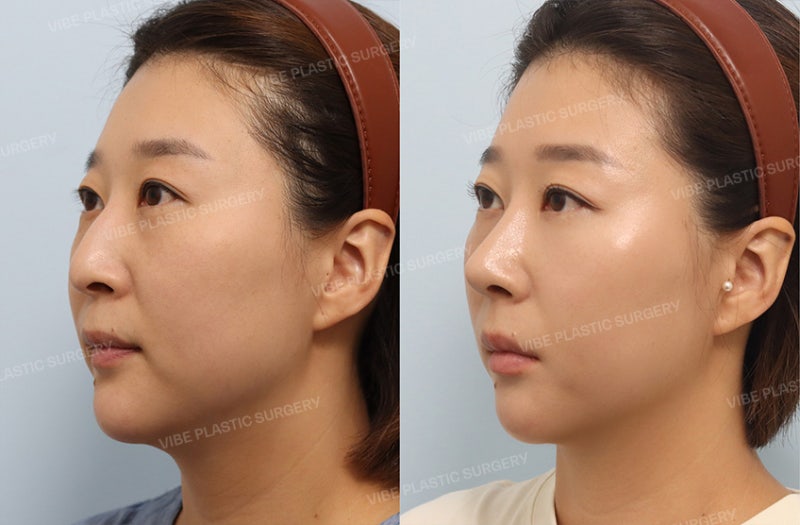
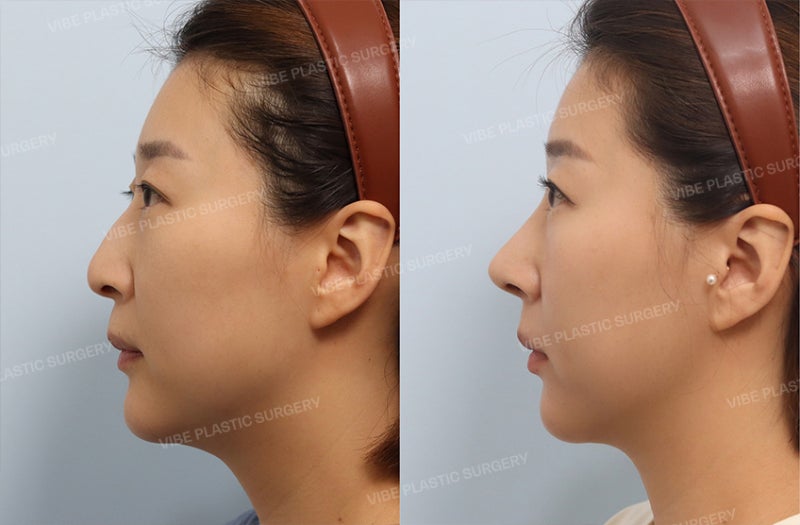
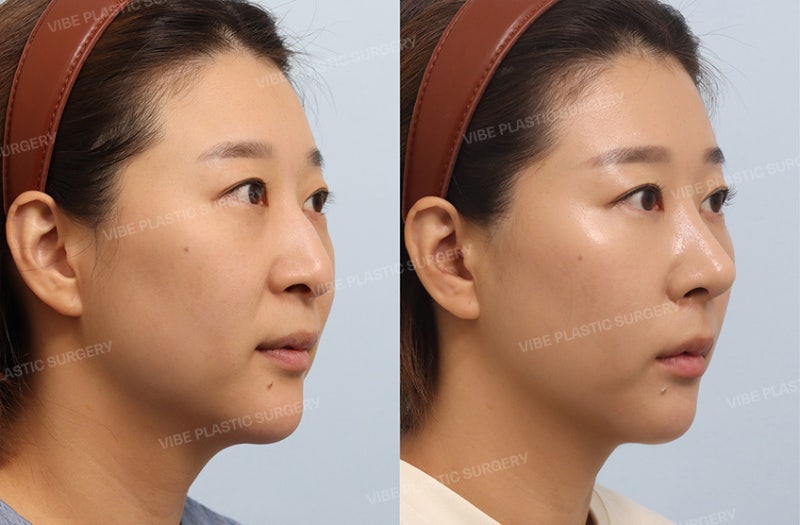
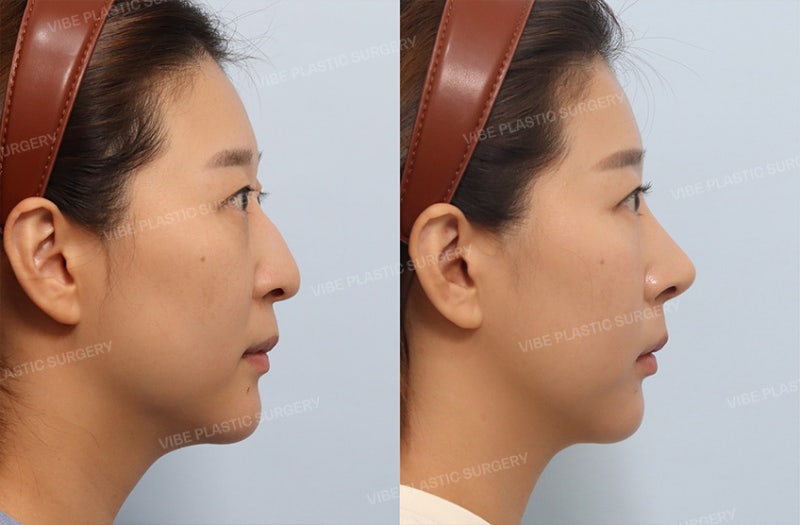
What changes were achieved before and after surgery?
Comparing the pre- and postoperative results, the most prominent improvements
are visible along the dorsal line and the nasal tip.
Before surgery, a dorsal hump and minor irregularities
interrupted the continuity of the profile line.
Additionally, the drooping, deviated tip
made the central nasal balance appear unstable.
Following hump reduction and smoothing of the dorsal bridge,
a sleek, harmonious line was established.
Straightening and lifting the deviated tip
restored overall balance to the entire facial structure.
Preoperative Status
Dorsal hump created an uneven, disrupted side profile
Adequate bridge height that lacked smooth continuity
Drooping tip lent a heavy, congested facial impression
Deviated tip and septum created an off-center appearance
Frequent discomfort caused by chronic rhinitis and nasal blockage
Postoperative Outcome
Hump reduction created a sleek, continuous bridge line
Natural native height preserved without synthetic implants
Deviated, drooping tip corrected for a well-balanced profile
Flowing semi-straight line from bridge to tip
Comprehensive surgical plan addressing internal nasal function
For those seeking a natural semi-straight nasal line
Rather than seeking an excessively high or dramatic bridge,
more patients today prefer a natural profile tailored to their unique facial features.
In particular, the semi-straight (straight-curved) line avoids an overly rigid appearance,
blending gentle curves with straight lines to evoke an elegant, feminine image.
However, the identical semi-straight silhouette cannot be applied uniformly to everyone.
Bridge elevation, forehead transition, skin thickness, tip geometry, and facial proportions
must all guide individual design choices.
Because this patient already possessed adequate height,
focus was placed on refining the hump and repositioning the tip
to achieve a balanced, natural semi-straight line rather than adding artificial height.
Recommended candidates for implant-free & functional rhinoplasty
✔ Those wanting to resolve nasal congestion during cosmetic rhinoplasty
Patients who wish to achieve aesthetic transformation while simultaneously addressing functional airflow concerns.
✔ Those experiencing rhinitis or nasal blockage who are considering rhinoplasty
Preoperative CT scans and nasal endoscopy can assess septal deviation, turbinate hypertrophy, and more.
✔ Those with adequate bridge height who struggle with a dorsal hump
Implant-free rhinoplasty refines the hump while preserving native bridge height without artificial materials.
✔ Those looking to correct a drooping or deviated nasal tip
Rebuilding tip structural support restores facial alignment and stability.
✔ Those preferring a natural semi-straight line over an overly elevated bridge
Patients who seek sophisticated improvement harmonious with their facial features.
Rhinoplasty at VIBE Plastic Surgery: Combining beauty and function!
The nose serves as the visual centerpiece of the face
while carrying out the vital physiological function of respiration.
Planning rhinoplasty therefore requires more than just picking a photo of a desired shape;
thoroughly evaluating internal and external structures together is paramount.
Especially when rhinitis and congestion are present as in this case,
identifying internal anatomical issues,
measuring the extent of septal deviation,
evaluating turbinate hypertrophy,
and selecting procedures that complement cosmetic goals
must all be meticulously analyzed.
At VIBE Plastic Surgery, our philosophy centers not on indiscriminate bridge augmentation,
but on preserving a patient's natural anatomical strengths and targeting only the necessary corrections.
When native height is sufficient, we examine whether implant-free surgery can retain that advantage;
for a drooping or deviated tip,
we determine how to establish firm structural stability;
and when functional issues exist,
we integrate appropriate breathing improvements with aesthetic design.
Harmonizing natural aesthetics with functional improvement
For this female patient in her 30s, rhinoplasty was far more
than just removing a dorsal hump or elevating the nasal tip.
Chronic rhinitis and congestion were treated with targeted functional procedures,
native bridge height was preserved while the hump was smoothed,
and costal cartilage was used to rectify the deviated, sagging tip structure.
As a result,
natural facial harmony was preserved,
the uneven dorsal hump was rendered sleek and smooth,
the drooping, deviated tip regained stable balance,
and a refined, effortless semi-straight nasal line
was successfully achieved.
If you are contemplating rhinoplasty, prioritizing individual anatomical correction yields far more satisfying and natural results than simply seeking an overly elevated or flashy profile.
Especially if you also suffer from nasal congestion or rhinitis,
we strongly encourage an in-depth consultation exploring both cosmetic and functional options.
At VIBE Plastic Surgery, we design natural, sophisticated nasal profiles
by carefully factoring in both aesthetic form and internal airway function.
Frequently Asked Questions
Can cosmetic rhinoplasty and rhinitis surgery be performed together?
Yes, they can be performed simultaneously. When aesthetic concerns are accompanied by functional issues such as septal deviation or turbinate hypertrophy confirmed on CT scans, a unified surgical plan can correct structural causes of nasal blockage while refining the cosmetic nasal contour.
Are implants mandatory for rhinoplasty?
No, synthetic implants are not mandatory for everyone. If your natural bridge height is already sufficient, an implant-free approach that smooths dorsal humps and uneven contours can yield a sleek, sophisticated semi-straight profile without artificial implants.
When is costal (rib) cartilage necessary in rhinoplasty?
Costal cartilage is chosen when firm tip support or significant structural reconstruction is required. It provides a sturdy structural framework when a sagging, deviated tip compromises stability, or when septal cartilage is inadequate, particularly in complex or revision cases.
Who is a good candidate for dorsal hump reduction?
Dorsal hump reduction is ideal for individuals with an uneven or protruding bridge that creates a harsh or prominent profile. It is especially suitable for those who have sufficient natural height and wish to achieve a smooth, natural semi-straight line without artificial elevation.