2026-09-16
Middle-Aged Male Blepharoplasty – Dramatic Yet Natural Transformation by Dr. Young-Moon Yoo of Vibe Plastic Surgery (Sinnonhyeon Station)
Dr. Young-Moon Yoo of Vibe Plastic Surgery explains comprehensive middle-aged male eyelid rejuvenation using forehead, sub-brow, upper/lower blepharoplasty, and midface lifts for natural results.
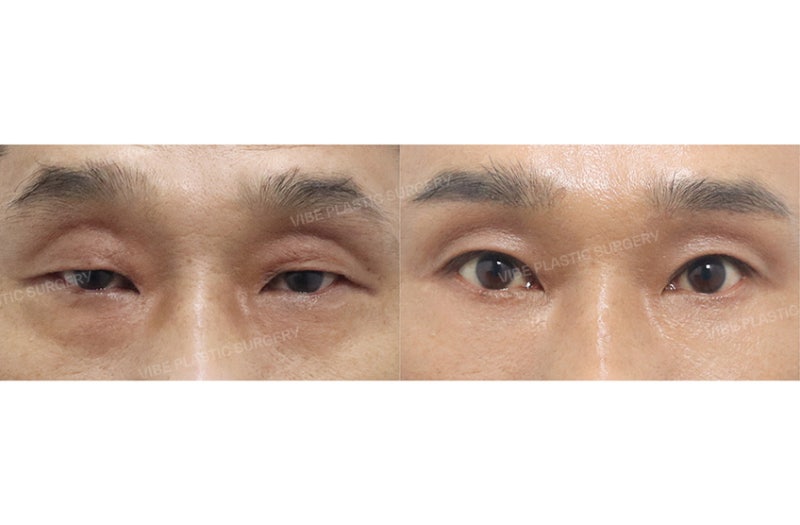
Eyelid Surgery for Men in Their 50s
Rather than simply trimming away sagging skin, redesign the entire structural framework of the eyes!
Hello.
I am Dr. Young-Moon Yoo, Chief Director of Vibe Plastic Surgery.
When men in their 50s and older consider blepharoplasty,
the concerns they voice are remarkably similar.
“My eyes droop so much that I constantly look exhausted.”
“Opening my eyes feels harder than it used to.”
“Because of my eyes, I look much older than my actual age.”
“Still, I don’t want anything that looks obviously operated on.”
In blepharoplasty for middle-aged men,
what matters most is not simply how much skin is excised.
You must comprehensively evaluate what is causing the eyelid to droop,
how far the eyebrows have descended,
whether the forehead muscles are being strained to lift the eyelids,
the current degree of eyelid laxity and levator muscle function,
and whether aging has also progressed into the under-eye and midface regions.
For this male patient in his 50s as well,
a standard upper blepharoplasty alone could not deliver satisfactory, lasting improvement.
Not all sagging eyes are the same.
In middle age, eyelids rarely sag from just one single factor.
As time passes,
the forehead and eyebrows descend downward,
the upper eyelid skin loses elasticity and stretches,
the eyelid fat pads and soft tissues undergo structural shifts,
the muscles that lift the eyes weaken,
the under-eye fat begins to bulge,
and the soft tissues of the midface droop as well.
Therefore, simply cutting away stretched upper eyelid skin
might temporarily make the eyes look slightly larger,
but it will not correct the underlying aged structural framework of the face.
On the contrary, excessive skin excision can strip away the relaxed, natural masculine impression that is so vital.
This consideration was my top priority when planning for this patient.
1. Endoscopic Forehead Lift
Resetting the Eyebrow Position from Above
The first structural element that had to be addressed was the position of the eyebrows.
Even when eyelids appear heavily hooded,
the root cause does not always lie within the eyelids themselves.
In many cases, the forehead and eyebrows descend together,
hooding over the upper eyelids and making the gaze look small, crowded, and constricted.
Taking this into careful account, an "endoscopic forehead lift" was performed concurrently for this patient.
A forehead lift is not merely a procedure to smooth out forehead wrinkles.
Its primary purpose is to elevate drooping brows back to an optimal anatomic position
and rejuvenate the upper face,
thereby relieving the downward burden bearing down on the eyelids.
Furthermore, properly stabilizing the position of the forehead and brows helps prevent the brows and upper eyelids from sagging again prematurely in the future.
Particularly in men,
lifting the eyebrows excessively high can produce an unnaturally feminine look.
Therefore, the question is not "how high can we lift them?"
but rather "where should they sit to look effortless and masculine?"
2. Sub-Brow Lift (Infrabrow Excision)
Thin, Severely Sagging Skin Is Managed from Beneath the Brow
This patient presented with substantial upper eyelid laxity,
and his skin was exceptionally thin.
In cases like this, indiscriminately excising excessive skin directly along the double eyelid fold can cause a hollowed-out look or leave a harsh, stark expression.
Consequently, an infrabrow excision—tightening and lifting sagging skin right beneath the brow line—was planned alongside the other procedures.
The advantage of a sub-brow lift
is that it directly elevates redundant skin superiorly
while preserving the patient’s existing natural eye shape and crease line as much as possible.
Especially for middle-aged men,
creating an artificial, dramatic double eyelid fold is far less desirable
than preserving the original, natural contours
while neatly eliminating only the hooded, redundant tissue.
3. Upper Blepharoplasty + Ptosis Correction
Looking Beyond Sagging Skin: Evaluating Levator Muscle Strength
Another crucial clinical challenge in this case
was the reduced strength of the levator muscles.
In mature eye surgery,
clinicians must distinguish between "lax skin" and "weak eye-opening muscle strength."
No matter how much excess skin you excise,
if the underlying levator muscle lacks sufficient tone,
the eyes will fail to achieve the clear, vibrant, well-rested appearance the patient seeks.
Therefore, upper blepharoplasty was combined with ptosis correction.
Through the upper eyelid incision, stretched tissue was trimmed
to re-anchor the structural planes,
while the attenuated levator mechanism was reinforced,
restoring comfortable eye-opening and a crisp, refreshed gaze.
Addressing Sunken Upper Eyelids Simultaneously
An issue frequently overlooked in middle-aged men is upper eyelid hollowing.
With age, changes in periorbital fat and soft tissue volume
often leave the upper eyelids hollowed and recessed.
If substantial skin is removed in this state without addressing the deficit,
the hollow becomes even more pronounced and skeletal.
Because this patient also had upper eyelid hollowing,
the eyelid fat was meticulously rearranged during the upper blepharoplasty to fill and smooth the sunken areas.
In other words:
“Remove redundant tissue where excessive, and replenish volume where depleted.”
This principle is essential.
Middle-aged eyelid surgery is not a simple resection;
it is an architectural repositioning and balancing of tissue volume and position.
4. Lower Blepharoplasty + Midface Lift
Treat the Midface, Not Just the Lower Eyelids Alone!
Rejuvenating the upper periorbital zone alone
will not resolve an aged, tired look across the entire face.
This patient also showed noticeable under-eye bulging and skin laxity.
Therefore, a lower blepharoplasty was performed in conjunction with a midface lift.
Lower blepharoplasty flattened the bulging fat pads
and smoothed out loose tissue,
while the midface lift elevated descended cheek tissue superiorly,
creating a seamless, youthful transition from the lower eyelid into the anterior malar (cheek) region.
When the midface is sagging,
the demarcating tear trough groove deepens,
making the entire face look drawn downward.
Therefore, rather than simply flattening the under-eye area,
it is critical to harmonize the continuous contour:
Lower Eyelid → Anterior Malar → Midface.
The Core Principle: Overall Facial Harmony, Not Just One Isolated Area
The combination of procedures performed for this patient is summarized below:
① Endoscopic Forehead Lift
→ Lifts descended brows, smooths forehead lines, and restores the upper third of the face
② Sub-Brow Lift (Infrabrow Excision)
→ Naturally pulls thin, severely drooping upper eyelid skin upward
③ Upper Blepharoplasty + Ptosis Correction
→ Trims hooded eyelid skin while reinforcing weak levator muscle strength
④ Upper Eyelid Fat Repositioning
→ Softens sunken upper eyelids for a refreshed, youthful fullness
⑤ Lower Blepharoplasty + Midface Lift
→ Corrects under-eye bags and laxity while elevating midfacial descent
Viewed in isolation, each is a distinct procedure,
yet all worked synchronously toward one clear goal:
“To restore tired, drooping eyes and facial features to a youthful, energized, and masculine vitality.”
5 Key Pillars of Eyelid Surgery for Middle-Aged Men
1. Avoid Over-Excising Skin
This is one of the most critical pitfalls to avoid in male eyelid surgery.
Removing large amounts of skin does not translate to looking younger.
Excessive excision can leave the eyes looking unnaturally wide,
deepen upper lid hollowing,
and create an uncharacteristically sharp, aggressive glare.
2. Always Assess Eyebrow Position
You must diagnose whether the laxity is confined to the eyelid,
caused by eyebrow descent,
or a combination of both.
When indicated, a forehead or brow lift should be utilized
to re-establish upper facial positioning first.
3. Thoroughly Evaluate Levator Muscle Strength
Stretched skin and an underperforming levator muscle are distinct clinical issues.
Accurately determining whether ptosis correction is required
is vital to restoring open, effortless, and crisp vision.
4. Balance Hollows and Bulges in the Same Field
Periorbital aging involves more than just excess tissue.
While some zones sag and protrude,
adjacent areas hollow out.
Therefore,
trimming unnecessary tissue while conserving and repositioning volume where deficient
is paramount.
5. Aim for "Naturally Rejuvenated," Not "Artificially Young"
This is the ultimate benchmark for male blepharoplasty.
A noticeably operated, wide crease or hyper-elevated brows do not signify youthfulness.
Rather, the ideal outcome is:
“You look wonderfully refreshed, but nobody can tell you had surgery.”
That is the hallmark of sophisticated male facial rejuvenation.
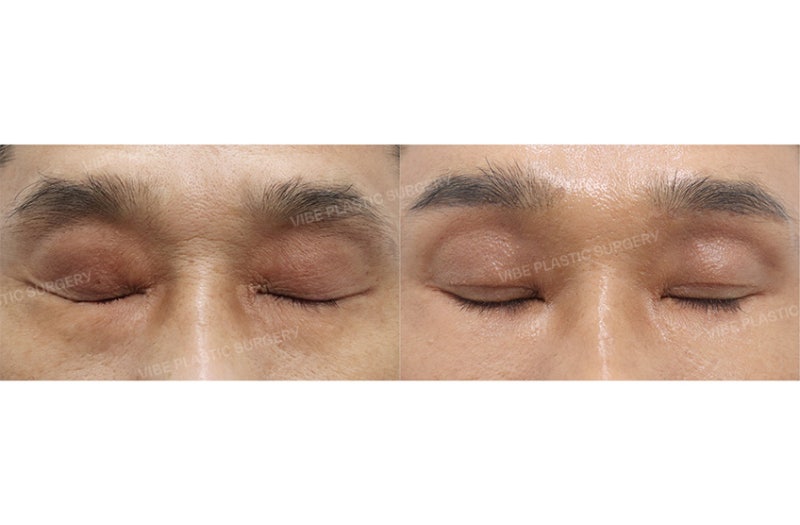


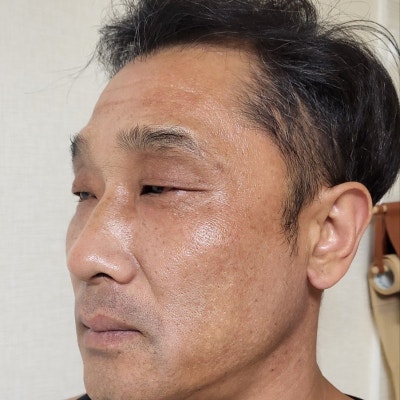
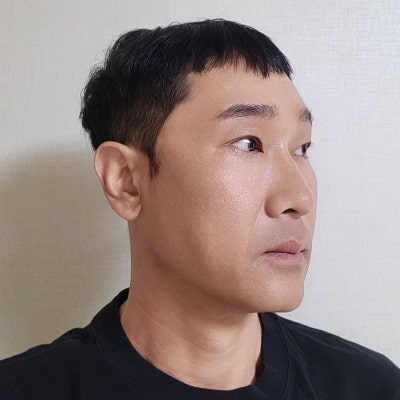
After Surgery: Not Just Changed Eyes, but a Transformed Demeanor
Rather than treating individual focal areas in isolation,
this plan reconnected the facial anatomy from the upper forehead down through the midface.
Before surgery,
drooping brows and heavy upper lids,
diminished eye-opening strength,
sunken upper eyelid contours,
and bulging, sagging under-eye tissue
projected an impression of heavy exhaustion and advanced age.
Following surgery,
hooded brows and excess eyelid skin were cleanly elevated,
eye-opening tone was reinforced to bring clarity to the eyes,
the upper hollows were smoothly restored,
and midface descent and lower eyelid bagging were resolved—
yielding a markedly youthful, confident, and energetic appearance.
Crucially, the patient’s fundamental eye shape was not altered;
instead, his distinctive masculine features were preserved
while the descended tissues were gently returned to their youthful anatomical positions.
Middle-Aged Male Blepharoplasty:
Look at the "Entire Face," Not the "Eyes Alone."
Blepharoplasty in one's 50s and beyond requires
a fundamentally different surgical philosophy than in one's 20s or 30s.
Simply creating a double fold or excising redundant skin
cannot correct multifactorial, progressive facial aging.
The position of the forehead and eyebrows,
upper eyelid hooding,
levator muscle strength,
upper eyelid volume deficits,
lower eyelid fat protrusion and laxity,
and midface descent—
all of these variables must be assessed in unison to assemble the appropriate custom surgical plan.
For this male patient in his 50s,
we combined an endoscopic forehead lift, sub-brow lift, upper blepharoplasty with ptosis correction, fat repositioning, and lower blepharoplasty with midface lifting—tailoring only what was strictly necessary for his anatomy.
The definitive outcome was never an "obviously operated eye,"
but rather:
“My own familiar eyes, look years younger and completely natural.”
At Vibe Plastic Surgery, when approaching mature eyelid rejuvenation,
we look beyond simple skin excision.
We examine why the eyes appear fatigued,
which tissues are deficient and which are redundant,
and how best to restore harmony across the entire face.
Frequently Asked Questions
Why should surgeons avoid excising too much skin during male eyelid surgery?
Excising an excessive amount of skin can produce an unnatural, startled, or overly harsh appearance. For men in particular, aggressive skin removal risks worsening upper lid hollowing or creating an artificially sharp look. It is vital to assess skin thickness and laxity accurately, removing only what is necessary to safeguard a comfortable, masculine eye shape.
Can drooping eyelids actually be caused by the forehead and eyebrows?
Yes. As the forehead and eyebrows descend with age, they push downward and hood over the upper eyelids. In such cases, simply trimming eyelid skin is inadequate; an endoscopic forehead lift or brow suspension is needed to reposition the eyebrows from above, alleviating upper facial laxity and taking the mechanical weight off the eyelids.
Why is ptosis correction often paired with upper blepharoplasty?
Because eyelid skin laxity is frequently accompanied by weakening of the levator muscle that lifts the eyelid. Even if redundant skin is trimmed, inadequate muscle strength leaves the gaze looking sleepy and dim. Combining blepharoplasty with ptosis correction restores the muscle’s lifting capacity, allowing the eyes to open comfortably, brightly, and effortlessly.
Why combine lower blepharoplasty with a midface lift?
This combination restores the structural continuity spanning the lower eyelid, anterior cheek (malar), and midface. Rather than simply flattening under-eye fat bags, lifting the descended midface softens deep tear troughs and reverses the downward gravitational pull on the central face for a far more natural, rejuvenated result.
Can eyelid surgery still be performed if the upper eyelids are hollowed out?
Yes, by combining the procedure with upper eyelid fat repositioning. When aging causes periorbital volume loss, merely excising skin can make the eyes look even more sunken and skeletal. A tailored approach reallocates and preserves fat pads to fill hollowed contours while simultaneously trimming redundant tissue where needed.