2026-10-23
Why Nose Fillers and Threads (Hico/Misco) May Not Be Enough
Explains the limits of nose fillers and Hico/Misco thread lifts for bulbous noses and nasolabial angle correction, and when rhinoplasty may be worth considering.
Hello.
This is Dr. Yoo Young-moon from Vibe Plastic Surgery Clinic.
When the tip of the nose looks blunt or the nasal bridge looks low, nose fillers or nose thread lifts are sometimes considered first.
These relatively simple procedures can help refine the contour of the nose,
but depending on the structural characteristics of the nose, the expected changes may not fully appear.
In particular, when the cartilage and soft tissue of the nasal tip are thick, as in a bulbous nose,
or when correction of the nasolabial angle, the angle formed by the nasal tip and the upper lip, is needed,
there are aspects that are hard to be satisfied with through procedures such as Wio.
In this article,
the limits of nose fillers and nose thread lifts
the principles of bulbous nose surgery
the meaning of nasolabial angle correction
when rhinoplasty may be considered
We will take a closer look at these from a medical information perspective.
1. The Principles and Limits of Nose Fillers
Nose fillers are a procedure in which hyaluronic acid or other fillers are injected
to add volume to the nasal bridge or specific areas of the nose.
They have the advantage of refining the contour of the nose without incisions,
but they do not surgically change the anatomical structure of the nose itself.
<Changes Achievable with Nose Fillers>
Depending on a person's nose shape and injection site, nose fillers may be used to achieve the following changes:
Filling in sunken areas of the nasal bridge
Smoothing irregular areas along the nasal bridge contour
Temporary visual changes in nose height and contour
However, the actual results vary depending on the existing nose shape, skin thickness, the type of filler, and the amount injected.
<What Are the Limits of Nose Fillers?>
First, it is difficult to fundamentally change the structure of the nasal tip.
A bulbous nose can result from a combination of factors, such as the shape and arrangement of the nasal tip cartilage and the thickness of the skin and soft tissue.
Because fillers work by adding volume, they cannot directly correct these structural causes.
Second, there are limits to correcting the nasolabial angle in the desired direction.
The nasolabial angle refers to the angle formed by the columella and the upper lip.
The position and rotation of the nasal tip, the structure of the columella, and the shape of the upper lip can all affect this angle.
Fillers can sometimes refine the surrounding contour,
but when the position or support structure of the nasal tip cartilage needs to be changed, fillers alone may not achieve the desired result.
Third, the effects are not permanent.
Fillers are broken down by the body or may change shape over time.
The duration varies by product and individual conditions, and there is no guarantee that the contour of the treated area will remain the same over the long term.
Fourth, filler procedures also carry serious risks.
The nose has a complex blood vessel structure.
After filler injection, serious complications such as vascular occlusion and skin necrosis can occur, and although rare, vision loss is also possible.
For this reason, nose fillers should not be regarded as simple procedures without risk.
2. The Principles and Limits of Nose Thread Lifts (Hico/Misco)
A nose thread lift uses medical threads to support or pull certain nasal tissues in order to induce changes in contour.
There are differences depending on the type of thread and the technique used, but the principle is different from surgery that directly reconstructs the nasal cartilage and bone.
<Changes You Can Expect from a Nose Thread Lift>
A nose thread lift can be considered to temporarily alter the contour or position of the nasal tip in certain nose shapes.
However, the degree of change and how long it lasts depend on individual anatomical characteristics, the threads used, and the technique.
<What Are the Limits of Nose Thread Lifts?>
① It is difficult to directly correct the cause of a bulbous nose.
If the nasal tip looks wide and round because of the width or arrangement of the cartilage, or because of thick skin and soft tissue,
supporting the tissue with threads alone may not be enough to change those causes.
② It is not a method for precisely rebuilding the support structure of the nasal tip.
When the height, rotation, or projection of the nasal tip needs structural adjustment,
the shape and support structure of the cartilage must be evaluated.
Thread lifts differ from surgical methods that reconstruct this structure.
③ There is individual variation in duration and shape change.
Duration can vary depending on the type of thread and tissue response, and over time the nose may look different from how it looked initially.
④ Complications can also occur with thread procedures.
Infection, pain, skin irritation, thread visibility or protrusion, asymmetry, and inflammatory reactions may occur.
If you have had a thread procedure before, it is important to confirm the type of thread used, when it was done, and the current condition of the tissue
before planning a repeat procedure or surgery.
3. When Might Rhinoplasty Be Considered?
The reasons for dissatisfaction after a nose filler or thread lift vary from person to person,
so you should first distinguish between the changes you want and the current structure of your nose.
Rhinoplasty may be an option to evaluate in the following cases:
① When you want to fundamentally adjust the height and shape of the nasal bridge
If you want to change the height or width of the nasal bridge or the overall contour of the nose more fundamentally,
the condition of the nasal bones, cartilage, skin, and soft tissue must be evaluated.
Depending on the need, various materials such as implants or autologous cartilage may be considered,
but the same material is not suitable for every patient.
② When you want to correct the shape of a bulbous nose
A bulbous nose is not caused by a single factor.
The width and arrangement of the nasal tip cartilage, the thickness of the soft tissue, and the characteristics of the skin can all have combined effects.
Therefore, rather than aiming only to narrow the nasal tip, it is important to identify which structures actually make the tip appear wide.
In surgery, depending on the anatomical condition, approaches such as reshaping the cartilage or rebuilding the support structure of the nasal tip may be considered.
However, the degree of correction may be limited depending on the characteristics of the skin and soft tissue.
③ When the height and rotation of the nasal tip and the nasolabial angle need to be considered together
Not only the height of the nasal tip but also the direction it faces and the position of the columella affect the profile of the face.
The nasolabial angle is one of the anatomical indicators referenced when evaluating this relationship.
An appropriate angle can vary depending on a person's sex, facial proportions, and the shape of the upper lip and chin,
so it is difficult to apply a single angle to everyone.
When the support structure of the nasal tip needs to be changed,
the surgical approach can be decided after evaluating the shape and position of the nasal tip cartilage and the condition of the nasal septum.
④ When the desired shape is not achieved even after filler or thread procedures
If you still have concerns about the shape of the nasal bridge or nasal tip after previous procedures,
it is important to evaluate the current condition first rather than simply repeating the procedure.
It is necessary to check whether filler remains, whether the threads have caused tissue changes, and whether there is inflammation or scar tissue.
Depending on the findings, treatment of existing filler or other therapies may be considered first, and surgery is not necessarily carried out in every case.
4. How Are Bulbous Nose Surgery and Nasolabial Angle Correction Carried Out?
A bulbous nose and the nasolabial angle may appear related, but the anatomical factors to be evaluated are different.
Bulbous nose surgery is planned mainly around the width and shape of the nasal tip, the arrangement of the cartilage, and the thickness of the skin and soft tissue.
Nasolabial angle correction is planned by comprehensively examining the rotation and support structure of the nasal tip, the position of the columella, and its relationship with the upper lip.
If both issues need to be corrected together, it is also necessary to review whether the goals of each affect the other.
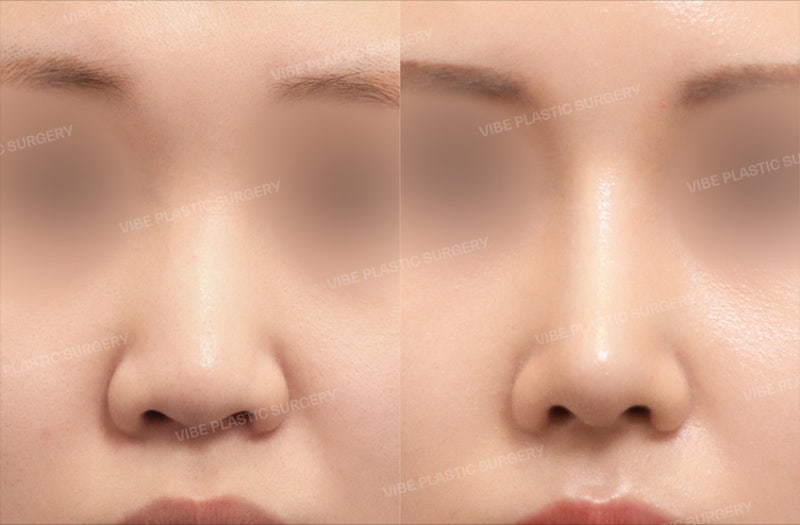
Front view of the nose in side-by-side comparison photos; the eyes are blurred for privacy.
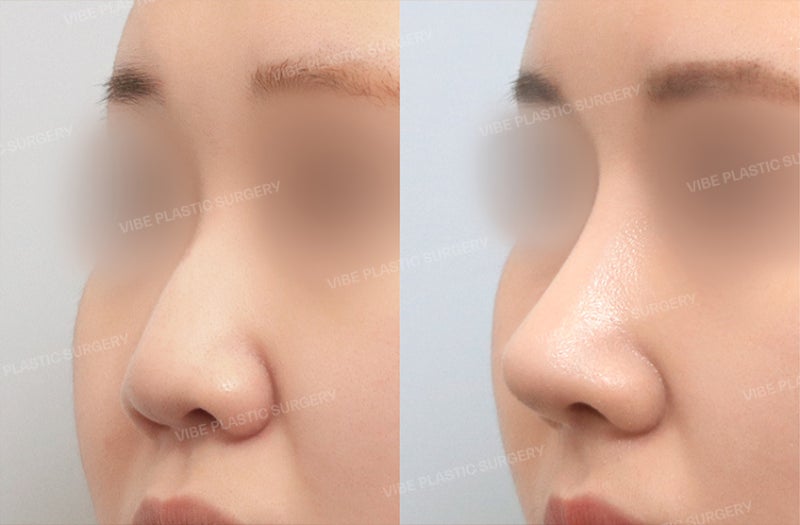
Angled three-quarter view of the nose, with comparison photos shown side by side.
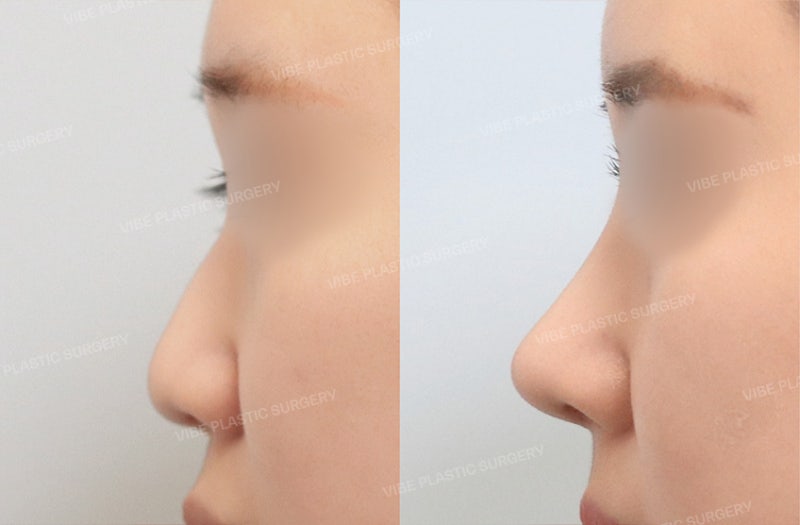
Side profile of the nose in side-by-side comparison photos, showing the line of the bridge and tip.
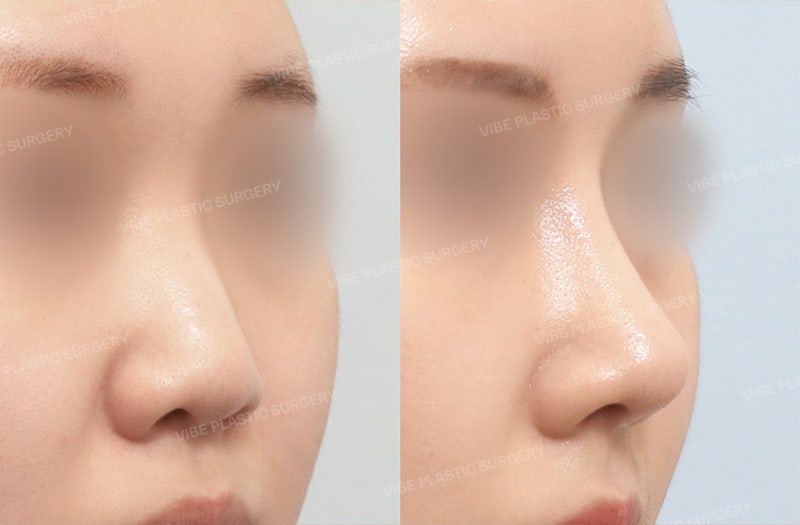
Angled view of the nose from the other side, with comparison photos placed side by side.
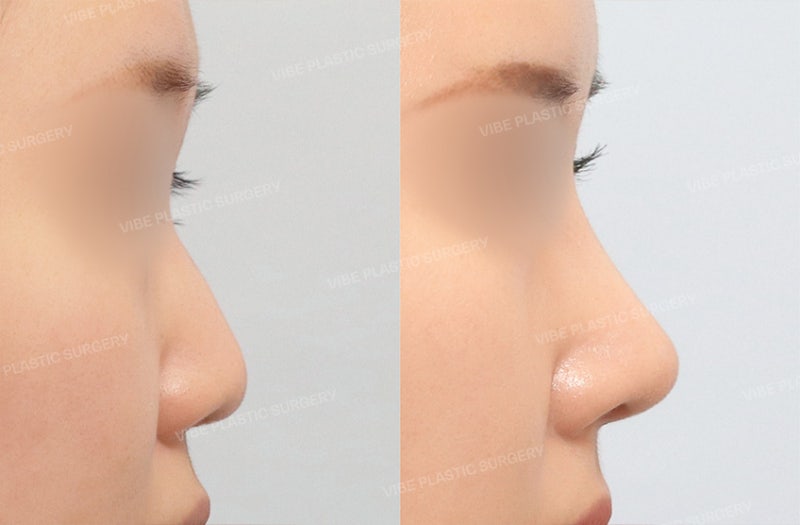
Side profile of the nose from the other side, with comparison photos placed side by side.
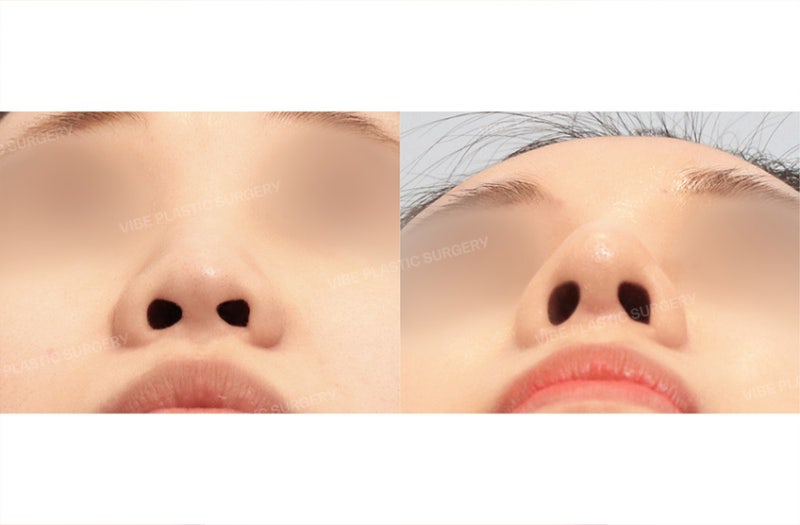
View from below the nose, comparing the nostrils and tip in side-by-side photos.
5. Points to Keep in Mind When Planning Rhinoplasty After Nose Filler or Thread Procedures
Past experience with nose fillers or thread lifts is important information when planning surgery.
When consulting, it is a good idea to tell your medical team the following:
The timing and number of procedures
The product name and type of filler, if you know them
The type of thread used, if you know it
Symptoms experienced after the procedure, such as pain, swelling, or inflammation
When and how the shape of your nose changed
Whether filler remains in the body and how it should be handled depends on the type of filler,
and after thread procedures, tissue adhesion or scar changes can affect surgery.
If necessary, the remaining filler can be checked or appropriate treatment can be considered first.
The timing of surgery should be determined after evaluating the condition of the tissue and whether inflammation is present.
6. What You Should Know Before Rhinoplasty
Because rhinoplasty changes the shape of the nose, the recovery process and risks differ depending on the surgical method.
Possible complications include bleeding, infection, scarring, asymmetry, under- or over-correction, skin problems, changes in smell, and changes in breathing function.
When implants or autologous cartilage are used, additional complications related to these materials may occur.
In addition, cosmetic changes and functional changes do not always match.
If there is a functional problem such as nasal obstruction, the nasal septum, turbinates, and internal nasal structures should be examined separately from the cosmetic assessment.
Before deciding on surgery, it is important to receive thorough explanations about the expected results, what surgery can realistically achieve, alternative options, the recovery process, possible complications, and the likelihood of revision surgery.
Conclusion: Procedures and Surgery Differ in Principle and Purpose
Nose fillers and nose thread lifts are methods that can be considered for refining the contour of the nose under certain conditions.
On the other hand, when the cartilage or support structure of the nose needs to be changed, surgical methods may be considered.
What matters is that filler or thread procedures alone cannot solve the fundamental problems of the nose,
and, conversely, surgery should not be assumed to be the only solution.
The most suitable approach should be chosen after comprehensively evaluating the cause of the bulbous nose, the shape of the nasal bridge and nasal tip, the nasolabial angle, the characteristics of the skin and soft tissue, and past procedure history.
This article is written to provide general medical information,
and it is not intended to recommend any specific procedure or surgery or to guarantee treatment results.
The appropriate treatment method and suitability should be determined through examination and evaluation by a medical professional based on your individual condition.
※ Nose fillers, thread lifts, and rhinoplasty can each cause side effects such as bleeding, infection, inflammation, asymmetry, and skin damage. With nose fillers, serious complications such as vascular occlusion and vision loss may rarely occur. Surgery includes the possibility of complications related to implants or cartilage, as well as the possibility of revision surgery.
Frequently Asked Questions
Can a bulbous nose be corrected with nose fillers alone?
The article explains that fillers alone make it difficult to directly correct the structural causes of a bulbous nose. A bulbous nose can result from a combination of factors, such as the shape and arrangement of the nasal tip cartilage and the thickness of the skin and soft tissue, and because fillers work by adding volume, they cannot directly change these causes.
How long do the effects of a nose thread lift last?
The duration of a thread lift's effects depends on the type of thread, individual anatomical characteristics, and the technique used. A thread lift can be considered to create temporary changes, and over time the nose may look different from how it initially appeared.
Can the nasolabial angle be corrected with fillers?
Fillers alone may have limits in correcting the nasolabial angle in the desired direction. The nasolabial angle is the angle formed by the columella and the upper lip, and it can be affected by the position and rotation of the nasal tip and the structure of the columella. When the nasal tip cartilage or its support structure needs to be changed, surgical methods may be considered.
When can rhinoplasty be considered?
If you want to fundamentally adjust the height or shape of the nasal bridge, or if correction of a bulbous nose or the nasolabial angle is needed, you can evaluate whether rhinoplasty is a suitable option. However, surgery is not performed immediately in every case, and if concerns about shape remain after filler or thread procedures, it is important to evaluate your current condition first.
What should I tell my doctor when planning rhinoplasty after previous procedures?
It is advisable to tell your doctor the timing and number of procedures, the product name and type of filler (if known), the type of thread used (if known), and any symptoms such as pain, swelling, or inflammation. After thread procedures, tissue adhesion or scar changes can affect surgery.
What should I check before rhinoplasty?
It is important to receive full explanations about the expected results, what surgery can achieve, alternative options, the recovery process, and the possibility of complications and revision surgery. Complications such as bleeding, infection, scarring, asymmetry, or under- or over-correction can occur, and cosmetic and functional outcomes do not always match.