2026-09-14
Is Rhinoplasty Possible with Only Septal and Ear Cartilage Without Silicone? by Dr. Young-moon Yoo, VIBE Plastic Surgery
Dr. Young-moon Yoo of VIBE Plastic Surgery shares an implant-free rhinoplasty case achieving natural bridge elevation and facial dimension using only septal and ear cartilage.
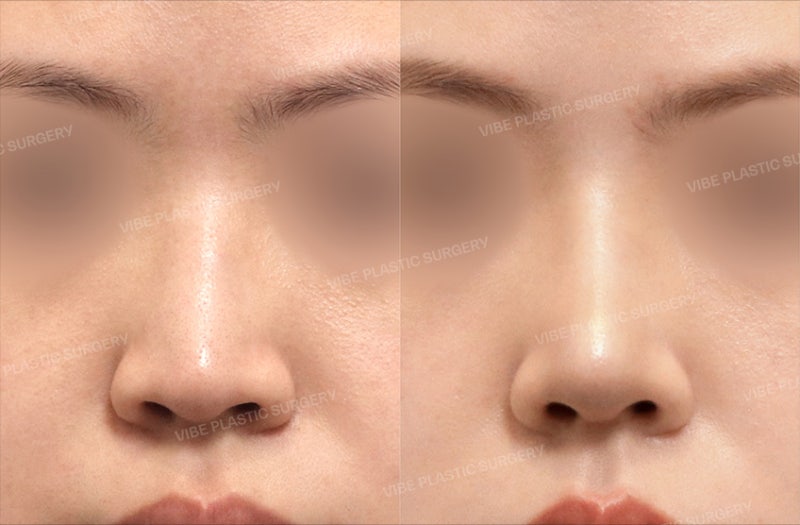
A low nose and lack of facial dimension
Can this be resolved with only septal and ear cartilage without silicone?
Hello.
I am Dr. Young-moon Yoo of VIBE Plastic Surgery.
When a patient has a low nose and feels their entire face lacks three-dimensionality,
some say, "I want to raise my nose slightly, but I don't want foreign implants like silicone."
There is a growing demand from patients who prefer a natural nose that harmonizes with their facial features over an excessively high, artificial-looking nose, and who wish to undergo surgery using only autologous cartilage harvested from their own bodies whenever possible.
A female patient in her 20s visited VIBE Plastic Surgery with similar concerns.
“My nose is low, making my face look flat.”
This patient's biggest concern was not simply the height of her nose.
Because the nose was low, the center of her face appeared relatively flat from the front,
and from the profile, the contours of the nasal bridge and tip were not sufficiently defined,
which made her overall facial dimension feel lacking.
However, the patient had one clear prerequisite.
“I do not want to use silicone.”
She wanted to naturally improve her nasal structure using only autologous cartilage if possible.
Checking 'the condition of my cartilage' first through CT
To plan a rhinoplasty using only autologous cartilage,
one cannot simply assume autologous cartilage is suitable without verification.
It is crucial to first determine whether there is a sufficient amount of cartilage available,
assess its condition,
and evaluate how it can be harvested and arranged.
After examining this patient's pre-operative CT scan,
we confirmed that the condition of both her septal cartilage and ear cartilage was relatively favorable.
Therefore, we were able to establish a surgical plan utilizing septal and ear cartilage without needing to harvest additional rib cartilage.
And the surgical approach chosen here is VIBE Plastic Surgery's signature
“Dan-Yeon-Ko.”
Rhinoplasty using “Only Cartilage” (Dan-ji Yeon-gol-man sayonghaneun Ko-seonghyeong)
What is Dan-Yeon-Ko?
Dan-Yeon-Ko = Rhinoplasty utilizing solely cartilage
As the name suggests, this is VIBE Plastic Surgery's rhinoplasty method that builds the height of the nasal bridge and the structure of the nasal tip using the patient's own autologous cartilage—such as septal and ear cartilage—without any artificial implants like silicone.
Of course, not every patient is an ideal candidate for Dan-Yeon-Ko.
It is suitable when a comprehensive assessment of the nasal condition, skin thickness, desired height, and the quantity and quality of septal and ear cartilage confirms that the desired outcome can be achieved with autologous cartilage alone.
This patient was a well-suited candidate who met these criteria.
What it means not to use silicone
Silicone is a representative artificial implant that has been used in rhinoplasty for a long time.
It has the advantage of offering relatively predictable height and shape,
making it easy to achieve the desired elevation.
However, because it is an artificial foreign material,
there is always a possibility of implant-related complications.
For example,
Displacement or mobility of the implant
Inflammation and infection around the implant
Implant outlines showing through in cases of thin skin
Extrusion or exposure of the implant
Capsular contracture or deformity
Implant-related issues developing over time
can occasionally occur.
Of course, using silicone does not mean these issues will inevitably happen.
However, by avoiding artificial implants from the start,
a significant advantage of autologous cartilage rhinoplasty is minimizing the possibility of problems that can arise specifically from foreign materials.
Using tissues from your own body
Another advantage of Dan-Yeon-Ko is
that it uses the patient's own tissue.
Because autologous cartilage is the body's own tissue,
it offers superior biocompatibility compared to artificial implants.
In fact, meta-analyses comparing autologous cartilage with silicone
have reported lower overall rates of complications and revision surgeries in rhinoplasties performed with autologous cartilage.
Recent systematic reviews have also shown that autologous cartilage tends to have a lower risk of infection and extrusion compared to synthetic implants.
However, autologous cartilage is not entirely free from complications.
Factors unique to autologous cartilage, such as cartilage warping, resorption, and donor site discomfort, must be considered.
Therefore, rather than stating that one material is universally superior,
it is vital to select the material best suited to the patient's unique nasal anatomy.
Can the nose be elevated sufficiently without silicone?
This is the question many patients are most curious about.
“If I don't use silicone, won't my nose fail to achieve significant height?”
Not necessarily.
The key in rhinoplasty is not simply placing an object on top of the bridge,
but rather designing and supporting the structural framework that constitutes the nose.
When a patient has good septal and ear cartilage quality and the desired transformation is achievable through autologous cartilage alone, as in this case,
appropriately utilizing septal and ear cartilage allows comprehensive consideration of:
Bridge height
Nasal tip projection and orientation
Dimensional contour of the tip
Seamless transition between the bridge and tip
Balance with overall facial proportions.
In other words, you do not need to assume that “no silicone = insufficient structural change.”
Why the entire face looks more three-dimensional after just a nose surgery
This is an especially crucial aspect to highlight in this case.
Because the nose is located right at the center of the face,
changes in nasal height, angulation, and contours
can transform the perceived three-dimensionality of the entire face.
A low nose can make the central facial axis appear relatively flat,
but by creating an appropriate bridge and tip height
and smoothing the nasal lines naturally,
the central facial dimension connecting the forehead → bridge → tip → perioral area is brought to life.
Rather than raising the nose excessively, it is essential to elevate it naturally in proportion to the patient's facial balance.
Ultimately, a successful rhinoplasty is
not merely “a surgery that makes the nose look pretty,”
but “a procedure that enhances the harmony and balance of the entire face through the nose.”
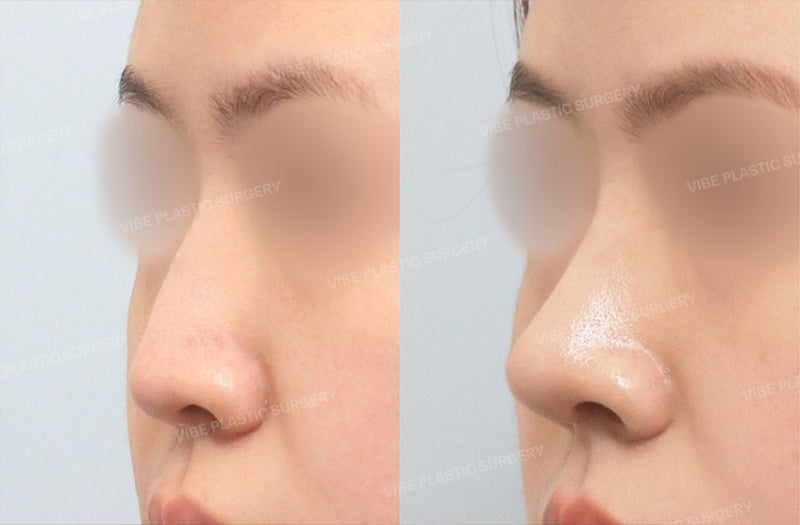
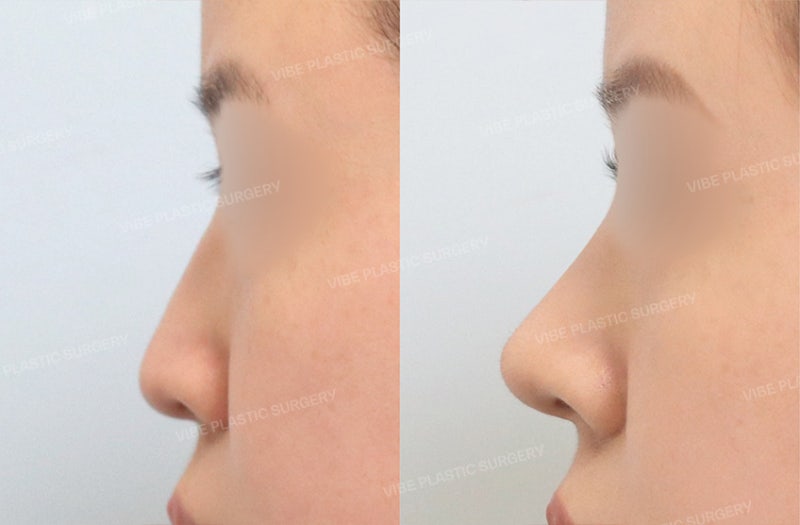
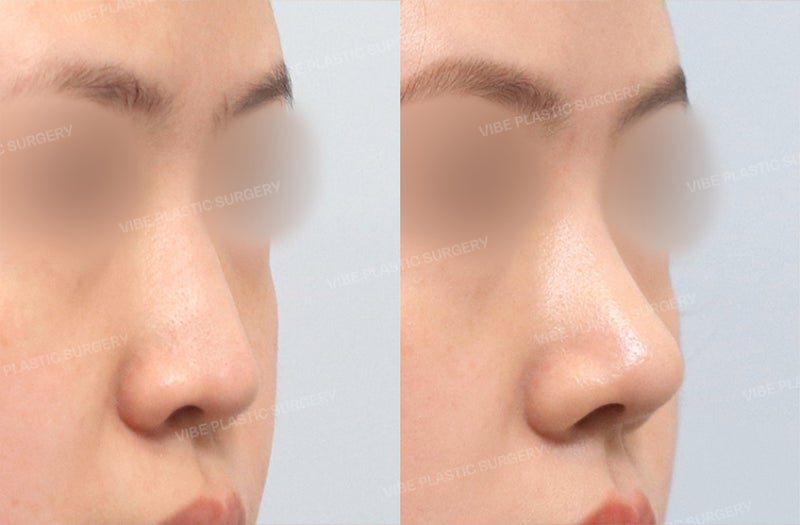
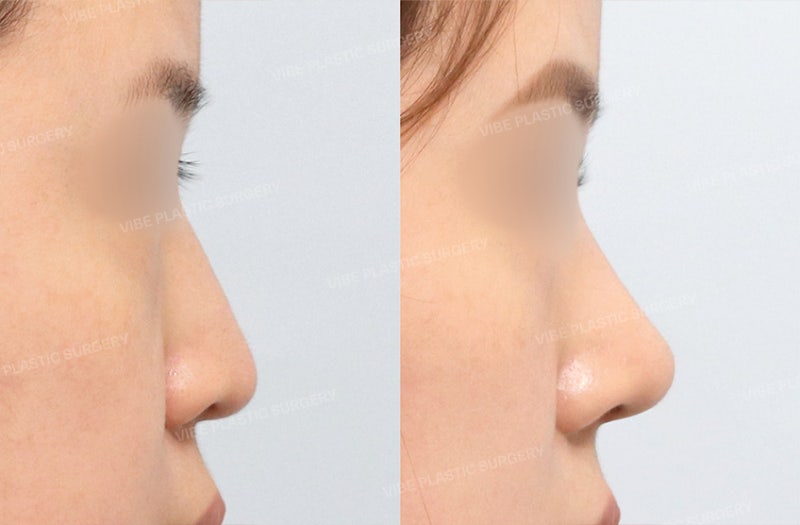
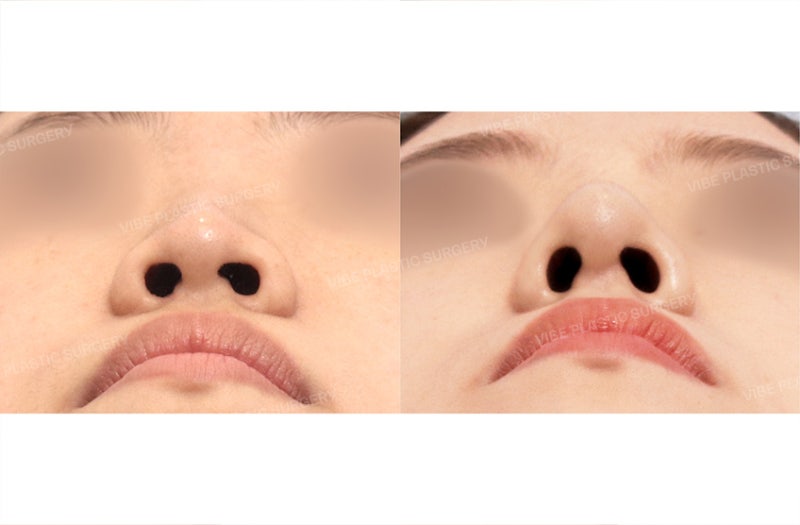





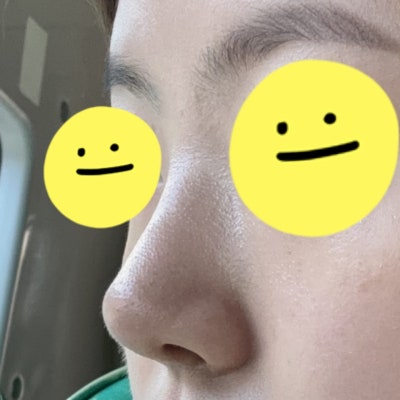
Transformations achieved after surgery
For this patient, rhinoplasty was performed without silicone implants,
using only septal cartilage and ear cartilage.
Before surgery, the low bridge and lack of projection made the whole face appear somewhat flat,
but after surgery,
✔ The previously low bridge gained natural height,
✔ The nasal tip contour became more defined,
✔ The dimensional presence of the central face was restored,
✔ The frontal profile gained clearer facial contours, and
✔ The lateral profile achieved a smooth, natural nasal line.
Most importantly, the procedure went beyond merely raising the nose; it reshaped it to harmonize perfectly with the patient's individual features.
“A nose that suits me” over an “excessively high nose”
In rhinoplasty, a higher nose is not unconditionally better.
An overly elevated bridge or an excessively sharp nasal tip can fail to harmonize with the rest of the face, resulting in an unnatural appearance.
That is why VIBE Plastic Surgery's Dan-Yeon-Ko considers not only
"How much should we raise it?" but also
"What materials should we use?"
"What structural framework should be built?"
"What degree of change will look most natural for this face?"
Rhinoplasty using only cartilage: “Dan-Yeon-Ko”
Autologous cartilage rhinoplasty
is not applicable to every patient.
However, if the quantity and condition of available cartilage are sufficient and the patient's desired change can be achieved with autologous cartilage alone,
you can opt to build the nasal framework using your body's own tissues without relying on synthetic implants.
For this patient as well,
we planned the procedure using septal cartilage + ear cartilage
to achieve natural nasal elevation and three-dimensionality without silicone.
This is what VIBE Plastic Surgery pursues with
Dan-Yeon-Ko (Rhinoplasty using solely cartilage):
Not merely building height,
but creating natural, harmonious dimension that complements your face.
That is the core philosophy behind Dan-Yeon-Ko rhinoplasty.
** Candidacy for Dan-Yeon-Ko and the appropriate type and quantity of autologous cartilage may vary depending on individual nasal anatomy, cartilage condition, skin thickness, and aesthetic goals. An accurate surgical plan requires in-person consultation and diagnostic evaluation. **
Frequently Asked Questions
Can the nose be elevated using only autologous cartilage without silicone?
Yes, absolutely. Rhinoplasty is about designing and supporting the structural framework of the nose rather than simply placing an implant. If your septal and ear cartilage are in good condition, you can achieve natural elevation and dimension using autologous cartilage alone.
Can anyone undergo autologous cartilage rhinoplasty?
No, it is not suitable for every patient. Suitability must be determined after a comprehensive evaluation using diagnostic CT scans to assess individual nasal anatomy, skin thickness, desired elevation, and the quantity and quality of available septal and ear cartilage.
Is autologous cartilage safer than artificial implants?
Yes, it generally carries a lower risk of infection and implant extrusion. Since it uses your own body tissue, biocompatibility is superior and risks of displacement or visible implant outlines are mitigated, though factors such as cartilage warping or resorption must still be considered.
What is VIBE Plastic Surgery's 'Dan-Yeon-Ko'?
It is a rhinoplasty method that uses exclusively autologous cartilage. Instead of synthetic implants like silicone, it utilizes the patient's own septal and ear cartilage to shape the bridge and tip, creating a natural, three-dimensional look tailored to the individual's face.
Why is a CT scan necessary before implant-free rhinoplasty?
A CT scan is essential to accurately evaluate the condition of your autologous cartilage. It provides detailed pre-operative insight into the volume and structure of septal and ear cartilage, helping determine whether rib cartilage harvesting is needed and establishing a precise surgical strategy.