2026-05-25
Rhinoplasty for a Low Bridge and Tip
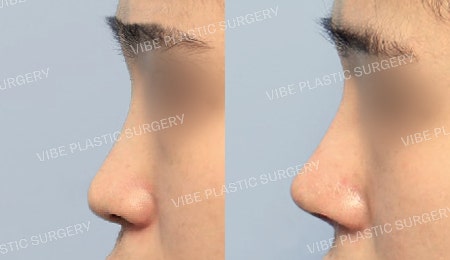
A case study of a 20s female patient with a low bridge and weak nasal cartilage, successfully treated using silicone implants and donated rib cartilage.
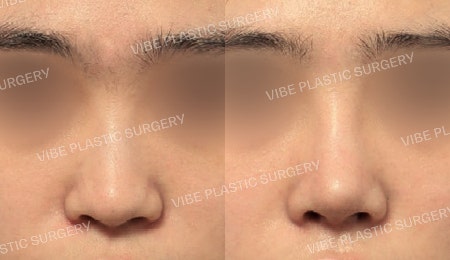
* Patient Information
- Female in her 20s
- Low nasal bridge and small nasal tip
- History of multiple nose filler injections
- Extremely thin and weak cartilage
* Consultation
1. Despite receiving dissolving injections two weeks prior to surgery due to multiple filler procedures, residual filler could still be felt upon palpation.
2. The alar cartilage was small, and the septal cartilage was soft and lacked strength. During the pre-operative examination, the nasal tip would easily collapse when pressed.
3. It was determined that autologous cartilage alone would be insufficient for the surgery, so the plan was made to utilize donated rib cartilage.
* Surgical Plan
Bridge Rhinoplasty (Removal of foreign substances and elevation using a silicone implant)
Tip Rhinoplasty (Donated rib cartilage: Septal extension graft + Ear cartilage: Onlay graft)
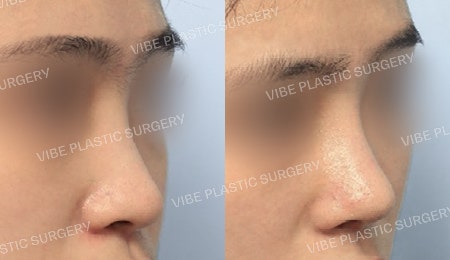
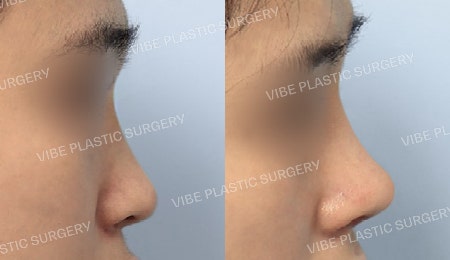
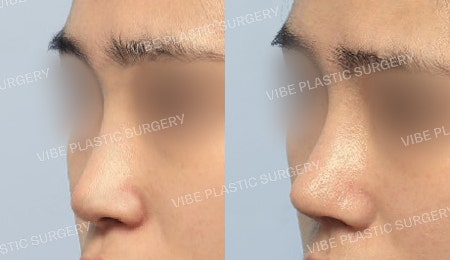
* Post-operative Progress
1. Foreign substances (filler residue) discovered during surgery were thoroughly scraped out and irrigated. This is because remaining filler can become a source of inflammation later.
2. Removing foreign substances during surgery can cause the skin to become thin and uneven, making the procedure more difficult. Therefore, it is always better to dissolve as much as possible before the operation!
3. During the surgery, as expected, the septum was found to be very thin and weak. The septum was harvested while preserving as much as possible, and the nasal tip was reconstructed using donated rib cartilage and ear cartilage. As a result, a natural yet sharp and defined nasal tip was achieved.
* Key Points
1. There are differing opinions among both patients and surgeons regarding the use of donated rib cartilage. While I do not recommend or insist on its use for everyone, I believe it is a viable option when truly necessary.
2. The biggest concerns with donated rib cartilage are inflammation and the drooping of the nasal tip. Since it is a foreign material, the risk of inflammation may be slightly higher compared to using only autologous cartilage. Also, depending on the absorption rate, the tip may unexpectedly droop or warp.
3. However, I believe these issues often occur when the nasal tip is raised excessively beyond what the individual can handle, or when factors like smoking are involved. Therefore, if a proper surgical plan is established and factors that negatively impact the nose—such as smoking—are avoided, donated rib cartilage is a sufficiently good and sometimes necessary material.
Consultations and surgeries should be performed by a board-certified plastic surgeon!
Wishing you both health and beauty today :)
Right Thinking, Right Plastic Surgery – Dr. Yu Young-moon
Complications and side effects such as bleeding, inflammation, infection, and asymmetry may occur after surgery and vary by individual; caution is required.
Frequently Asked Questions
Is nose surgery possible after nose filler treatment?
Yes, it is possible. However, if you have received nose filler treatment multiple times, residual filler may remain even after receiving dissolving injections before surgery. The remaining filler must be completely removed during surgery to prevent it from causing inflammation.
How is tip plasty performed if the cartilage is weak?
If the cartilage is weak and lacks strength, it may be determined that autologous cartilage alone is not sufficient. In such cases, donated costal cartilage and ear cartilage can be used together to create the nasal tip through septal extension graft and overlapping graft methods.
In what cases is donated costal cartilage used?
Donated costal cartilage may be considered for use when it is determined that autologous cartilage alone is not sufficient for surgery. It can be particularly useful when the septal cartilage is thin and weak, making it difficult to support the nasal tip.
What are the main problems that can occur when using donated costal cartilage?
The biggest issues when using donated costal cartilage are inflammation and drooping of the nasal tip. Since it is a foreign body, the chance of inflammation may be slightly higher than when using only autologous cartilage, and the nasal tip may droop or deviate depending on the degree of absorption.
How can side effects be reduced after donated costal cartilage surgery?
It is important to plan appropriate nose surgery and avoid factors that can negatively affect the nose, such as smoking. Refrain from excessively raising the nasal tip, and consult sufficiently with a specialist for management to reduce the risk of side effects.