2026-10-03
Beauty and Function! Achieving Both in Rhinoplasty by Dr. Young Moon Yoo at VIBE Plastic Surgery, Sinnonhyeon Station
Learn how implant-free functional rhinoplasty using rib cartilage straightens a crooked nose and tip while relieving severe septal deviation and nasal congestion.
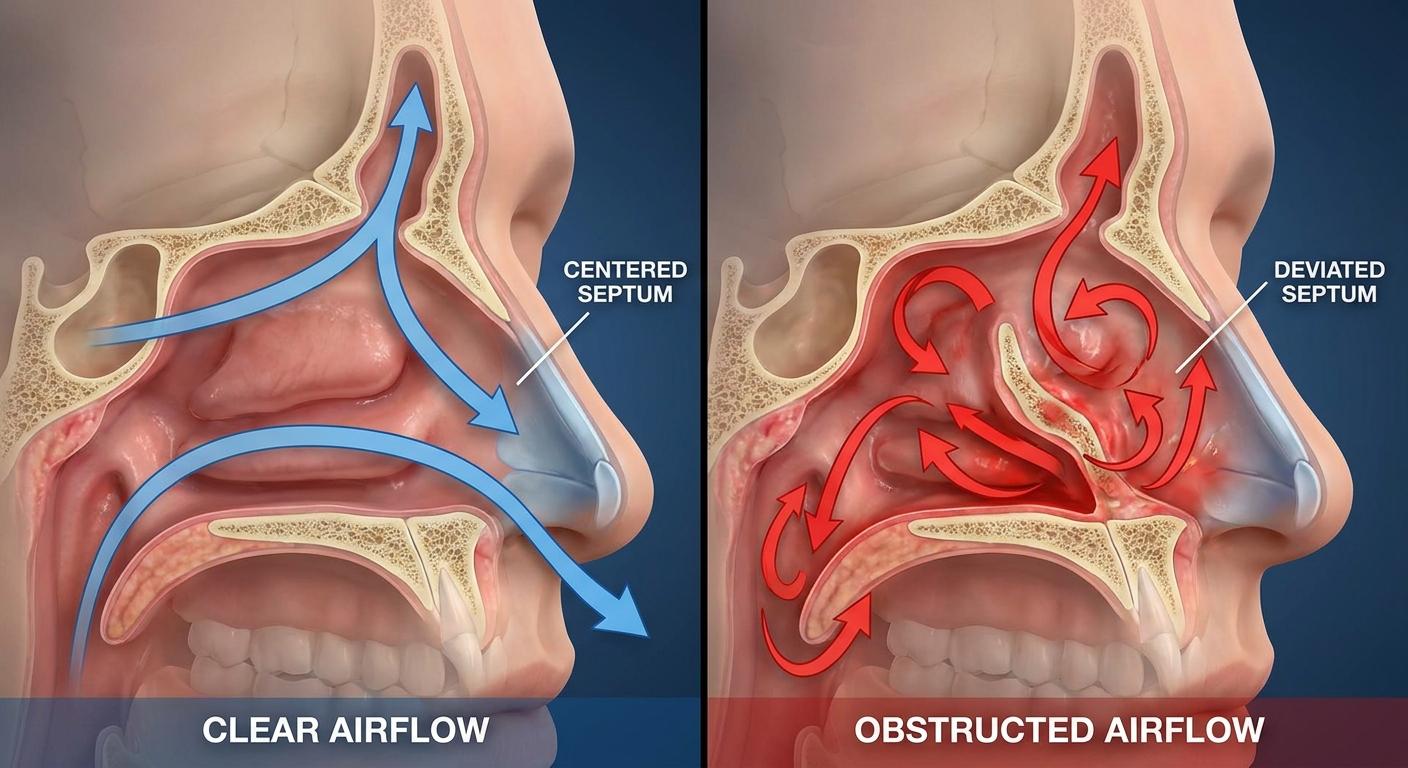
A crooked nose making it uncomfortable to breathe! What if you could combine functional rhinoplasty with cosmetic enhancement?!
A case of implant-free functional rhinoplasty simultaneously correcting a deviated septum, a crooked nasal tip, and nasal congestion.
Hello.
I am Dr. Young Moon Yoo from VIBE Plastic Surgery.
If your nose not only looks crooked,
but you also frequently experience difficulty breathing through one or both nostrils,
you should not focus solely on the aesthetic aspect of your nose.
You must also examine the internal nasal structures—
particularly how severely the nasal septum is deviated and how the tip support structures have been altered.
The case I am sharing today also involves a patient
who presented with severe septal deviation, a crooked nasal tip, and breathing discomfort.
To resolve the functional issues while simultaneously improving the crooked external appearance,
we performed rhinoplasty using rib cartilage.
Struggling to Breathe with a Crooked Nose?
There are various causes behind a crooked nose.
Beyond visible deviation of the nasal bones or cartilage,
it is very common to have an internal septal deviation where the septum is crooked as well.
The septum is the central structure dividing the nose into left and right cavities. When this structure is severely deviated, it narrows the internal nasal passages and can lead to:
Nasal congestion
Difficulty breathing through one nostril
Uneven airflow between nostrils
Mouth breathing habit
A noticeably crooked external nasal appearance
and more.
Of course, not all nasal congestion stems from a deviated septum, which is why an accurate diagnosis is essential.
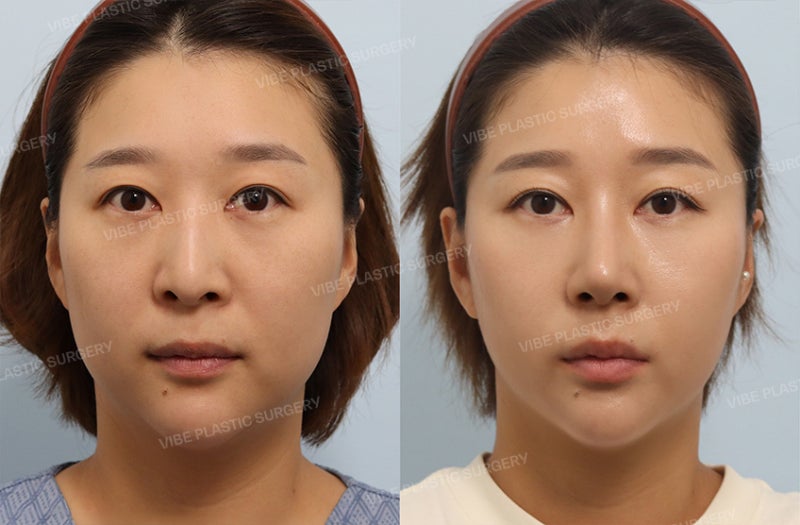
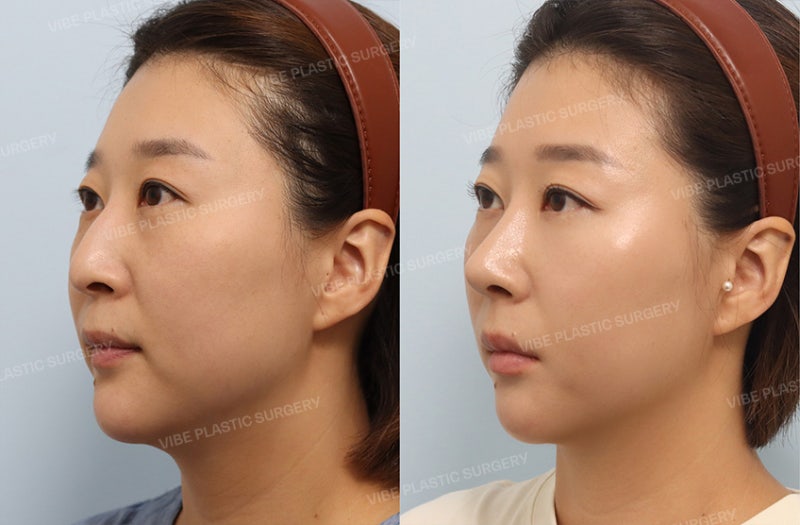
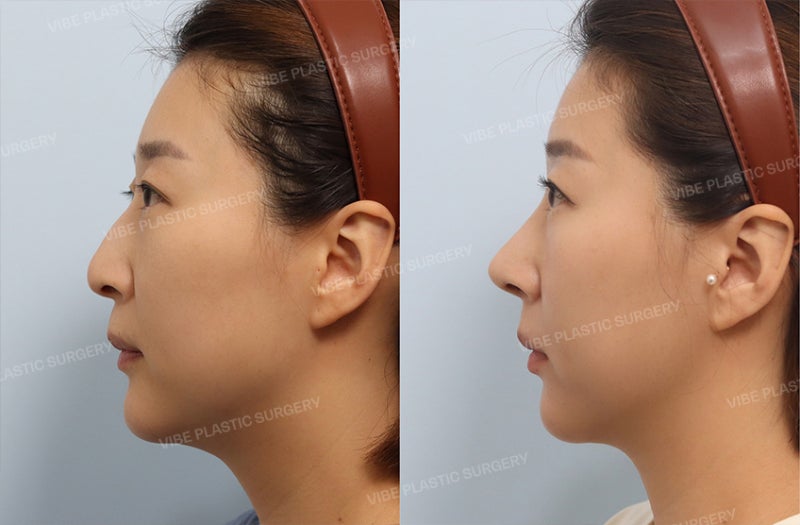
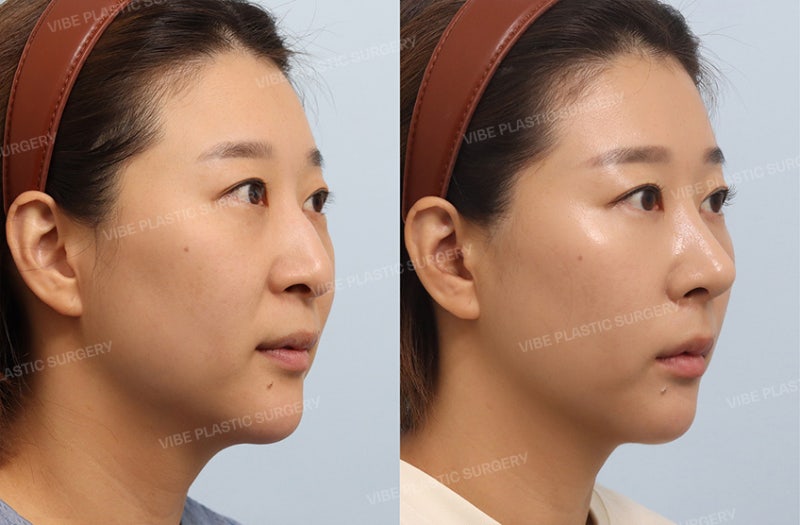
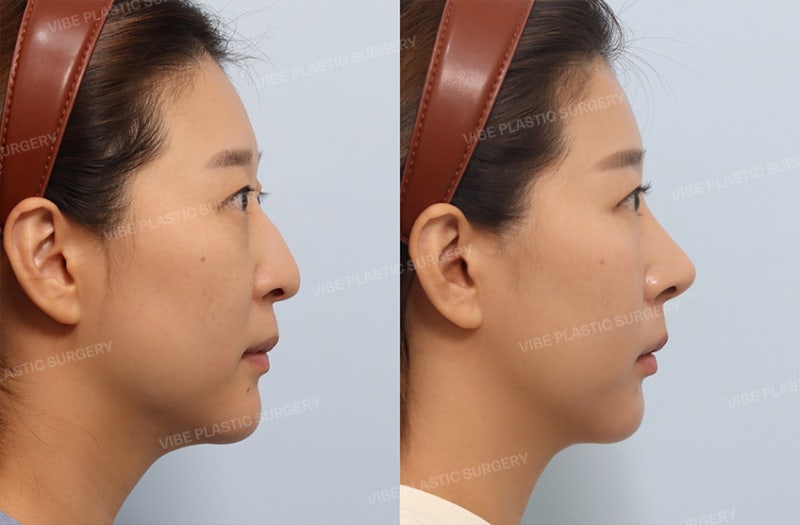
The core issue in this case was both 'function and aesthetics'!
For this patient, it wasn't just a slightly deviated nose.
① The nasal septum was severely deviated,
② The nasal tip was also noticeably slanted to one side, and
③ There was genuine discomfort when breathing.
Therefore, rather than simply straightening the external appearance,
we developed a surgical plan aimed at "correcting the internal structural problems while simultaneously refining the external crookedness."
In such cases, creating a stable core framework to center the nose is especially crucial.
Why is Septal Deviation Related to Nasal Shape?
The septum is not just an internal divider.
Because it supports the central axis of the nose and connects directly to the nasal tip framework,
a severe septal deviation can cause the entire nose to tilt to one side or result in a crooked nasal tip.
Therefore, when severe septal deviation coexists with external deviation,
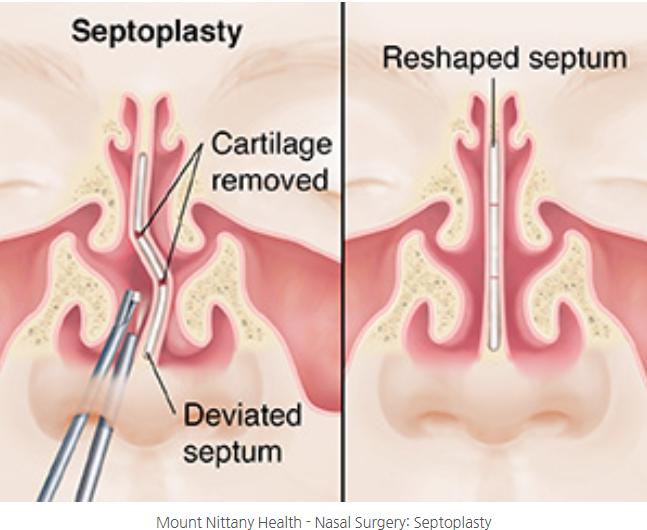
Septoplasty → Realignment of the central nasal axis → Correction of the tip support framework
must all be addressed comprehensively.
Particularly when the nasal framework is already significantly distorted,
simple manipulation alone may fall short of delivering the desired outcome.
Why Did We Use Rib Cartilage?
For this surgery, costal (rib) cartilage was used.
When simultaneously correcting a severely deviated septum and tip,
a substantial quantity and strong grade of cartilage are often required during the procedure.
In particular, rib cartilage can be an excellent option when:
The septum is severely deviated
The nasal tip is significantly tilted
The central nasal axis must be rebuilt from scratch
Septal cartilage is insufficient from a previous surgery
Strong tip structural support is required
In this case as well, we determined that existing internal cartilage alone was insufficient for complete correction,
so we proceeded by reconstructing the central axis and support framework using rib cartilage.
The Bridge was Performed Implant-Free!
This patient already had a sufficient nasal bridge height.
Therefore, rather than indiscriminately elevating the bridge,
we focused on preserving the natural advantages of their existing bridge while correcting the crookedness and refining the tip.
Consequently, we performed an implant-free rhinoplasty without inserting a silicone implant on the bridge.
Going implant-free does not mean implants should be avoided in every nose.
What matters is comprehensively evaluating the patient's existing bridge height, skin thickness, nasal length, tip shape, and septal status to determine whether an implant is genuinely needed.
For patients who already have adequate dorsal height like this one,
focusing solely on structural correction without adding unnecessary implants
often leads to a far more natural and harmonious result.
Why Combine Functional and Aesthetic Rhinoplasty?
Even if a patient visits the clinic due to functional discomfort,
severe internal structural problems often present with external deformities.
Conversely, if a severely crooked nose is treated cosmetically without properly correcting internal structural issues,
simply altering the outer appearance has distinct limitations.
Therefore, when indicated,
Septal deviation correction (internal structure) + Crooked nose correction (external appearance)
can be incorporated into a single comprehensive surgical plan.
Addressing functional and aesthetic concerns together
allows the patient to simultaneously relieve breathing difficulties and achieve their desired nasal appearance.
However, not every functional rhinoplasty requires aesthetic changes,
nor does every crooked nose have septal deviation.
Thus, a dual assessment of both the internal and external nasal anatomy is the most critical first step.
What Changed Before and After Surgery?
Before the surgery, this patient presented with:
A nose visibly leaning to one side overall,
A tip noticeably displaced from the midline,
A severely deviated septum, and
Actual respiratory restriction.
After surgery, the central axis was neatly realigned to the midline, and the tip deviation was successfully corrected.
Furthermore, because the bridge already had sufficient height, we did not add unnecessary height,
maintaining a natural nasal contour through an implant-free approach.
Ultimately, this was not just an aesthetic nose augmentation,
but a procedure designed to deliver both "a nose that breathes comfortably" and "a straight, natural contour."
Who Should Consider a Functional Rhinoplasty Consultation?
If you experience any of the following symptoms, we recommend evaluating both nasal function and aesthetics rather than opting for a purely cosmetic procedure.
✔️ Frequently experiencing a blocked nostril on one side
✔️ Noticeable airflow discrepancy between nostrils
✔️ A visibly crooked or tilted nose
✔️ A nasal tip turned to one side
✔️ A diagnosed deviated septum
✔️ Crooked nasal appearance accompanied by nasal obstruction
✔️ Wanting to improve both functional and aesthetic issues simultaneously
✔️ Persistent deviation or breathing issues following a previous rhinoplasty
Keep in mind that nasal congestion can also stem from
inferior turbinate hypertrophy, rhinitis, nasal valve collapse, and other conditions,
making accurate diagnosis of the underlying cause essential.
Functional Rhinoplasty: Focus on 'Structure' Rather than Just 'Beauty'
Functional rhinoplasty approaches the nose differently than procedures aimed solely at surface-level straightening.
It requires a deep understanding of internal nasal anatomy and tip support mechanisms,
relieving airway obstruction while balancing external facial aesthetics.
Especially in cases where the septum is severely deviated or the tip is markedly shifted,
standard septoplasty alone might not suffice.
As demonstrated in this case, when necessary,
utilizing rib cartilage to reinforce deficient support and reconstruct the core framework provides a reliable solution.
And if your bridge already has good height, omitting artificial implants and choosing an implant-free technique remains an excellent pathway to achieving refined, natural results.
Frequently Asked Questions
Can a deviated septum cause the external nose to look crooked?
Yes. The septum is integral to both the internal nasal cavity and the central support framework of the tip. When severely deviated, it can cause the entire nose or tip to lean. Addressing both the internal and external structures simultaneously provides stable, lasting alignment.
Why was rib cartilage chosen as the graft material for this surgery?
Rib cartilage was used because it provides the necessary volume and structural rigidity required to rebuild a compromised nasal framework. In cases of severe septal and tip deviation, local cartilage may be insufficient to ensure durable, long-term support.
Is a bridge implant mandatory in functional rhinoplasty?
No. If the patient already possesses sufficient dorsal bridge height, an implant-free approach can be chosen. By evaluating skin thickness, bridge height, and tip projection, the surgeon can prioritize structural realignment and natural contours without inserting artificial implants.
Who is an ideal candidate for simultaneous septoplasty and crooked nose rhinoplasty?
Anyone experiencing chronic nasal obstruction, asymmetrical airflow, or mouth breathing alongside visible external deviation or tip misalignment is an ideal candidate. Treating only the exterior often leaves internal airway restrictions unresolved, which is why an integrated evaluation of both function and appearance is recommended.